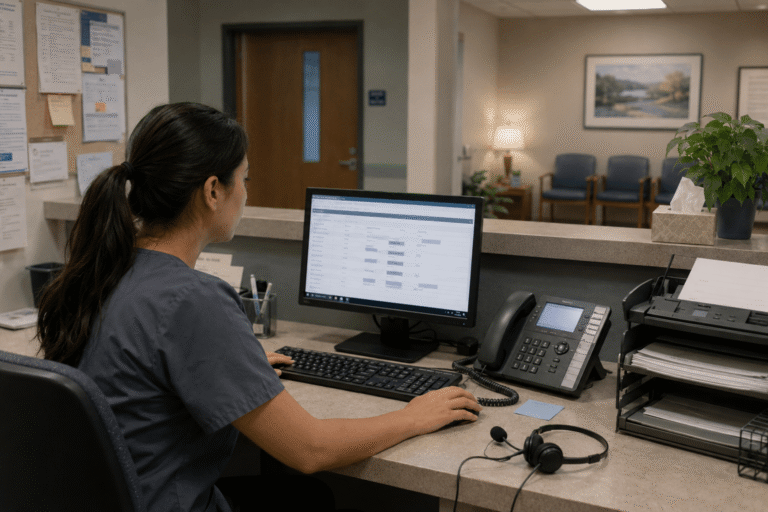

Small medical practices often run phone calls, text messages, faxes, and video visits through separate tools that were never built to work together. That gap creates missed follow-up, unclear accountability for protected health information, and extra manual work for front-desk and clinical staff.
What to Know
- Unified communications replaces several disconnected apps with one managed system for calls, secure texting, fax, and video visits.
- Scattered communication tools make it harder to track where patient information moves, which raises compliance risk for small practices with limited IT support.
- A HIPAA-compliant communication platform supports safeguards such as signed business associate agreements and access controls, but technology alone does not make a practice compliant.
- Consolidating channels can reduce the manual work of switching between separate apps to manage patient calls, texts, and voicemail.
- Before switching systems, a practice should evaluate reliability across phone, text, and fax, number porting, and whether pricing is transparent.
What Does Unified Communications Mean for a Small Medical Practice?
Unified communications means routing phone calls, secure text messages, fax documents, voicemail, and video visits through one connected platform instead of several separate tools. For a small practice, this typically replaces a mix of a landline phone system, a consumer texting app, a stand-alone fax line or fax vendor, and a separate video-visit tool. The practical effect is that staff work from fewer logins and fewer places to check for a patient response. A front-desk team member can see a missed call, a text message, and a faxed referral in connected views rather than checking three or four unrelated systems throughout the day.
Why Do Disconnected Communication Tools Create Risk for Medical Offices?
Disconnected tools create risk because patient calls, messages, and documents may contain protected health information that needs consistent handling, and that consistency is harder to enforce across multiple unrelated apps. Small practices are especially exposed because they often manage sensitive patient information with fewer dedicated security resources than larger health systems. Communication systems sit inside this risk picture because they carry the calls, messages, and documents that make up daily patient interaction. Bringing these channels into a secure, managed environment can make it easier to control access, maintain accountability, and support healthcare cybersecurity requirements as part of a broader compliance strategy rather than treating phone and messaging tools as an afterthought.
What Does a HIPAA-compliant Communication Platform Actually Provide?
A HIPAA-compliant communication platform provides the technical safeguards a practice needs to support compliant workflows, such as a signed business associate agreement, secure access controls, and audit visibility into communication activity. It does not, by itself, make a practice HIPAA compliant; policies, staff training, and consistent use still matter. For texting specifically, this means practices should pair the technology with clear policy on patient consent, minimum necessary information, and avoiding sensitive clinical detail over standard SMS when a more secure channel is available. A HIPAA-compliant phone service built for healthcare workflows gives staff a documented, auditable channel rather than relying on personal devices or consumer apps for patient contact. This is not legal advice. Practices should confirm communication and privacy policies with their own legal, compliance, or administrative teams.
How Are Patient Expectations Changing Communication Requirements for Small Practices?
Patient expectations are shifting because healthcare delivery increasingly blends in-person visits with digital interaction, and communication technology has become central to how patients access care rather than a side function. Broader adoption of modern telehealth communication trends across specialties shows that patients now expect convenient scheduling, virtual visits, and reliable follow-up, not just a phone line during office hours. Meeting those expectations with separate tools for calling, video, messaging, and scheduling makes coordination harder for a small team. A connected communication environment allows different channels to work together as part of one workflow, which can help independent practices respond to patients as efficiently as larger organizations with more staff.
What Should a Practice Evaluate Before Switching Communication Systems?
A practice should evaluate a new system against the specific problems it is meant to solve, not just its feature list. Switching communication systems can feel disruptive, so it helps to compare options against a consistent set of criteria before committing.
- Reliability across voice calls, texting, fax, and call routing, since a gap in any one channel affects patient access.
- Number porting so existing practice phone numbers transfer without disrupting patients who already have them saved.
- Pricing transparency, including whether fees are clearly stated or likely to change after onboarding.
- How after-hours and on-call routing will work so urgent calls reach the right person without manual forwarding.
- Staff time required to learn the new system compared with the manual work it is meant to reduce.
Practices researching this shift often compare it against broader workflow and integration decisions, including how call routing, document exchange, and team handoffs are handled; a workflow and integration overview is a useful reference point for that comparison.
How RingRx Helps
RingRx is a healthcare-focused cloud communications platform that brings voice, secure texting, fax, and video into one system built for medical practice workflows.
- Routes calls so the right staff member or provider gets the right call, including after-hours and on-call escalation paths.
- Keeps voice, text, voicemail, and fax organized in one place instead of spread across separate apps and logins.
- Supports HIPAA-compliant workflows with a signed business associate agreement and access controls built for healthcare use.
- Uses transparent pricing so practices can budget for communication costs without hidden fees or billing surprises.
- Helps practices manage number porting and onboarding when consolidating from multiple prior tools.
Practices comparing costs across tools can review RingRx pricing directly to see how a unified platform lines up against paying separately for phone, texting, and fax services.
Frequently Asked Questions
What Counts as Unified Communications for a Medical Office?
It refers to combining phone, secure texting, fax, voicemail, and video visits into one connected platform instead of managing each channel through a separate vendor or app. The goal is fewer logins and more consistent handling of patient interactions.
Is a Cloud Phone System Safe for Handling Patient Information?
A cloud communication platform built for healthcare can support HIPAA-compliant workflows through safeguards like access controls, a signed business associate agreement, and audit visibility. Safety also depends on how staff use the system, so policy and training remain necessary.
Will Switching Communication Systems Disrupt Current Patients?
Switching can be managed with limited disruption when the new provider supports number porting, so existing practice phone numbers continue working. Planning the transition during a lower-volume period and training staff in advance also reduces friction.
Does Unified Communications Replace the Practice’s EHR?
No. A unified communications platform manages calls, messaging, fax, and video, while the EHR remains the system of record for clinical documentation. The two typically operate alongside each other rather than replacing one another.
You may also be interested in: Operations & Integration
Missed calls, scattered text messages, and voicemails buried in separate apps can slow patient communication and add compliance risk. RingRx brings voice, secure texting, fax, video, and on-call communication into one HIPAA-compliant platform built for healthcare workflows. Start your RingRx free trial today.