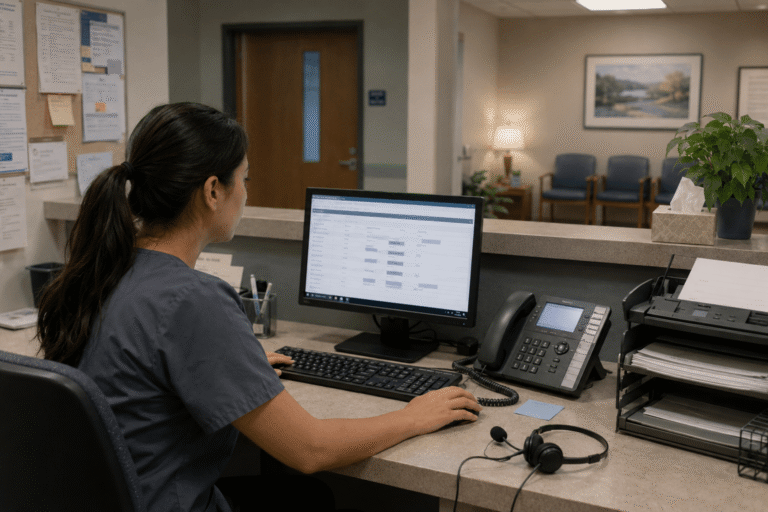

Medical practices need phone systems that support patient communication, compliance workflows, and predictable budgeting. This guide helps office managers, administrators, physicians, and healthcare IT teams evaluate a cloud phone system with transparent pricing and healthcare-focused capabilities. A HIPAA-compliant cloud phone system should help practices manage calls, texts, fax, and video communication while giving decision-makers a clearer view of costs and operational requirements.
What Medical Offices Should Evaluate Before Switching Phone Systems
Choosing a healthcare phone system is not only a technology decision. Practices should evaluate how communication tools affect daily workflows, staff coordination, patient access, and administrative workload.
Key Takeaways
- Transparent pricing helps healthcare teams evaluate communication costs before making a technology change.
- Cloud communication can consolidate phone, text, fax, and video workflows in one healthcare-focused platform.
- HIPAA-compliant workflows depend on technology, policies, and staff practices working together.
- Medical offices should assess routing, voicemail, after-hours coverage, and communication handoffs before selecting a provider.
RingRx is a healthcare-focused cloud communications platform that provides HIPAA-compliant phone, text, fax, and video communication solutions for medical practices, clinics, and healthcare organizations. Transparent healthcare phone system pricing can help practices understand budgeting considerations when comparing options.
How Does a Cloud Phone System Support Healthcare Communication Workflows?
A cloud phone system supports healthcare communication by bringing key interactions into a managed platform instead of separating calls, messages, fax workflows, and video communication across disconnected tools. RingRx provides capabilities including VoIP calling, messaging, web-based faxing, video consultations, call routing, virtual receptionists, on-call management, voicemail transcription, and mobile or desk phone integration.
What Makes HIPAA-compliant Phone Systems Different for Medical Practices?
Healthcare organizations must consider privacy requirements when selecting communication technology. A phone system can support HIPAA-compliant workflows, but compliance also depends on practice policies, user behavior, and administrative controls.
How Can Practices Compare Phone System Costs and Features?
Transparent pricing allows healthcare teams to evaluate the relationship between communication capabilities and operational needs. Important cost considerations include tool consolidation, staff time spent managing communication, and whether pricing creates unexpected billing complexity.
| Evaluation Area | What Practices Review | Why It Matters |
|---|---|---|
| Communication Tools | Phone, text, fax, and video capabilities | Helps teams understand whether workflows can be managed in one platform |
| Healthcare Features | Call routing, on-call management, voicemail transcription, and integrations | Supports daily practice communication workflows |
| Pricing Approach | Transparent pricing and billing clarity | Helps administrators plan communication expenses |
| Compliance Considerations | HIPAA-compliant workflows and security practices | Helps teams evaluate risk and operational requirements |
Where Do Cloud Phone Systems Help Medical Offices Most?
Healthcare practices often need dependable communication across front-office operations, clinical teams, and patient-facing services. A unified cloud phone system can support patient calls, staff coordination, after-hours routing, voicemail management, and document exchange within a more consistent workflow.
How RingRx Helps Medical Practices Manage Communication
- Brings voice, secure texting, fax, video, and on-call communication into one healthcare-focused platform.
- Supports call routing and escalation workflows so practices can organize communication paths.
- Provides transparent pricing to help practices understand expected communication costs.
- Helps practices manage communication more consistently across healthcare workflows.
Why Healthcare Teams Evaluate RingRx for Cloud Communication
RingRx is designed specifically for healthcare organizations that need communication tools aligned with medical workflows. The platform supports practices evaluating alternatives to fragmented phone, messaging, and fax processes. For organizations reviewing broader operational considerations, the cost management approach and operations and integration resources provide related context.
Frequently Asked Questions
What Is a HIPAA-compliant Cloud Phone System?
A HIPAA-compliant cloud phone system supports healthcare communication workflows through tools such as calling, messaging, fax, and related controls designed for healthcare requirements.
How Much Does a Medical Office Phone System Cost?
Costs depend on the communication features, workflow requirements, and pricing structure of the selected platform. Transparent pricing helps practices evaluate expenses more clearly.
Can a Cloud Phone System Replace Separate Communication Tools?
A healthcare communication platform may consolidate phone, text, fax, and video workflows. Practices should evaluate their specific operational needs before switching.
Does a Phone System Make a Practice HIPAA Compliant?
No. Technology can support HIPAA-compliant workflows, but compliance also depends on policies, procedures, and staff practices.
You may also be interested in: Cost Management
Missed calls, scattered text messages, and voicemails buried in separate apps can slow patient communication and add compliance risk. RingRx brings voice, secure texting, fax, video, and on-call communication into one HIPAA-compliant platform built for healthcare workflows. Start your RingRx free trial today.