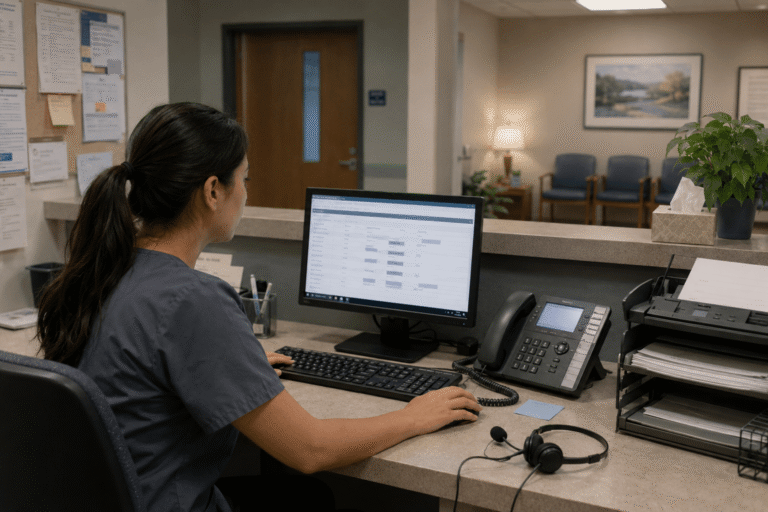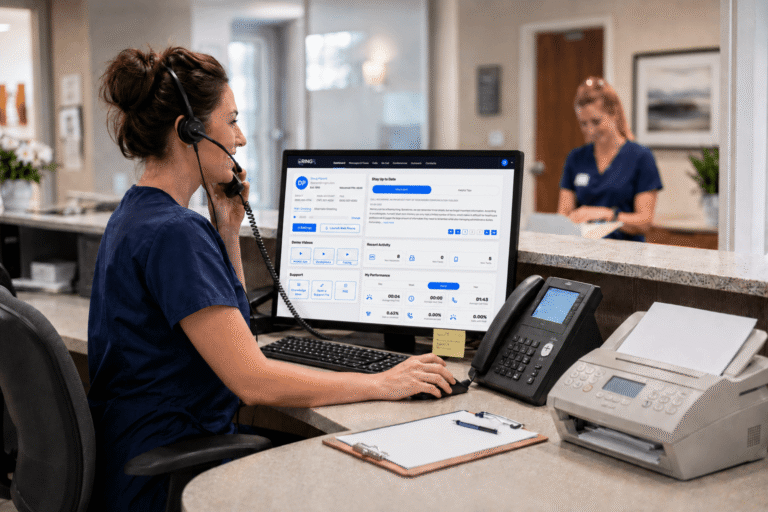

In today’s demanding healthcare environment, medical practices must balance high-quality patient care with increasing administrative pressures, variable call volumes, and strict privacy requirements. Many still depend on legacy phone systems or fragmented tools that create inefficiencies and compliance risks. A significant shift is occurring toward cloud-based platforms that consolidate voice, text, fax, and video into one secure, integrated system. These solutions not only maintain reliable connectivity but also enable practices to expand capacity, respond more effectively to patients, and grow sustainably without added complexity.
RingRx stands out as a healthcare-focused cloud communications platform, delivering fully HIPAA-compliant phone, text, fax, and video capabilities tailored to medical workflows. It empowers providers to connect securely with patients and teams while simplifying front-office tasks and supporting scalable operations.
Missed calls, scattered text messages, voicemails buried in separate apps disrupt patient care and expose practices to compliance risks. Erodes patient trust, longer waits and wasted staff time. RingRx changes that by combining voice, secure texting, fax, video visits, and on-call scheduling into one intuitive, fully HIPAA-compliant platform designed specifically for medical workflows. See how your practice can grow, run more smoothly, and deliver a better experience for every patient. Sign Up for RingRx Free Trial today!
The Limitations of Traditional Communication Systems in Healthcare
For years, medical offices have relied on landlines, standalone fax machines, and basic voicemail. While these once sufficed, they now generate friction in busy practices. Missed calls during peak times, unsecured messaging that jeopardizes patient data, and inefficient after-hours routing contribute to lost opportunities and dissatisfied patients. Staff waste valuable time tracking messages or manually transferring calls instead of supporting care delivery.
Consequently, many practices find growth constrained. A solo practitioner or small clinic may limit new patient intake because the communication infrastructure cannot accommodate higher volumes without extra personnel or compliance challenges. Multi-location groups encounter even greater difficulties coordinating teams and managing schedules across sites.
The Advantages of Cloud-Based Communication for Scalability
Cloud communications eliminate hardware constraints and provide flexible capacity that grows with demand. Traditional on-premises PBX systems often require costly hardware upgrades for expansion, whereas cloud platforms adjust instantly. Adding extensions for new providers or handling sudden increases in inquiries becomes seamless, without system failures or dropped connections.
This adaptability proves particularly beneficial for telemedicine and hybrid care models. Calls route effortlessly between office phones, mobile applications, and remote staff. Intelligent features direct urgent matters to the appropriate clinician regardless of location, while virtual receptionists handle initial patient inquiries efficiently.
Unified Platforms Aligned with Medical Workflows
Healthcare-specific platforms distinguish themselves by mirroring the daily rhythms of clinical practice. They integrate phone calls, secure patient texting, web-based faxing, and video consultations within a single HIPAA-compliant environment, eliminating the need to switch between disparate applications or question data security.
Helpful capabilities such as voicemail transcription convert spoken messages into searchable text, streamlining documentation and chart reviews. Advanced call routing and on-call scheduling maintain smooth coverage during non-business hours. Seamless integration with both mobile and desk phones keeps providers accessible without compromising security or disrupting established processes.
Practices adopting these unified systems often experience measurable improvements: reduced missed calls, quicker patient responses, and enhanced coordination among front desk, nursing, and clinical staff. The platform functions as a natural extension of the care team rather than an administrative hurdle.
Ensuring Reliability, Security, and Compliance
Transitioning to a new communication system understandably prompts concerns about potential disruptions, uptime during high-volume periods, and adherence to rigorous privacy standards. Healthcare-tailored platforms address these directly through built-in redundancy, automatic failover mechanisms, and comprehensive security protocols.
Features including encrypted channels, detailed audit logs, and formal business associate agreements deliver the documentation and protections practices require. Unlike general-purpose tools adapted for medical use, these solutions incorporate specialized safeguards such as robocall blocking and spam filtering to protect sensitive patient interactions. Transparent pricing structures further support confident budgeting as practices expand.
Enhancing Patient Engagement and Reducing Missed Opportunities
Every unanswered call or delayed response can create gaps in care continuity. Modern cloud systems counteract this with virtual receptionists, smart queuing, and intelligent after-hours routing that ensures messages reach the right team member promptly.
Secure patient texting revolutionizes routine communications whether for appointment reminders, lab result notifications, or follow-up check-ins making them convenient and fully compliant. Patients value the accessibility, while practices benefit from improved engagement and higher adherence to care plans. These tools prove especially valuable for behavioral health practices, therapy offices, and smaller medical settings where maintaining connection while preserving privacy is essential, even during remote or telehealth work.
Tailored Benefits Across Practice Sizes
- Solo and small practices: Cost-effective entry points combined with scalable features remove the burden of dedicated IT support.
- Multi-provider clinics: Unified inboxes and shared call handling promote alignment and reduce redundant efforts across the team.
- Specialty and larger groups: Custom on-call routing and integrated fax capabilities alleviate administrative load in high-volume environments.
Overcoming Common Concerns with Proven Value
Practices often hesitate due to migration worries, yet well-designed platforms minimize downtime through number porting assistance and structured onboarding support. The long-term gains fewer missed interactions, optimized workflows, and deeper patient relationships typically surpass initial transition efforts.
When evaluating costs, cloud solutions frequently prove advantageous once maintenance, upgrades, and compliance expenses of older systems are considered. More critically, the capacity to accommodate growth without proportional increases in staffing fosters sustainable development, allowing practices to serve more patients while retaining the personalized attention that cultivates loyalty.
Market Trends Supporting Modern Healthcare Communications
Demand for advanced clinical communication tools continues to strengthen as practices address evolving coordination needs. North America maintains a leading position in adoption, driven by emphasis on technologies that boost workflow efficiency and patient safety.
Industry insights highlight steady expansion in the unified communications-as-a-service sector for healthcare, where cloud platforms are increasingly replacing legacy equipment. This transition assists hospitals, clinics, and home-care providers in implementing secure environments that unify voice, video, messaging, and collaboration features. The shift reflects broader efforts to enhance care delivery amid rising demands on healthcare professionals.
Taking the Next Step Toward Efficient, Secure Communication
Cloud-based systems for telemedicine and practice communication deliver more than updated phone service they create new capacity for forward-looking practices. By merging dependable performance, robust compliance, and workflow intelligence specific to healthcare, these platforms free providers to concentrate on exceptional patient care.
Whether managing a bustling primary care practice, a specialized therapy setting, or an expanding clinic network, selecting the appropriate communication foundation can minimize operational friction, lower risks, and enable growth aligned with your vision. Today’s technology stands ready to meet future challenges while upholding privacy and efficiency standards.
As healthcare evolves toward more integrated and patient-focused models, practices investing in unified cloud solutions position themselves to excel. Reliable connections, protected information, and smooth scalability become the foundation for sustained success one confident interaction at a time.
Frequently Asked Questions
How do cloud-based telemedicine systems help medical practices scale without hiring more staff?
Cloud-based communication platforms offer flexible capacity that adjusts instantly to rising call volumes, eliminating the need for costly hardware upgrades or additional personnel. Features like virtual receptionists, smart call queuing, and intelligent routing handle higher patient loads automatically. This allows practices to serve more patients while maintaining the personalized care that builds long-term loyalty.
Are cloud-based healthcare communication platforms HIPAA-compliant?
Yes healthcare-specific cloud platforms are built with HIPAA compliance at their core, incorporating encrypted channels, detailed audit logs, and formal business associate agreements (BAAs). Unlike general-purpose tools adapted for medical use, these solutions include specialized safeguards such as robocall blocking, spam filtering, and secure patient texting. This ensures sensitive patient interactions remain protected across all communication channels, including voice, fax, video, and text.
What advantages do cloud phone systems offer over traditional landlines for medical offices?
Traditional landlines and on-premises PBX systems create bottlenecks during peak hours, risk compliance gaps with unsecured messaging, and require expensive hardware to expand. Cloud-based systems eliminate these constraints by routing calls seamlessly between office phones, mobile apps, and remote staff making them ideal for hybrid care and telemedicine workflows. Practices typically see measurable improvements including fewer missed calls, faster patient response times, and stronger coordination across front desk, nursing, and clinical teams.
Disclaimer: The above helpful resources content contains personal opinions and experiences. The information provided is for general knowledge and does not constitute professional advice.
You may also be interested in: RingRx: HIPAA Compliant Phone System Designed for Modern
Missed calls, scattered text messages, voicemails buried in separate apps disrupt patient care and expose practices to compliance risks. Erodes patient trust, longer waits and wasted staff time. RingRx changes that by combining voice, secure texting, fax, video visits, and on-call scheduling into one intuitive, fully HIPAA-compliant platform designed specifically for medical workflows. See how your practice can grow, run more smoothly, and deliver a better experience for every patient. Sign Up for RingRx Free Trial today!
Powered by flareAI.co