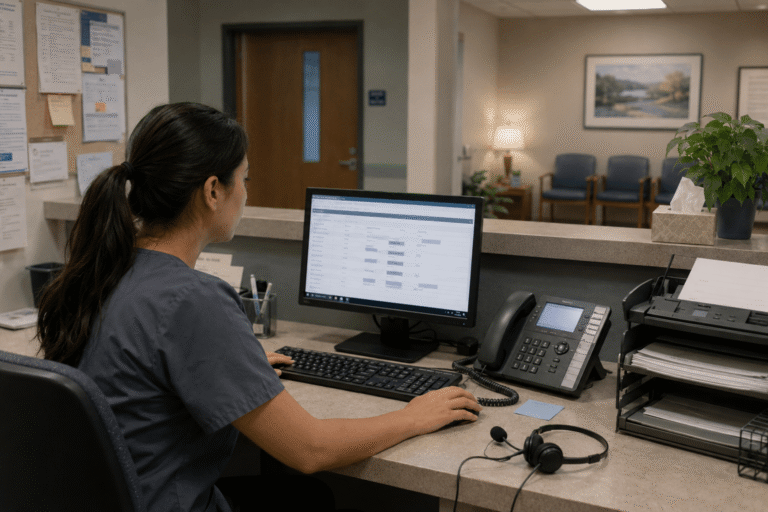

Medical practices rely on timely communication to deliver high-quality patient care and keep operations running smoothly. Yet delays in phone calls, messages, or scheduling handoffs can create bottlenecks that frustrate staff and patients alike. Practices that address these issues often see faster response times, fewer missed connections, and stronger patient engagement. This guide explores proven strategies and practical steps that help teams reduce communication delays while maintaining focus on quality care.
Missed calls, scattered text messages, and voicemails buried in separate apps can slow patient communication and add compliance risk. RingRx brings voice, secure texting, fax, video, and on-call communication into one platform designed to support HIPAA-compliant healthcare communication workflows. Start your RingRx free trial today.
Quick Summary
- Adopt flexible wave scheduling to match real visit lengths and free up unused slots for same-day needs.
- Implement online appointment systems that give patients 24/7 booking access and lower no-show rates.
- Integrate automated reminders and SMS follow-ups to improve attendance and reduce manual follow-up work.
- Use parallel processing with multiple exam rooms to handle check-in and rooming simultaneously.
- Schedule follow-up visits at the end of each appointment to eliminate extra call-backs.
- Build buffer time daily for unexpected demands and open schedules months ahead for recurring visits.
The Real Impact of Communication Delays in Outpatient Practices
Communication delays show up in many ways. Patients wait too long for call backs, staff spend hours on manual scheduling, and rooms sit empty while patients arrive late or fail to show. These issues drain resources and lower satisfaction. In today’s fast-paced healthcare environment, practices that streamline communication achieve smoother daily operations and better overall efficiency.
Widespread Challenges Facing Today’s Medical Practices
Rigid scheduling blocks create friction. Staff must often pause current patients to answer incoming calls or manage new requests. Patients face longer wait times and feel the inconvenience of inflexible systems. The result is frustrated teams and missed opportunities for timely care. Addressing these pain points directly supports better workflow and higher team morale.
Every visit requires coordination between check-in, rooming, and provider availability. Delays at any step compound quickly. Practices that plan ahead see fewer surprises and more predictable patient flow.
Step-by-step Strategies to Cut Communication Delays
Healthcare leaders can tackle delays with focused changes. Here are five evidence-based approaches drawn from successful practice models.
1. Switch to Wave Scheduling for Greater Flexibility
Traditional 15- or 30-minute blocks rarely match real visit times. Wave scheduling rearranges patients into flexible slots so shorter visits free time for longer ones. This method builds in buffer time for same-day demands and lets staff anticipate busy periods. Practices report smoother patient flow and reduced overall delays once they move away from rigid timing.
2. Open the Schedule Months Ahead for Recurring Appointments
Patients who return at fixed intervals benefit from pre-scheduled slots. Opening the calendar 13 to 15 months in advance lets staff book yearly or recurring visits ahead of time. This step eliminates last-minute calls and keeps the schedule full. It also gives patients greater certainty about their next appointment date.
3. Add Follow-up Visits Immediately After Each Appointment
Patients forget to schedule returns and staff waste time calling to confirm. Scheduling the next visit right at the end of the current one removes this step. The practice saves time and patients stay on track for ongoing care. This simple change improves continuity and reduces communication gaps between visits.
4. Use Multiple Exam Rooms for Parallel Processing
One room limits how quickly staff can move patients through check-in and rooming. Two or three rooms allow one physician to see a patient while staff rooms the next. This parallel approach speeds up the entire visit cycle and cuts idle time for patients and staff alike.
5. Integrate Telemedicine and Dedicated Visit Blocks
Combining in-person and virtual visits on the same day or in separate blocks improves time management. Dedicated telemedicine slots keep them from interrupting other work. Practices that plan these visits thoughtfully maintain personal care while expanding access options for patients.
How RingRx Helps
- Route calls so the right person gets the right call and delays drop.
- Support after-hours workflows with clear escalation rules that keep patient needs moving.
- Reduce manual work on voicemail and fax by organizing messages across channels.
- Keep communication structured for better handoffs between staff shifts.
Supporting Evidence From Practice Models
Studies in real medical settings show clear benefits when practices modernize scheduling and communication. One comparative analysis across an ophthalmology practice and a university hospital found that online booking adoption reached 22.8 percent in the practice and 7.2 percent in the hospital. In the practice, unused appointments fell from 22.7 percent to 10.3 percent after implementation, while never-booked slots dropped from 8.6 percent to 1.6 percent. No-show rates were also lower for online-booked appointments compared with phone or in-person bookings. In the hospital, regular consultations and SMS reminders proved most effective at cutting no-shows.
These outcomes illustrate how shifting to digital tools and flexible scheduling aligns availability with patient preferences and reduces forgetfulness-driven delays. Practices that embrace these changes report faster appointment access, fewer unnecessary follow-up calls, and stronger continuity of care.
The online appointment scheduling impact highlights how shifting to digital tools and flexible scheduling aligns availability with patient preferences and reduces forgetfulness-driven delays. Practices that embrace these changes report faster appointment access, fewer unnecessary follow-up calls, and stronger continuity of care because patients are more likely to keep their chosen slots and respond promptly to automated communications. Overall, online scheduling addresses the fundamental source of delays in traditional practices by aligning availability with patient preferences and providing built-in mechanisms for timely updates.
Building a Culture of Efficient Communication
Small changes add up. Encourage staff to use wave scheduling templates, review daily schedules weekly, and celebrate days with fewer delays. Practices that treat communication as a shared responsibility often see higher staff satisfaction and better patient experience. Regular check-ins on workflow performance keep momentum going and highlight areas still needing attention.
Continuous Improvement in Healthcare Communication
Communication delays do not disappear overnight, but steady progress does. By combining flexible scheduling, automated reminders, parallel processing, and thoughtful use of technology, practices can reduce wait times and improve the overall patient journey. The focus stays on practical steps that work today while preparing teams for tomorrow’s demands. When every delay is addressed, care flows more reliably and patients notice the difference.
Healthcare practices that invest in these strategies create environments where both staff and patients thrive. The result is not just fewer delays but a more efficient, patient-centered operation that supports long-term success.
Frequently Asked Questions
How can healthcare practices reduce communication delays with better scheduling systems?
Healthcare practices can reduce communication delays by using flexible scheduling strategies such as wave scheduling, online appointment booking, and advance planning for recurring visits. These approaches improve patient flow, reduce unnecessary calls, and help staff respond faster to patient needs.
What tools help medical practices improve patient communication and reduce missed appointments?
Medical practices can improve patient communication by using automated reminders, SMS follow-ups, telemedicine workflows, and digital scheduling tools. These solutions keep patients informed, reduce no-shows, and decrease the amount of manual follow-up work required from staff.
How does RingRx help healthcare practices streamline communication workflows?
RingRx helps healthcare practices streamline communication by routing calls efficiently, organizing messages across channels, and supporting after-hours workflows with clear escalation processes. These features reduce communication bottlenecks and create smoother handoffs between healthcare teams.
Disclaimer: This article is for general informational purposes and is not legal advice. Practices should review communication, privacy, and compliance policies with their legal, compliance, or administrative teams.
You may also be interested in: Why Secure Patient Communication Matters in Healthcare Practices
Missed calls, scattered text messages, and voicemails buried in separate apps can slow patient communication and add compliance risk. RingRx brings voice, secure texting, fax, video, and on-call communication into one platform designed to support HIPAA-compliant healthcare communication workflows. Start your RingRx free trial today.
Powered by flareAI.co