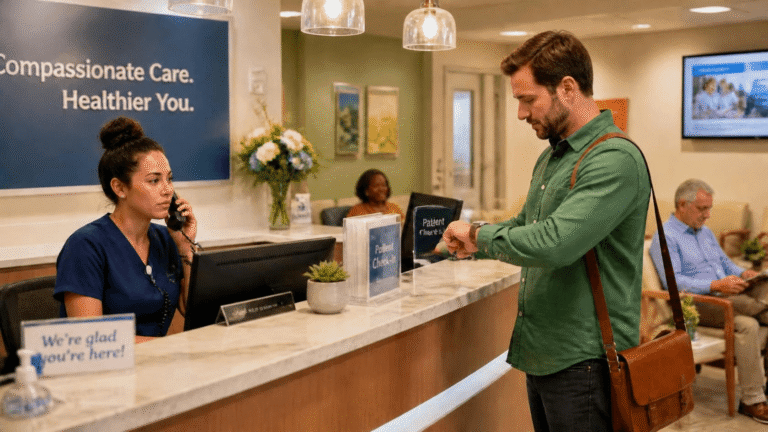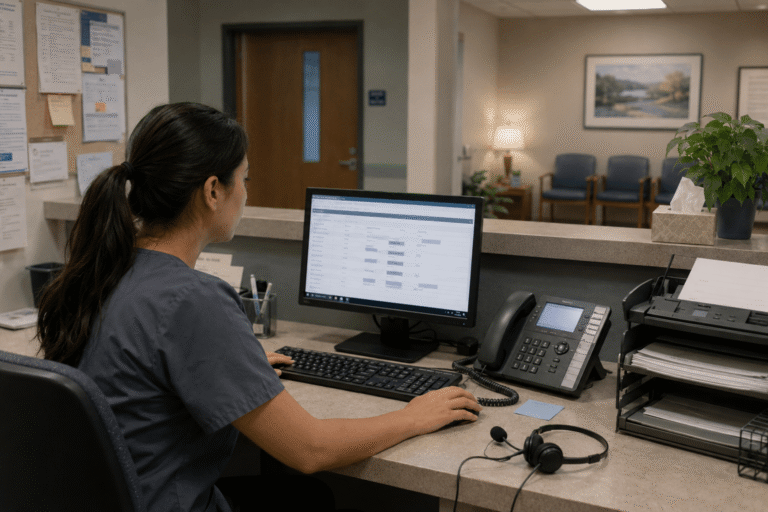

Medical offices rely on phone communication for appointments, questions, follow-up, and daily coordination. When calls are difficult to route or manage, front-office teams face additional administrative pressure and patients may experience delays reaching the practice. This guide explains how healthcare teams can evaluate call handling workflows and use RingRx to support more organized patient communication. A reliable medical office phone system should help practices manage incoming calls, after-hours needs, voicemail, texting, fax, and staff handoffs within healthcare-focused workflows.
Key Takeaways for Improving Medical Office Call Management
- Clear call routing helps direct patient conversations to the appropriate team member or workflow.
- Organized communication channels can help reduce administrative friction caused by scattered messages and disconnected tools.
- After-hours and on-call workflows should include defined escalation paths so staff know how communication is handled.
- Healthcare communication platforms should support HIPAA-compliant workflows while practices maintain appropriate policies and procedures.
- Reviewing call handling processes can help practices identify where missed calls and follow-up gaps occur.
Why Do Missed Calls Create Operational Challenges for Medical Offices?
Missed calls are not only a phone issue; they are a workflow issue. A patient trying to contact a practice may need appointment information, follow-up guidance, or another administrative response. When communication paths are unclear, staff may spend more time checking multiple systems, returning messages, or determining ownership.
How Can Medical Practices Improve Patient Call Handling Workflows?
Practices can improve call management by reviewing how calls enter, move through, and leave the organization. The goal is not simply to answer more calls, but to create a predictable process for patients and staff.
- Map common call types, including scheduling questions, follow-up requests, and administrative inquiries.
- Create routing rules so calls reach the correct person or department.
- Define after-hours coverage and escalation paths for urgent communication needs.
- Review voicemail processes to reduce delays caused by unclear ownership.
- Coordinate phone, text, fax, and video communication workflows where appropriate.
Research into telephone access also shows that response speed influences patient perceptions of access and satisfaction. The findings summarized through call center performance and patient satisfaction emphasize the importance of timely and effective phone interactions.
What Should Practices Look for in a Healthcare Phone System?
A medical office phone system should be evaluated based on how well it supports real operational needs. Generic communication tools may not account for healthcare workflows involving patient privacy, routing requirements, and multiple communication channels.
- Healthcare-focused communication: The platform should support workflows used by medical practices, clinics, and healthcare organizations.
- Call routing flexibility: Practices should be able to organize how calls move between teams and coverage roles.
- Multiple communication methods: Phone, text, fax, and video capabilities can help reduce fragmented communication processes.
- Compliance considerations: Technology should support HIPAA-compliant workflows alongside practice policies and procedures.
How Does RingRx Support More Organized Patient Communication?
RingRx is a healthcare-focused cloud communications platform that provides HIPAA-compliant phone, text, fax, and video communication solutions for medical practices, clinics, and healthcare organizations. The platform is designed around healthcare workflows and includes capabilities such as call routing, on-call management, voicemail transcription, and mobile or desk phone integration. By bringing communication activities into a healthcare-focused platform, practices can evaluate their workflows with fewer disconnected communication points.
How RingRx Helps
- Routes calls so the appropriate person or workflow can handle the communication.
- Supports after-hours and on-call communication processes with defined handling options.
- Helps organize phone, text, fax, and video communication in one healthcare-focused platform.
- Provides transparent pricing with no hidden fees or billing surprises.
Where Can Medical Offices Apply Better Call Management?
Improved call workflows can support many healthcare environments, including private practices, clinics, behavioral health organizations, and other healthcare teams managing patient communication.
- Front desks: Clear routing can help staff manage incoming patient conversations more consistently.
- Specialty practices: Defined workflows can help teams coordinate follow-up and administrative requests.
- Organizations with on-call coverage: Escalation paths can help clarify responsibility outside normal office hours.
- Growing practices: Centralized communication tools can support changing operational needs.
Why Healthcare Practices Evaluate Dedicated Communication Platforms
Healthcare teams often need communication tools that reflect the realities of medical operations. RingRx focuses on healthcare communication workflows rather than general business calling needs, helping practices evaluate phone, messaging, fax, and video requirements together. Practices comparing communication options should consider implementation needs, workflow fit, staff adoption, and how well the platform supports existing operational processes.
Frequently Asked Questions
How Can Medical Offices Reduce Missed Calls?
Medical offices can reduce missed calls by reviewing routing rules, after-hours processes, voicemail handling, and staff responsibilities. A healthcare communication platform can support more organized call workflows.
What Features Should a Medical Office Phone System Include?
Important features may include call routing, voicemail management, on-call workflows, texting, fax, video communication, and support for HIPAA-compliant workflows.
Is RingRx a HIPAA-compliant Phone System for Healthcare?
RingRx provides HIPAA-compliant phone, text, fax, and video communication solutions designed to support healthcare communication workflows. Practices should maintain their own compliance policies and procedures.
How Does Call Routing Help Healthcare Practices?
Call routing helps organize where incoming calls go based on practice workflows. This can make ownership clearer and support more consistent communication handling.
Can Healthcare Practices Use One Platform for Phone and Fax Communication?
RingRx supports phone, text, fax, and video communication capabilities within a healthcare-focused cloud communications platform. Explore healthcare communication workflow resources at operations and integration guidance and review communication cost considerations through cost management resources. You may also be interested in: Operations & Integration
Missed calls, scattered text messages, and voicemails buried in separate apps can slow patient communication and add compliance risk. RingRx brings voice, secure texting, fax, video, and on-call communication into one HIPAA-compliant platform built for healthcare workflows. Start your RingRx free trial today.