
Quick Listen:
In the fast-paced world of modern medicine, where every second can shape a patient’s recovery, reliable communication has become one of the most vital tools in healthcare. Telecommunication technologies ranging from secure messaging platforms to integrated VoIP systems and clinical collaboration tools are quietly reshaping how care teams interact, coordinate treatments, and deliver timely support. The days of relying on outdated pagers, handwritten notes, and constant phone tag are giving way to seamless, protected networks that keep every member of the care ecosystem aligned and responsive.
Picture a typical day in a busy hospital or clinic: a nurse seeking an urgent specialist consult, a physician reviewing critical lab results while on rounds, or a team updating family members without unnecessary delays. These everyday moments directly influence patient safety and experience. Advanced telecommunication solutions close those gaps, converting potential bottlenecks into efficient, coordinated actions that put patients first. Here are five significant ways these technologies are strengthening patient care.
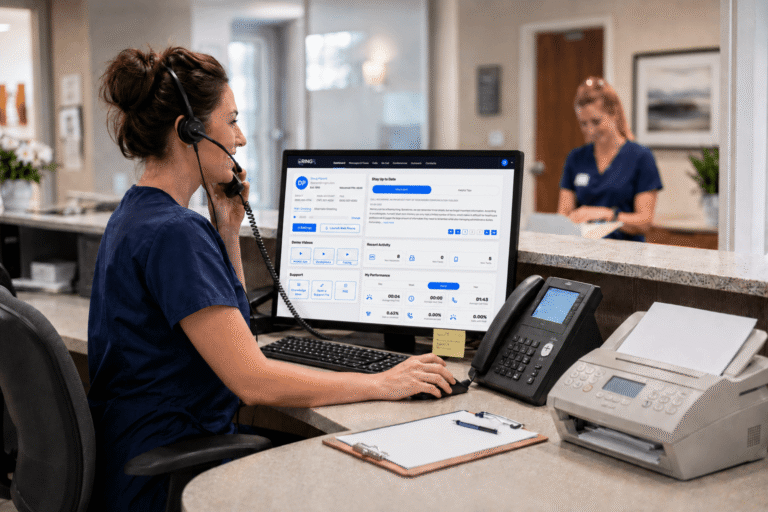
Missed calls, scattered text messages, voicemails buried in separate apps disrupt patient care and expose practices to compliance risks. Erodes patient trust, longer waits and wasted staff time. RingRx changes that by combining voice, secure texting, fax, video visits, and on-call scheduling into one intuitive, fully HIPAA-compliant platform designed specifically for medical workflows. See how your practice can grow, run more smoothly, and deliver a better experience for every patient. Sign Up for RingRx Free Trial today!
Faster Coordination Among Care Teams
Strong teamwork forms the foundation of high-quality healthcare, yet fragmented communication has long created hidden inefficiencies. Clinical communication and collaboration platforms now enable doctors, nurses, specialists, and support staff to exchange updates instantly through secure, dedicated channels. Rather than waiting for a page to be returned or searching for the right colleague, teams can share vital information in real time.
This immediacy proves especially critical during shift changes, emergency situations, or complex cases spanning multiple departments. Shorter response times lead to faster interventions, fewer oversights, and smoother transitions between providers. Care teams spend less time tracking down details and more time focused directly on the patient. The outcome is a more agile care environment where critical decisions occur precisely when needed.
Secure and Compliant Sharing of Patient Information
Protecting patient privacy is essential, even as the demand for rapid information sharing continues to grow. HIPAA-compliant messaging software and specialized telecommunication tools offer encrypted channels built specifically for healthcare workflows. Providers can discuss cases, transmit lab results, or coordinate treatments confidently, without the risks associated with standard email, personal texts, or unsecured applications.
This market sits at the intersection of healthcare IT, cybersecurity, and patient engagement, serving as a key enabler for secure clinical communication across hospitals, clinics, and care networks. Solutions integrate smoothly with electronic health records, ensuring the right information reaches the right people at the right moment while upholding full regulatory compliance. Patients gain from reduced errors linked to miscommunication and increased trust that their sensitive data remains safeguarded.
The global clinical communication and collaboration market underscores this priority, with North America holding the largest share and strong momentum in other regions driven by the need for seamless yet protected exchanges among professionals.
Enhanced Patient Engagement and Accessibility
Telecommunication reaches beyond internal care teams to connect directly with patients. Secure texting, telehealth video consultations, and simplified appointment reminders allow individuals to maintain consistent contact with their providers through convenient channels they already use daily.
Long wait times on hold or missed callbacks become far less common. Patients can ask questions, receive clear follow-up guidance, or book visits more easily. This accessibility proves particularly helpful for people managing chronic conditions, living in rural or underserved areas, or balancing demanding schedules. Timely responses support better medication adherence, lower missed appointments, and encourage patients to play a more active role in their health. When communication feels approachable instead of bureaucratic, satisfaction improves and minor issues can be resolved before they escalate.
Improved Workflow Efficiency and Reduced Administrative Burden
Healthcare professionals juggle intense demands, with documentation, coordination, and administrative duties often competing for precious time. Modern telecommunication systems bring voice, text, fax, and video capabilities together into unified platforms, removing the need to juggle multiple separate tools or devices.
Intelligent call routing, flexible on-call scheduling, and full mobile integration let providers manage communications from virtually anywhere at the bedside, in the office, or while traveling. Greater efficiency directly benefits patient care: less time spent wrestling with outdated systems means more opportunities for meaningful conversations, detailed assessments, and thoughtful treatment adjustments. Staff often experience smoother daily operations and reduced frustration, fostering a calmer atmosphere that supports better focus on clinical priorities.
Better Support for Remote and Hybrid Care Models
The expansion of telehealth and remote monitoring has dramatically broadened healthcare’s reach beyond traditional facility walls. Robust telecommunication infrastructure makes these models both practical and effective, supporting virtual consultations, real-time sharing of data from home devices or wearables, and ongoing follow-up without requiring every interaction to happen in person.
Secure platforms maintain the same high standards of privacy and professionalism expected in face-to-face care. For patients facing mobility limitations, recovering at home, or living in communities with limited specialist availability, this connectivity can be life-changing. Providers receive clearer insights into patient progress between visits, enabling earlier adjustments to care plans and helping prevent complications from developing unchecked.
Real-World Impact and Practical Considerations
While the clinical communication sector continues to expand steadily, its greatest value appears in everyday practice. Secure messaging solutions help hospitals and clinics protect sensitive data while streamlining coordination and workflow. Specialized healthcare telecommunication systems deliver tailored features that support everything from routine calls to intricate multidisciplinary collaborations.
Successful adoption typically depends on selecting platforms designed explicitly for healthcare environments, emphasizing ease of use, strong integration with existing systems, and consistent compliance. Thoughtful training and phased implementation further support smooth transitions, allowing teams to realize improvements in speed, accuracy, and overall satisfaction with minimal disruption to patient care.
Addressing Common Challenges
Moving to new communication systems naturally involves some challenges, including concerns about data security, staff adoption rates, and compatibility with current electronic records. Forward-thinking platforms tackle these issues by incorporating robust encryption, intuitive interfaces, and seamless integration capabilities from the outset. Pilot programs and gradual rollouts often help teams adjust comfortably while keeping patient care uninterrupted.
Looking Ahead: Communication as a Cornerstone of Better Care
As healthcare moves toward more connected and patient-centered approaches, reliable telecommunication will continue serving as essential infrastructure. Technologies that once felt like optional enhancements have become fundamental to delivering timely, coordinated, and compassionate care.
From accelerating responses in urgent situations to making it easier for patients to stay engaged, these tools enhance nearly every part of the healthcare journey. Providers who integrate them thoughtfully are not merely updating technology they are strengthening relationships with patients and colleagues while achieving clearer, more measurable improvements in outcomes.
In a field where human connection remains central to healing, advanced communication systems ensure that connection happens consistently, securely, and exactly when it matters most. The ongoing evolution of patient care will depend not only on innovative treatments but also on making certain that critical information flows freely and reliably to the right hands without delay.
Frequently Asked Questions
How does telecommunication technology improve patient safety in hospitals?
Telecommunication tools like secure messaging platforms and integrated VoIP systems enable care teams to share critical information in real time, reducing delays during emergencies, shift changes, and complex multi-department cases. Faster coordination means quicker interventions and fewer oversights. By replacing outdated pagers and fragmented communication methods, these systems help prevent errors linked to miscommunication and keep every provider aligned on patient needs.
What is HIPAA-compliant messaging, and why is it important in healthcare?
HIPAA-compliant messaging software uses encrypted channels specifically designed for healthcare workflows, allowing providers to securely share lab results, discuss cases, and coordinate treatments without risking patient privacy. Unlike standard email or personal texting apps, these platforms meet strict regulatory requirements while integrating with electronic health records. This protects sensitive patient data, reduces compliance risks, and builds greater trust between patients and their care teams.
How does telehealth and remote communication benefit patients in rural or underserved areas?
Robust telecommunication infrastructure makes virtual consultations, remote monitoring, and real-time data sharing from home devices practical and effective, extending quality care well beyond traditional facility walls. For patients with mobility limitations, chronic conditions, or limited local access to specialists, this connectivity can be genuinely life-changing. Providers can monitor patient progress between visits, enabling earlier adjustments to care plans and helping prevent complications before they escalate.
Disclaimer: The above helpful resources content contains personal opinions and experiences. The information provided is for general knowledge and does not constitute professional advice.
You may also be interested in: Texting vs. Calling: What Patients Really Want in 2025 – RingRx
Missed calls, scattered text messages, voicemails buried in separate apps disrupt patient care and expose practices to compliance risks. Erodes patient trust, longer waits and wasted staff time. RingRx changes that by combining voice, secure texting, fax, video visits, and on-call scheduling into one intuitive, fully HIPAA-compliant platform designed specifically for medical workflows. See how your practice can grow, run more smoothly, and deliver a better experience for every patient. Sign Up for RingRx Free Trial today!
Powered by flareAI.co