
Missed appointments quietly undermine healthcare delivery in clinics everywhere. Empty exam rooms translate to lost revenue, overburdened schedules, and most importantly patients who miss timely care. While forgetfulness, transportation barriers, and competing priorities explain many no-shows, a growing body of evidence shows that well-designed automated reminder systems can meaningfully reduce the problem without requiring massive new resources.
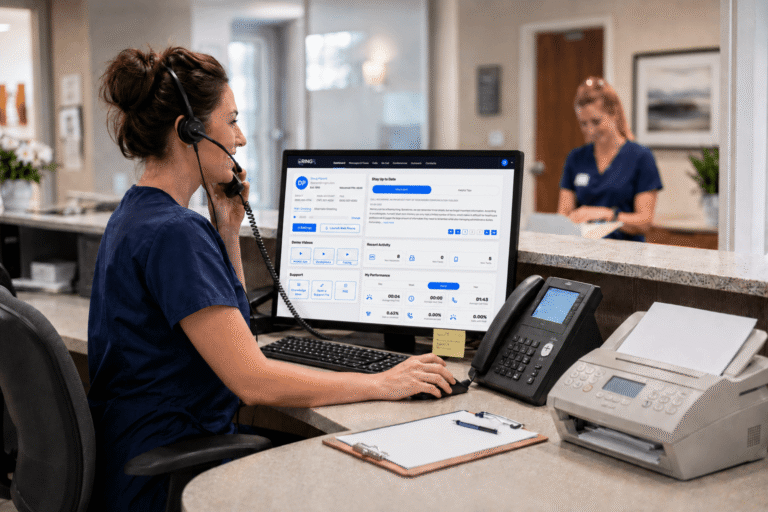
Missed calls, scattered text messages, voicemails buried in separate apps disrupt patient care and expose practices to compliance risks. Erodes patient trust, longer waits and wasted staff time. RingRx changes that by combining voice, secure texting, fax, video visits, and on-call scheduling into one intuitive, fully HIPAA-compliant platform designed specifically for medical workflows. See how your practice can grow, run more smoothly, and deliver a better experience for every patient. Sign Up for RingRx Free Trial today!
The Persistent Challenge of No-Show Rates
In safety-net health systems especially, no-show rates frequently exceed 30 percent for primary care visits. These gaps disrupt continuity of care, delay diagnosis and treatment, and strain already stretched staff and budgets. Conventional automated text or voice reminders help somewhat, yet many high-risk patients still slip through the cracks. The central question clinics face today is whether smarter, more targeted reminder strategies can close that remaining gap equitably and cost-effectively.
Proven Impact of Reminder Interventions
Multiple rigorous reviews confirm that reminders work. A synthesis of randomized trials conducted in hospital outpatient departments found that sending SMS messages or making telephone calls before appointments increases attendance by about 11 percent overall (risk ratio 1.11, 95% CI 1.05–1.19). Both channels proved effective, though the best results often emerged when reminders were tailored to local patient populations and delivery contexts.
The consistency across settings stands out. Whether reminders arrive via text, automated call, or live staff outreach, they interrupt the cycle of forgotten appointments. Patients frequently report that the simple prompt jogs their memory or prompts them to rearrange conflicting obligations small nudges that produce outsized returns for busy clinics.
Targeted Outreach in Safety-Net Settings
Researchers recently tested whether adding live telephone outreach to standard automated reminders could further lower no-show rates in a resource-constrained environment. Using a predictive algorithm, they identified appointments with elevated risk and randomized high-risk patients to receive either usual automated reminders alone or the same reminders plus a personalized call from scheduling staff.
The intervention group showed a clear reduction: no-show rates fell from 36.2 percent to 32.8 percent among flagged high-risk appointments. Cancellation rates remained similar, meaning the improvement stemmed primarily from patients who actually arrived for their visits. Importantly, the strategy narrowed rather than widened existing racial and ethnic disparities. Among Black patients the group with the highest baseline no-show rate the proportion dropped from 42.1 percent to 35.8 percent, delivering a relative reduction of roughly 15 percent while rates for other groups remained stable or improved modestly.
Reminders in Hospital Outpatient Clinics
Hospital-based outpatient departments face similar pressures but operate at larger scale. Systematic evidence from randomized controlled trials in these settings reinforces that SMS and telephone reminders reliably improve attendance. The pooled benefit holds despite considerable variation in patient demographics and clinic workflows, underscoring the value of context-sensitive implementation. Hospitals that invest in reminder infrastructure frequently report steadier daily volumes and more efficient use of specialist time.
The Practical Advantages of Modern Scheduling Software
Contemporary appointment scheduling platforms have transformed how reminders reach patients. Automatic text messages, two-way confirmation links, calendar integration, and easy rescheduling options allow individuals to manage appointments with minimal friction. Clinics increasingly adopt these tools precisely because they help fill slots that would otherwise go unused. The global market for such software passed USD 546 million in 2025, reflecting strong demand for features that directly address no-show prevention.
Compared with labor-intensive manual calling campaigns, automation delivers reach at a fraction of the cost. One system can contact thousands of patients daily without additional staffing. Many platforms now support interactive replies patients confirm, cancel, or reschedule directly turning passive notifications into active engagement and giving clinics far greater schedule predictability.
Virtual Visits and the Attendance Advantage
The expansion of telehealth introduced another dimension. A large meta-analysis comparing virtual and in-person care models across 45 retrospective cohort studies found that virtual appointments carried substantially lower non-attendance risk (pooled odds ratio 0.61). Removing travel time and distance appears to be the dominant factor, especially for patients in rural areas, those with mobility limitations, or individuals juggling demanding work schedules.
Variability across studies reminds us that virtual care is not universally superior; some patients still prefer in-person encounters for complex examinations or when trust in the provider relationship is still developing. Hybrid models that combine automated reminders with flexible in-person and virtual options often produce the most robust attendance gains.
Realistic Limitations and Implementation Lessons
Reminder systems are powerful but not infallible. Delivery failures occur wrong numbers, spam filters, poor cell coverage and some patients ignore messages even when received. Digital literacy gaps, language barriers, and reminder fatigue can erode effectiveness over time. Evidence also suggests that live human outreach occasionally outperforms fully automated approaches, particularly when empathy and nuanced conversation help resolve underlying access obstacles.
Successful programs tend to share common traits: thoughtful timing (24–72 hours before the visit), multi-channel delivery, clear language, and easy opt-out or rescheduling pathways. Clinics that continuously monitor response rates and iterate on their protocols usually achieve the strongest, most sustainable reductions in no-shows.
Looking Ahead: Sustainable Progress
No-show rates are unlikely to disappear entirely, yet they need not remain an intractable problem. Automated reminder systems especially when intelligently combined with predictive risk stratification and selective live outreach offer clinics a practical, evidence-backed pathway to higher attendance, greater equity, and better care continuity. The data are consistent, the tools are mature, and the return on investment is clear. In an era when every completed visit matters for both patient outcomes and institutional viability, these quiet digital interventions continue to demonstrate surprising strength.
Frequently Asked Questions
How effective are automated appointment reminder systems at reducing no-show rates in clinics?
Automated appointment reminders including SMS and telephone calls have been shown to increase patient attendance by approximately 11 percent overall, based on randomized trial data from hospital outpatient departments. The improvement is consistent across diverse patient populations and clinic workflows. When automated reminders are combined with targeted live outreach for high-risk patients, no-show rates can drop even further, falling from around 36% to under 33% in safety-net settings.
What types of appointment reminder systems work best for reducing patient no-shows?
Both SMS text messages and telephone reminders have proven effective, though results are strongest when reminders are tailored to the local patient population and delivered 24–72 hours before the appointment. Modern scheduling software enhances this further by offering two-way confirmation, easy rescheduling links, and calendar integration turning passive notifications into active patient engagement. For the highest-risk patients, supplementing automated reminders with a personalized call from scheduling staff can deliver an additional meaningful reduction in missed appointments.
Can automated reminders help reduce healthcare disparities in appointment attendance?
Yes targeted reminder strategies have shown promise in narrowing racial and ethnic gaps in no-show rates rather than widening them. In one study, Black patients (who had the highest baseline no-show rate of 42.1%) saw their rate drop to 35.8% a relative reduction of roughly 15% when personalized outreach was added to standard automated reminders. This suggests that well-designed reminder programs, especially those using predictive risk stratification to identify high-risk appointments, can improve both overall attendance and health equity simultaneously.
Disclaimer: The above helpful resources content contains personal opinions and experiences. The information provided is for general knowledge and does not constitute professional advice.
You may also be interested in: Patient Communication Excellence for Healthcare Practices – RingRx
Missed calls, scattered text messages, voicemails buried in separate apps disrupt patient care and expose practices to compliance risks. Erodes patient trust, longer waits and wasted staff time. RingRx changes that by combining voice, secure texting, fax, video visits, and on-call scheduling into one intuitive, fully HIPAA-compliant platform designed specifically for medical workflows. See how your practice can grow, run more smoothly, and deliver a better experience for every patient. Sign Up for RingRx Free Trial today!
Powered by flareAI.co