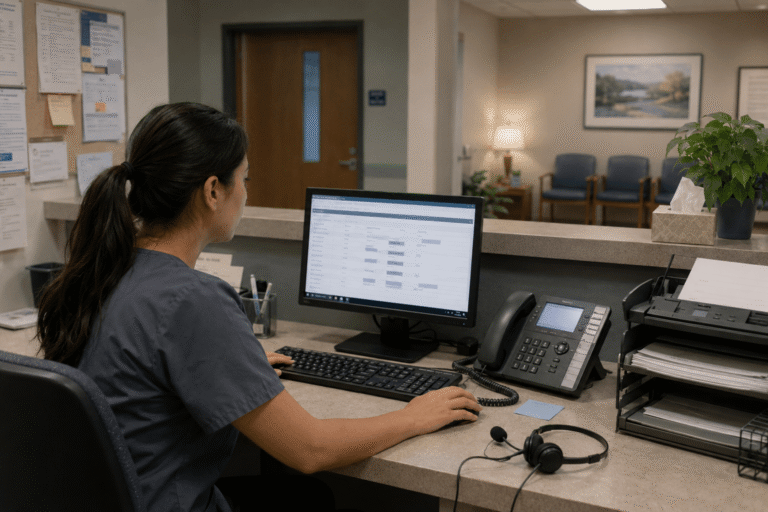

Multi-site healthcare organizations still need a reliable way to route calls, messages, and follow-up without creating more compliance risk or handoff gaps. HIPAA-compliant call routing matters because it helps teams move communication more clearly across locations while keeping patient information inside a more controlled workflow.
Missed calls, scattered text messages, and voicemails buried in separate apps disrupt patient care and expose practices to compliance risks. They also erode patient trust, create longer waits, and waste staff time. RingRx supports HIPAA-compliant phone, text, fax, video, and on-call workflows in one platform for healthcare teams. See how RingRx can support healthcare communication in one place. Sign up for a free RingRx trial today.
The Real-World Pressures Facing Multi-Site Providers
Healthcare organizations with multiple locations have to move communication across sites without losing speed, context, or privacy. Staff at one location may need to reach specialists, front-desk teams, or on-call coverage at another location, and that gets harder when the system relies on manual transfers or disconnected tools. Those gaps do more than slow operations. They make follow-up harder to manage, increase the chance of misrouted communication, and add more friction for teams already trying to coordinate across distance. In multi-site care, call routing matters because the workflow must remain clear even when people are not in the same place.
Why Standard Tools No Longer Cut It
Many organizations still rely on consumer apps or older PBX systems for daily calls. That creates fragmented workflows that require constant manual intervention, especially when communication spans multiple locations. A call may be transferred from one site to another without enough context, or a message may end up in a separate app that the next team never sees in time. That kind of setup creates both workflow and compliance risk. Multi-site organizations need tools that are easier to manage across regulated environments, not a patchwork of separate systems that leave too much room for missed handoffs.
A Platform Built for Healthcare Workflows
The strongest platforms treat call routing as part of the daily communication workflow rather than as a stand-alone technical feature. Routing rules can direct urgent calls to the right on-call coverage path across sites while keeping communication clearer for staff. What sets the better options apart is whether they fit real clinical workflows. When routing is easier to manage across locations, teams spend less time sorting out handoffs and more time keeping communication organized.
Security That Meets HIPAA Standards
HIPAA-compliant call routing depends on more than moving a call from one extension to another. Multi-site organizations need secure handling, access controls, and audit visibility that support patient communication without leaving staff to rely on workarounds. That matters even more when teams are spread across locations. A healthcare-focused system can help keep routing, messaging, and related communication within a single protected workflow. That makes privacy easier to manage as staff coordinate care across sites.
Reliability Across Every Channel
One common concern is whether a single platform can handle calls, messages, faxing, and routing consistently across multiple sites. For healthcare organizations, reliability matters because communication must flow clearly, even when volume is high or teams are spread across locations. Useful capabilities can include:
- Routing that keeps calls moving to the right site or coverage path
- Communication history that preserves context
- Cross-site visibility into who is handling what
- Systems that reduce dropped handoffs between channels
For most organizations, the practical value is not just uptime. It is communication that is easier to track, route, and manage across the full workflow.
Making the Switch Easier to Manage
Switching systems can feel disruptive, especially when communication is already difficult to manage across multiple sites. Teams usually worry about rollout, training, and whether the new routing logic will create more confusion before it helps. A better platform should make that transition easier to manage through clear setup, phased rollout, and support that fits existing workflows. For most organizations, the key question is not whether the platform sounds more advanced. It is whether staff can use it without adding more friction to the day.
Clear Value Compared with Cheaper Alternatives
Lower-cost tools can look appealing at first, especially when organizations are trying to control spending across multiple sites. The problem is that cheaper tools often create more work later through disconnected workflows, unclear pricing, or communication gaps that staff still have to patch manually. For many organizations, the practical value of a healthcare-focused platform is simpler communication management. Clearer routing, fewer handoff gaps, and more predictable pricing can make the system easier to justify than a lower-cost option that adds friction back into the day.
Bringing It All Together for Better Patient Experiences
At its core, effective call routing is about reducing friction so care teams can keep communication moving. A patient calling from a rural satellite clinic should reach the right specialist without unnecessary delay, and family updates should be easier to route securely across sites. These improvements matter because better coordination is easier for patients and staff to feel. For multi-site organizations, the practical advantage is clearer communication, tighter follow-up, and fewer gaps caused by distance or disconnected systems.
Looking Ahead
As healthcare organizations expand across locations and care settings, the need for clear, secure communication will grow, too. HIPAA-compliant call routing matters because it helps teams move calls, messages, and follow-ups more clearly across the same workflow. For multi-site providers, the practical question is whether the platform makes coordination easier to manage without adding more complexity. When it does, staff spend less time chasing communication gaps and more time keeping patient care moving.
Frequently Asked Questions
What is HIPAA-compliant call routing, and why do multi-site healthcare organizations need it?
HIPAA-compliant call routing is a secure communication system that directs patient calls, messages, and faxes through encrypted channels while maintaining strict access controls and full audit trails. Multi-site healthcare organizations need it because traditional phone systems and consumer-grade apps create fragmented workflows, compliance risks, and communication gaps between locations. Without it, urgent calls can reach the wrong desk, sensitive patient information can travel through unsecured channels, and care coordination suffers, directly impacting patient outcomes and regulatory standing.
How does HIPAA-compliant messaging software protect patient data across multiple clinic locations?
HIPAA-compliant messaging platforms help protect patient data by encrypting communication channels, including voice calls, secure texts, and digital faxes, while enforcing role-based access controls so only authorized staff can view sensitive information. Interactions are logged with audit visibility, helping organizations document compliance across locations. For multi-site teams, the practical value is more secure communication without relying on disconnected tools.
What should healthcare organizations look for when switching to a HIPAA-compliant call routing platform?
Healthcare organizations should prioritize platforms built specifically for clinical workflows, with support for call routing, secure texting, digital fax, and on-call scheduling within a single unified system. Look for solutions that offer phased onboarding, implementation support, and transparent pricing to avoid hidden compliance gaps or unexpected costs. The best platforms fit existing staff workflows well enough that the transition is easier to manage.
Disclaimer: The above helpful resources content contains personal opinions and experiences. The information provided is for general knowledge and does not constitute professional advice.
You may also be interested in: Failed a HIPAA Audit? 7 Steps for Practices – RingRx
Missed calls, scattered text messages, and voicemails buried in separate apps disrupt patient care and expose practices to compliance risks. They also erode patient trust, create longer waits, and waste staff time. RingRx supports HIPAA-compliant phone, text, fax, video, and on-call workflows in one platform for healthcare teams. See how RingRx can support healthcare communication in one place. Sign up for a free RingRx trial today.
Powered by flareAI.co