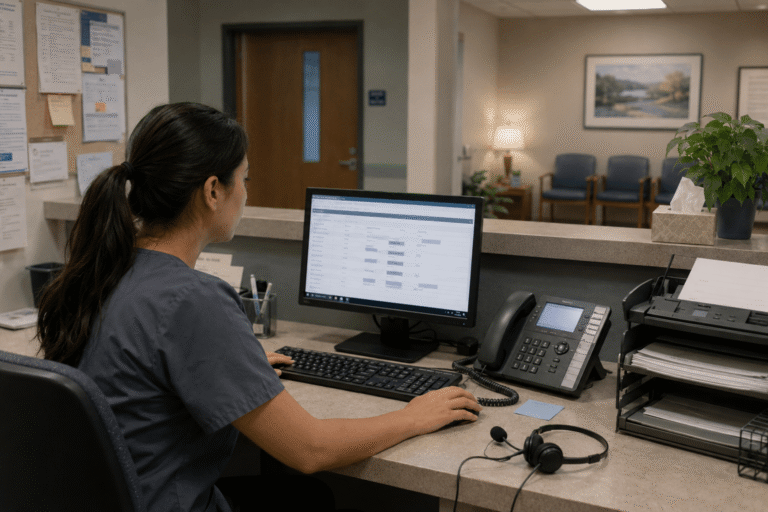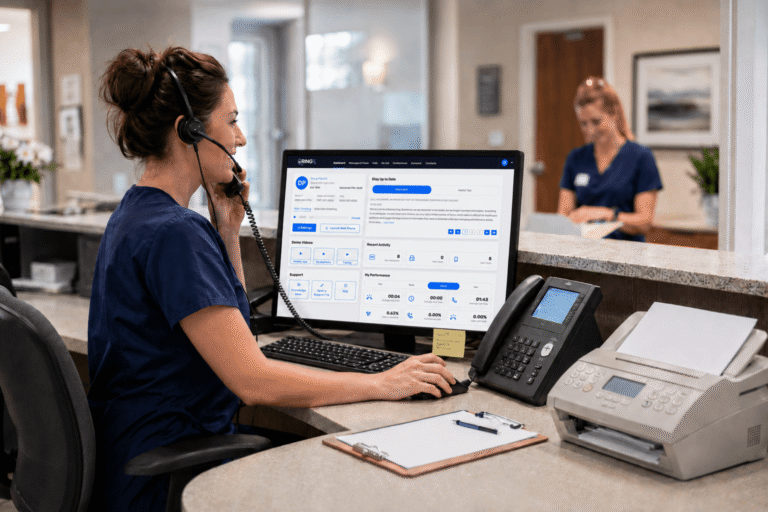

In busy medical offices across the United States, every missed call, unanswered text, or unclear message can quietly slow down operations. Patients expect quick responses, yet front-desk teams often spend hours chasing confirmations, rescheduling, or following up. The result is delayed care, lower no-show rates, and staff who spend more time on administrative tasks than on meaningful patient interactions.
Effective patient communication changes that reality. When practices shift from reactive phone calls to thoughtful, two-way messaging and automated reminders, workflows become smoother, revenue holds steady, and patient experience improves. This approach does not replace in-person care it strengthens it by turning communication into a reliable operational tool.
Missed calls, scattered text messages, and voicemails buried in separate apps can slow patient communication and add compliance risk. RingRx brings voice, secure texting, fax, video, and on-call communication into one platform designed to support HIPAA-compliant healthcare communication workflows. Start your RingRx free trial today.
The Communication Shift That Has Reshaped Medical Office Operations
Post-pandemic, patient messages sent through practice portals have grown dramatically. One analysis found that messages from patients rose from 0.99 per patient per year in 2020 to 2.5 in 2025. At the same time, office visits increased by 17 percent. This pattern shows that digital messaging is expanding care between visits rather than replacing them.
Clinicians and staff are also sending more messages up 24 percent in the same period. The growth reflects a structural change in how patients and providers connect. Practices that recognize this shift can reduce phone queues, free staff time, and create more predictable daily schedules.
According to a study published in JAMA, patient messages to providers have skyrocketed since the COVID-19 pandemic. Between 2020 and 2025, messages from patients sent through patient portals increased 153%. Office visits rose 17% during the same period, suggesting that messaging is expanding between-visit care instead of substituting for in-person services. Patient-written portal messages rose from 0.99 messages per patient per year in 2020 to 2.5 messages in 2025. Messaging was most common among women, patients between the ages of 40 and 64, and those who lived in neighborhoods with limited social vulnerabilities.
Clinicians are writing more messages, too. During the same period, messages authored by clinicians or other staffers rose from 4.59 to 5.7, an increase of 24%. The COVID-19 pandemic marked an early peak in telephone encounters and clinician- and staff-authored messages that only partially normalized, whereas patient-authored messaging increased gradually, indicating a structural shift in communication rather than a transient disruption. The growing number of patient messages could create new challenges for providers, who already worry that the amount of administrative work and other EHR tasks distract from patient care and extend into off-hours.
Some research shows that a high volume of messages contributes to exhaustion and burnout among physicians. Messaging could be an area where artificial intelligence tools could help, technology companies and advocates say. Generative AI products have been adopted for a range of healthcare tasks, including drafting clinical documentation and messages to patients, as well as triaging messages that might need immediate responses. This trend directly illustrates how patient communication supports everyday medical office operations by creating a more responsive, flexible system that reduces reliance on phone calls and in-person visits for routine inquiries.
Practices that implement efficient digital communication channels can streamline workflows, improve scheduling accuracy, lower no-show rates, and allow staff and clinicians to focus on higher-value patient interactions. The shift toward asynchronous messaging also addresses health equity by providing accessible care for patients who prefer digital channels or face barriers to in-person visits. Overall, embracing these communication improvements helps medical offices operate more efficiently while maintaining high standards of patient engagement and satisfaction.
Why Two-way Automated Reminders Deliver Measurable Results
Many practices still rely on one-way reminder calls that patients cannot easily answer. Two-way automated reminders change the equation. Patients receive a text 48 to 72 hours before their appointment and can confirm, cancel, or reschedule directly in the message thread.
This simple design eliminates guesswork. Cancellations arrive days earlier, giving teams time to fill open slots instead of discovering gaps the morning of. Front-desk staff reclaim several hours each week previously spent on outbound reminder calls. Practices that implement the system often see cancellations come in 28 to 48 hours sooner.
Research at an outpatient mental health clinic showed that 55.4 percent of patients preferred SMS for reminders, compared with just 7.6 percent who chose phone calls. Another large analysis at Denver Health found that SMS reminders improved attendance rates and reduced operational strain, with more than 80 percent of eligible patients opting into the text-based program.
Two-way automated reminders can cut no-shows and recover lost revenue. Missed appointments continue to drain practice revenue and burden front desk staff, yet many practices remain reliant on reminder systems patients cannot easily act on. One patient engagement expert explains that persistent no-show rates represent a communication design failure, not a patient compliance issue. The model replaces one-way reminders with two-way automated messaging, typically via SMS or RCS. Patients receive a text 48 to 72 hours before their appointment and can confirm, cancel or reschedule directly in that same message thread.
For patients with limited English proficiency, the interaction can take place in their preferred language. Cancellation data feeds back to the schedule automatically, without staff logging confirmations or chasing callbacks. The difference between one-way and two-way communication is like the difference between hoping and knowing. If a patient cancels, the practice finds out one to two days in advance instead of the morning of.
That is what creates the opportunity to recover the slot. Patient preference data supports the shift. A study examining automated reminder implementation at an outpatient mental health clinic found that 55.4% of patients chose SMS as their preferred reminder method, compared with just 7.6% who preferred phone calls. A separate large-scale analysis at Denver Health found that SMS reminders improved attendance rates and reduced operational strain, with more than 80% of eligible patients opting into the text-based program.
Benefits to the practice appear quickly after implementation. In the first few weeks, front desk teams typically reclaim 5 to 10 hours per week previously spent on outbound reminder calls. Cancellations arrive 28 to 48 hours earlier, giving staff time to backfill open slots rather than discover gaps at the start of the day. Most practices do not actually have a no-show problem.
They have a visibility problem. Recovering appointments is not about working harder. It is about knowing sooner. For smaller and independent practices, the stakes are especially acute.
A single missed appointment is not a metric, it is a missed paycheck. Losing a few appointments daily can represent more than $1,000 in daily revenue impact for a practice with little financial cushion. Practices also face a secondary risk: patients who miss an appointment and do not rebook quickly may seek care elsewhere or skip it altogether, accelerating patient leakage. One client that implemented automated outreach for mammogram scheduling saw a 30% increase in scheduled screening completions, a 20% reduction in front office workload and higher job satisfaction scores from administrative staff.
Automation does not make care less personal. It removes the friction that makes it feel impersonal. A text patients can respond to immediately comes across as more attentive than navigating a phone queue or trying to recall a patient portal password. For practices still depending on one-way phone reminders, the starting recommendation is straightforward: stop sending reminders patients cannot respond to.
This approach directly supports everyday medical office operations by turning communication into a proactive system that minimizes scheduling gaps, frees staff from repetitive call-backs, and creates more predictable revenue. Practices that adopt these two-way channels see immediate efficiency gains while improving patient satisfaction and retention. The result is a smoother daily workflow where every interaction builds trust and reduces the operational friction that otherwise slows practice performance.
Building Patient Engagement That Reduces Administrative Burden
Clear communication policies help practices stay HIPAA-compliant while improving engagement. Patients need to understand when they can use text for routine questions and when to reserve the phone for urgent matters. Practices that set simple consent and minimum-necessary guidelines reduce the risk of privacy incidents and keep workflows efficient.
Automating appointment reminders and follow-up messages also cuts no-show rates. One client that added automated outreach for mammogram scheduling saw a 30 percent increase in scheduled screening completions and a 20 percent reduction in front-office workload. Staff satisfaction scores rose as repetitive reminder calls disappeared.
These improvements matter for small and independent practices especially. A single missed appointment can represent more than $1,000 in lost revenue for practices with thin margins. Early visibility into cancellations lets teams act quickly and protect revenue.
Practical Steps Practices Can Take Today
- Switch to two-way automated reminders via SMS or RCS so patients can respond immediately.
- Define clear texting policies that include consent, language preferences, and minimum-necessary rules.
- Train staff to triage messages quickly and route urgent items to the right clinician or team member.
- Review voicemail and email daily to catch patient questions before they escalate into phone calls.
- Track key metrics such as response time, cancellation patterns, and staff hours saved to measure progress.
Start with one pilot practice perhaps the obstetrics or orthopedics area then expand once the workflow adjustments feel comfortable.
How RingRx Helps with Patient Communication in Medical Office Operations
RingRx supports healthcare communications that align with daily practice needs. Here are the ways it helps:
- Route calls and messages so the right person receives them quickly.
- Provide after-hours coverage with clear escalation rules that protect staff time.
- Reduce spam and unwanted calls without blocking real patients.
- Keep all communication organized across phone, text, voicemail, and fax.
- Offer transparent pricing that simplifies budgeting and removes surprises.
These features work alongside existing systems to strengthen patient engagement without adding complexity.
Measuring the Impact on Daily Operations
Track a few simple indicators each month. Look at the number of staff hours spent on reminder calls, the average time to fill open appointment slots after a cancellation, and patient response rates to automated messages. Practices that monitor these numbers often see front-desk teams reclaim three to five hours per week and fewer last-minute scheduling conflicts.
The goal is not perfection. It is consistency knowing sooner that a patient will not make it, then using that information to keep the schedule full and staff focused on care.
The Bottom Line: Communication as a Daily Operational Advantage
Patient communication is no longer a nice-to-have support function. It is an operational lever that directly affects revenue, staffing efficiency, and patient satisfaction. Practices that treat messaging and reminders as core parts of the workflow find that the daily grind becomes less frustrating and more predictable.
By focusing on two-way channels, clear policies, and reliable routing, medical offices can reduce administrative waste, protect revenue, and deliver the responsive, attentive care patients expect. The change starts small but compounds quickly when built into everyday operations.
Ready to explore how these practical improvements fit your practice? The right communication platform can turn everyday challenges into manageable routines.
Frequently Asked Questions
How does patient communication improve medical office operations?
Effective patient communication helps medical offices streamline workflows, reduce administrative tasks, and improve the patient experience. Two-way messaging, automated reminders, and organized communication channels allow staff to respond faster while keeping daily operations more predictable.
How can automated appointment reminders reduce no-shows in medical practices?
Automated appointment reminders help patients confirm, cancel, or reschedule appointments through two-way SMS or messaging systems. This gives practices earlier notice of cancellations, helps fill open slots, and reduces the time staff spend making reminder calls.
What role does healthcare communication software play in patient engagement?
Healthcare communication software helps medical practices manage calls, texts, voicemails, and other patient messages in one organized system. It supports better routing, faster responses, and more efficient patient engagement while reducing administrative burden for staff.
Disclaimer: This article is for general informational purposes and is not legal advice. Practices should review communication, privacy, and compliance policies with their legal, compliance, or administrative teams.
You may also be interested in: Virtual Receptionist Services for Medical Practices – RingRx
Missed calls, scattered text messages, and voicemails buried in separate apps can slow patient communication and add compliance risk. RingRx brings voice, secure texting, fax, video, and on-call communication into one platform designed to support HIPAA-compliant healthcare communication workflows. Start your RingRx free trial today.
Powered by flareAI.co