
Quick Listen:
Cloud phone systems for medical practices can help small healthcare teams manage calls, texts, faxes, voicemail, video, and routing without relying on separate tools. For busy offices, that matters because patient communication can quickly overwhelm the front desk.
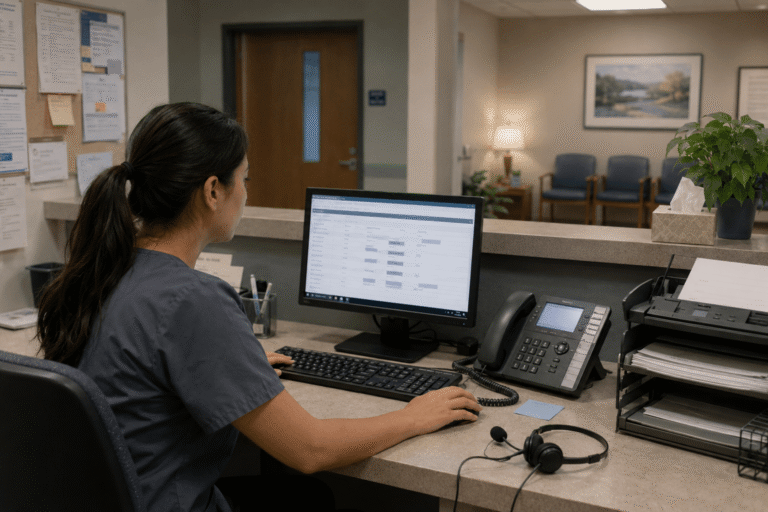
Small medical practices often handle appointment questions, follow-up messages, referral calls, faxed documents, and after-hours issues with limited staff. When those workflows are spread across disconnected systems, staff lose time checking messages, routing calls, or tracking down information.
RingRx supports HIPAA-compliant phone, text, fax, video, voicemail, call routing, and on-call workflows in one platform for healthcare teams. That gives small medical practices a clearer way to manage daily communication as they grow.
Missed calls, scattered text messages, and voicemails buried in separate apps can disrupt patient care and create compliance concerns. They can also erode trust, lengthen response times, and waste staff time. RingRx supports HIPAA-compliant phone, text, fax, video, and on-call workflows in one platform for healthcare teams. See how RingRx can help your practice manage communication in one place. Sign up for a free RingRx trial today.
Why Small Practices Outgrow Traditional Phone Systems
Many small clinics still rely on phone setups that worked when the practice had fewer providers, fewer patients, and fewer communication channels. As the practice grows, those systems can become harder to manage.
Call volume may rise during busy seasons. At the same time, voicemail can pile up, faxes may require manual review, and text messages may live in a separate tool. Over time, staff spend more time moving between systems and less time helping patients get to the right next step.
Cloud phone systems for medical practices give teams a more flexible way to manage communication without depending on outdated phone hardware or disconnected workflows.
Supporting HIPAA-Conscious Communication
Healthcare communication often involves protected health information, so privacy needs to be part of the workflow. Phone calls, texts, faxes, voicemail, and video should be handled through systems that support HIPAA-compliant workflows.
Technology alone does not make a practice compliant. Practices still need policies, staff training, appropriate agreements, and careful handling of patient information. However, the right platform can support those requirements with secure access, encryption, permissions, and audit-friendly records where available.
Before choosing a phone system, medical practices should confirm whether the vendor offers a business associate agreement. They should also review how communication data is protected, which staff members can access each channel, and how activity records or call logs are maintained.
What Cloud Phone Systems for Medical Practices Should Include
A cloud phone system should do more than replace a landline. For medical practices, the value comes from helping staff manage the communication channels they already use every day.
Useful capabilities may include:
- Call routing by role, department, or schedule
- Voicemail access and transcription where available
- Secure texting for appropriate patient communication
- Cloud-based faxing that staff can review and track
- After-hours and on-call routing controls
- Mobile and desk phone access for approved users
- Video communication for practices that offer virtual visits
These tools can help small practices reduce disconnected handoffs and give staff a clearer way to manage patient communication.
How Cloud Communication Supports Daily Workflows
Small medical practices often need communication tools that can adapt as their teams grow. A solo provider may need basic call routing and voicemail. A growing practice may need separate routing for the front desk, billing, providers, and after-hours coverage.
As communication needs change, the system should make it easy to route new patient calls, review voicemail within a shared workflow, manage faxed documents, send appropriate appointment reminders, and support staff using approved mobile or desk phones.
When those workflows are easier to manage, staff can spend less time checking disconnected systems and more time responding to patient needs.
Addressing Common Concerns Before Switching
Changing phone systems can raise practical questions. Will current numbers transfer? Will staff need extra training? Will calls, texts, faxes, and routing work reliably once the system changes?
A smoother rollout starts with clear planning. Practices should map current call flows, confirm fax needs, review voicemail ownership, and decide how after-hours calls should be routed.
Common setup questions include:
- Can the practice keep its existing phone numbers?
- What setup support is included?
- How are users, devices, and permissions managed?
- How does the system handle downtime or backup routing?
- What training does the staff need before launch?
The goal is not to change every workflow at once. It is to move communication into a more manageable system while protecting continuity for patients and staff.
Pricing and Scalability for Growing Practices
Small medical practices need pricing they can understand. Traditional phone systems may involve hardware, maintenance, separate fax lines, support fees, or contract terms that are hard to compare.
A clearer pricing model helps practices plan as they add users, locations, or communication features. Before choosing a platform, leaders should review what is included, what may cost extra, and how the monthly cost changes as the practice grows.
For example, a practice should know whether calls, texts, faxes, voicemail, video, and routing are included. It should also understand whether setup, porting, support, after-hours workflows, or added users are priced separately.
How Better Communication Helps Small Practices Grow
Cloud phone systems can support growth by making communication easier to standardize. That matters when a practice adds providers, expands hours, opens another location, or adds telehealth workflows.
Common benefits may include:
- Fewer disconnected communication tools
- Clearer call routing as the team grows
- More organized voicemail and fax workflows
- Better support for approved mobile and desk phone use
- More consistent after-hours communication
- Less dependence on outdated office phone hardware
For small practices, the practical benefit is simple: staff get a clearer system for handling patient communication without adding unnecessary complexity.
Choosing Cloud Phone Systems for Medical Practices
Cloud phone systems for medical practices are most useful when they fit the way the office already works. The right platform should support phone, text, fax, voicemail, video, and routing in a way that staff can understand and manage.
Practices should look for healthcare-focused communication features, privacy safeguards, practical setup support, transparent pricing, and options that can scale as the team grows.
Better communication tools do not replace staff judgment. Instead, they give teams a clearer structure for getting patient calls, messages, faxes, and after-hours needs to the right place.
Frequently Asked Questions
What is a HIPAA-compliant phone system, and why do small medical practices need one?
A HIPAA-compliant phone system supports healthcare communication workflows while safeguarding phone, text, fax, voicemail, and related patient communication. Small practices need these tools because routine messages may include protected health information and should be handled through appropriate systems and policies.
How can a cloud phone system help reduce missed calls in a medical office?
A cloud phone system can help reduce missed-call friction with call routing, voicemail visibility, mobile access, and after-hours routing. It gives staff a clearer way to review and respond to patient communication.
Is switching to a cloud-based phone system disruptive for a small medical practice?
The transition depends on the current setup, number porting requirements, fax workflows, and staff training. A practical rollout should include call-flow review, user setup, testing, and training before the system becomes the daily workflow.
Disclaimer: This content is for general informational purposes and does not constitute legal or compliance advice.
You may also be interested in: RingRx: HIPAA Compliant Phone System Designed for Modern Practices
Missed calls, scattered text messages, and voicemails buried in separate apps can disrupt patient care and create compliance concerns. They can also erode trust, lengthen response times, and waste staff time. RingRx supports HIPAA-compliant phone, text, fax, video, and on-call workflows in one platform for healthcare teams. See how RingRx can help your practice manage communication in one place. Sign up for a free RingRx trial today.