
Quick Listen:
Text message appointment reminders in healthcare can help practices reduce missed visits, confirm schedules, and give patients a simple way to remember upcoming appointments. For busy front-desk teams, reminders also reduce the need for repeated phone calls and manual follow-up.
No-shows create real problems for healthcare organizations. They leave open appointment slots, add administrative work, and can delay follow-up care. While every practice needs its own reminder policy, text messaging is often a practical way to reach patients with timely, easy-to-read information.
RingRx supports HIPAA-compliant phone, text, fax, video, and on-call workflows in one platform for healthcare teams. That gives practices a more organized way to manage patient communication, appointment reminders, and follow-up workflows.
Missed calls, scattered text messages, and voicemails buried in separate apps can disrupt patient care and create compliance concerns. They can also erode trust, lengthen response times, and waste staff time. RingRx supports HIPAA-compliant phone, text, fax, video, and on-call workflows in one platform for healthcare teams. See how RingRx can help your practice manage communication in one place. Sign up for a free RingRx trial today.
Why Missed Appointments Create Front-Desk Pressure
Missed appointments affect more than the calendar. They can leave providers with unused time, require staff to reschedule patients, and make it harder for other patients to access open appointment slots.
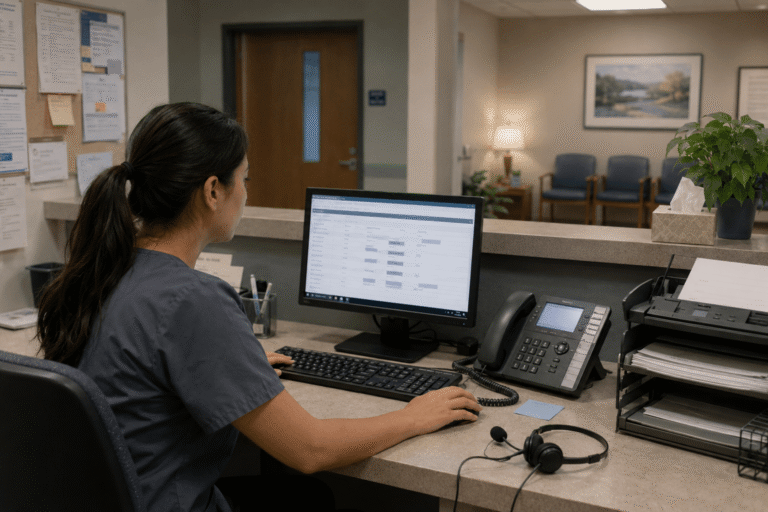
Front-desk teams often manage this work manually. Staff may call patients, leave voicemails, update schedules, and try to fill gaps when someone does not arrive. As a result, appointment reminders become part of the daily workflow, not just a courtesy message.
Text message appointment reminders in healthcare give practices another way to reach patients before a scheduled visit. They are not a complete fix for no-shows, but they can help reduce avoidable confusion and make reminder workflows easier to manage.
How Text Message Appointment Reminders Support Patient Communication
Text messages are easy for many patients to receive and review. A reminder can sit on the patient’s phone, making it more visible than a missed call or voicemail.
For medical offices, text reminders can support practical workflows such as:
- Appointment confirmations
- Pre-visit reminders
- Simple rescheduling instructions
- Follow-up prompts where appropriate
- Office-hour or location reminders
- Links to approved scheduling or intake resources
The content of each reminder should match the practice’s policies. In healthcare, short and general reminders are usually safer than messages that include sensitive clinical detail.
Why Text Reminders Often Work Better Than Phone Calls Alone
Phone calls still matter, especially for urgent or complex issues. However, many routine appointment reminders do not require a live conversation.
Text reminders can help because they are:
- Visible: Patients can see and revisit the reminder on their phone.
- Simple: A short message can confirm the date, time, and next step.
- Efficient: Staff do not need to manually repeat the same reminder call.
- Scalable: Practices can send reminders across a full schedule when the workflow is set up correctly.
That efficiency matters for small practices, specialty clinics, behavioral health teams, and multi-location offices that need consistent patient communication without adding more front-desk work.
Using Text Reminders in HIPAA-Conscious Workflows
Texting in healthcare requires care. Practices need to consider consent, message content, patient preferences, and the amount of information to include in a reminder.
Text message appointment reminders should avoid unnecessary clinical detail. For example, a practice may remind a patient about an upcoming appointment without including diagnosis information, treatment details, or sensitive notes.
Before using text reminders, practices should confirm:
- Whether the patient has agreed to receive text messages
- What information is appropriate to include
- How opt-outs or communication preferences are handled
- Which staff members can send or review messages
- Whether the platform supports HIPAA-compliant workflows
This is not legal advice. Each practice should follow its own policies and consult qualified counsel or compliance support when needed.
How Reminder Workflows Help Busy Practices
Appointment reminders work best when they are part of a broader patient communication system. If texts, calls, voicemails, and scheduling notes are stored in different places, staff may still spend time manually reconciling information.
A better workflow can help teams:
- Send reminders more consistently
- Reduce repeated manual reminder calls
- Keep patient communication easier to review
- Support front-desk staff during busy periods
- Give patients clearer instructions before a visit
For practices with limited administrative staff, even small reductions in repeated calls can make the day easier to manage.
What to Look for in a Healthcare Texting Platform
Not every texting tool is appropriate for medical workflows. Healthcare teams should look for systems that support patient communication while helping staff follow privacy and workflow requirements.
Useful platform features may include:
- Secure texting options
- Role-based staff access
- Message history or audit-friendly records are available
- Support for appointment reminder workflows
- Clear opt-out and communication preference handling
- Phone, text, voicemail, fax, and routing tools in one platform
The right system should help practices communicate more consistently without requiring staff to manage patient reminders across disconnected apps.
Choosing Text Message Appointment Reminders for Healthcare
Text message appointment reminders in healthcare are useful because they address a simple yet persistent problem: patients miss or forget appointments, and staff spend time trying to reschedule.
Reminders are not a replacement for strong scheduling processes or staff judgment. Instead, they are one practical tool that can help practices communicate earlier, reduce avoidable back-and-forth, and make appointment workflows easier to manage.
For medical offices reviewing their communication setup, the best approach is to keep reminders simple, use approved messaging workflows, and make sure phone, text, voicemail, and follow-up activities are easy for staff to manage in one place.
Frequently Asked Questions
How effective are text message reminders in reducing missed medical appointments?
Text message reminders can help reduce missed appointments by giving patients a timely prompt before a scheduled visit. Results vary by practice, patient population, reminder timing, and whether patients have agreed to receive text messages.
Why do SMS appointment reminders work better than phone calls or voicemails for some patients?
Text reminders are visible, easy to revisit, and do not require the patient to answer a call. They can be useful for routine reminders, while phone calls may still be better for urgent or complex communication.
Can SMS appointment reminders work in rural or low-resource healthcare settings?
SMS reminders can be useful in many settings, but practices should consider cell coverage, shared phones, language needs, and patient preferences. Offering multiple reminder options may help reach more patients.
Disclaimer: This content is for general informational purposes and does not constitute legal or compliance advice.
You may also be interested in: Texting vs. Calling: What Patients Really Want in 2025
Missed calls, scattered text messages, and voicemails buried in separate apps can disrupt patient care and create compliance concerns. They can also erode trust, lengthen response times, and waste staff time. RingRx supports HIPAA-compliant phone, text, fax, video, and on-call workflows in one platform for healthcare teams. See how RingRx can help your practice manage communication in one place. Sign up for a free RingRx trial today.