In the high-stakes environment of a modern hospital, every second counts. Nurses move quickly between rooms, doctors manage multiple consultations, and administrators coordinate complex discharges. Yet the tools intended to connect these professionals beeping pagers, ringing phones on disconnected systems, and messages lost in email threads often create more friction than flow. Unified communications as a service (UCaaS) is transforming these chaotic workflows into seamless processes, enabling care teams to focus on patients rather than chasing information.
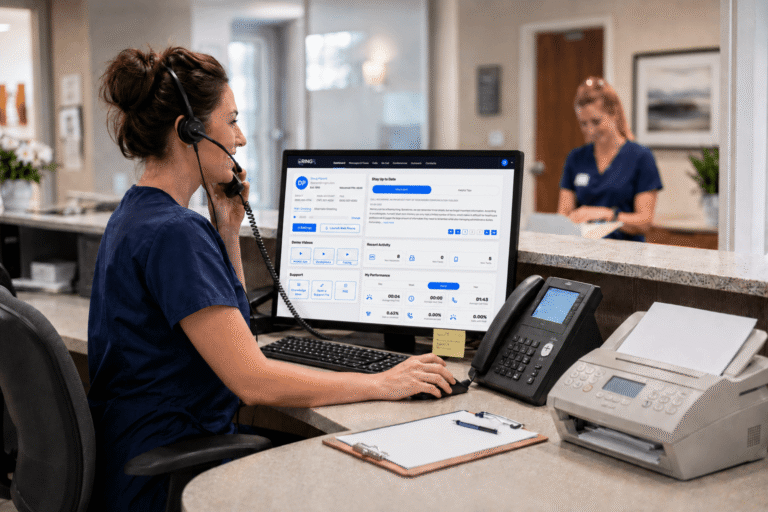
Missed calls, scattered text messages, voicemails buried in separate apps disrupt patient care and expose practices to compliance risks. Erodes patient trust, longer waits and wasted staff time. RingRx changes that by combining voice, secure texting, fax, video visits, and on-call scheduling into one intuitive, fully HIPAA-compliant platform designed specifically for medical workflows. See how your practice can grow, run more smoothly, and deliver a better experience for every patient. Sign Up for RingRx Free Trial today!
The Hidden Costs of Fragmented Communication
Hospitals have traditionally depended on a patchwork of tools: landlines for routine calls, pagers for urgent alerts, secure messaging apps that fail to integrate with electronic health records, and separate video platforms for telehealth. This fragmentation leads to delays in critical handoffs, duplicated work, and staff burnout from constant context-switching. A nurse may waste valuable minutes tracking down a specialist, only to find that the message never arrived. These inefficiencies do more than frustrate they can directly impact patient care quality.
Unified communications addresses this challenge by integrating voice, video, messaging, and collaboration tools into one secure platform. Clinicians no longer toggle between multiple applications; instead, they can reach the right colleague instantly, share context-rich information, and connect directly with hospital systems. The transition feels less like implementing new technology and more like eliminating long-standing barriers that have hindered efficient care delivery for years.
How Unified Communications Enhances Daily Hospital Operations
Imagine a typical shift in a busy emergency department. A triage nurse sends a secure message containing patient vitals and lab results directly to the attending physician, who replies with a voice note while reviewing the integrated record. No more waiting for pages to be answered or searching outdated directories for the on-call cardiologist.
Real-time presence indicators reveal who is available without intrusive calls. Secure video consultations connect remote specialists in moments. Automated alerts direct nurse calls or bed management requests to the appropriate team member, including relevant patient context. These improvements accumulate throughout the day, significantly reducing administrative burdens and allowing clinicians to spend more time at the bedside.
Key Operational Benefits
- Instant access to colleagues across departments via integrated messaging and voice tools.
- Seamless sharing of patient data within secure, compliant platforms.
- Reduced response times for urgent requests through intelligent routing.
- Better coordination between internal teams and external partners in telehealth scenarios.
Improving Patient Safety Through Better Communication
Miscommunication remains one of the primary causes of preventable medical errors. When information flows through disconnected channels, critical details can be lost or misinterpreted. Unified platforms mitigate these risks by providing auditable, centralized conversation records while upholding the stringent security standards essential in healthcare.
Shift handoffs become more reliable with structured updates rather than rushed verbal exchanges. Critical test results generate immediate, targeted notifications instead of relying on manual inbox checks. The overall result is fewer oversights and greater assurance that every member of the care team works from the same up-to-date information.
Market Demand Reflects Practical Necessity
The healthcare sector clearly recognizes this need. The global clinical communication and collaboration market reached USD 3.29 billion in 2025, underscoring the demand for advanced tools that support care teams more effectively. North America continues to lead in adoption, fueled by efforts to improve coordination amid growing patient volumes and staffing challenges.
This growth stems from real-world pressures rather than trends alone. Healthcare organizations grappling with chronic disease management, aging populations, and higher admission rates require solutions that alleviate burdens on professionals. Unified communications offers tangible relief by replacing outdated pagers with scalable, cloud-native platforms tailored to dynamic demands.
Delivering Measurable Improvements in Workflow Efficiency
Health systems adopting these solutions report concrete results. Response times to urgent requests decrease as messages reach the correct recipient on their preferred device. Care coordination strengthens across departments, spanning radiology, pharmacy, and discharge planning. Staff satisfaction frequently improves when technology aligns with clinical needs instead of complicating them.
Unified communications also supports the expansion of telehealth and hybrid care models. Providers can perform virtual rounds, engage family members, or conduct post-discharge follow-ups without managing separate systems. The platform serves as essential connective tissue, ensuring the entire care ecosystem operates smoothly.
Addressing Implementation Challenges Effectively
Transitioning to new technology presents challenges, including data security concerns, integration with existing electronic health records, and the need for comprehensive staff training. Successful implementations treat unified communications as a clinical workflow initiative rather than a purely technical project, with input from frontline users guiding the process.
Selecting healthcare-specific platforms featuring HIPAA-compliant security, role-based access controls, and strong interoperability proves essential. When executed thoughtfully, the investment yields returns through enhanced operational efficiency and improved staff retention.
The Future of Connected Care in Healthcare
As hospitals navigate persistent workforce shortages and evolving care models, unified communications is becoming a fundamental requirement rather than an optional advantage. The technology continues to advance, incorporating artificial intelligence for intelligent message routing, predictive analytics to anticipate bottlenecks, and tighter integration with Internet of Medical Things devices.
At its core, the promise remains profoundly human: equipping clinicians with additional time for patient care by eliminating daily frictions. In a field where moments can influence outcomes, streamlined workflows represent an essential element of delivering compassionate, coordinated care.
Final Thoughts
The transformation occurring in hospital communication may not dominate headlines like groundbreaking medical devices, yet its influence runs deep. By unifying the ways care teams connect, exchange information, and collaborate, these platforms help restore the human focus at healthcare’s center. The outcome extends beyond faster processes to stronger teams and improved experiences for all involved from the nurse beginning a shift to the patient returning home with clear instructions. Ultimately, the most effective technology fades into the background, empowering professionals to fulfill their original calling: healing patients.
Frequently Asked Questions
What is unified communications in healthcare and how does it improve hospital workflows?
Unified communications as a service (UCaaS) integrates voice, video, messaging, and collaboration tools into one secure platform, replacing fragmented systems like pagers, separate phones, and disconnected messaging apps. By consolidating these tools, hospital staff can reach colleagues instantly, share patient data securely, and access integrated electronic health records eliminating the time wasted switching between multiple applications and enabling clinicians to spend more time focused on patient care rather than chasing information.
How does unified communication reduce medical errors and improve patient safety?
Miscommunication is a leading cause of preventable medical errors, often occurring when critical information gets lost across disconnected channels. Unified communications platforms create centralized, auditable conversation records that ensure all care team members work from the same up-to-date information. Structured shift handoffs and immediate notifications for test results replace rushed verbal exchanges and manual inbox checks, significantly reducing oversights and ensuring nothing falls through the cracks.
What are the main operational benefits of implementing unified communications in hospitals?
Healthcare organizations adopting unified communications report concrete improvements including faster response times to urgent requests, stronger care coordination across departments (radiology, pharmacy, discharge planning), and reduced staff burnout from context-switching. The platform also enables seamless telehealth and remote specialist consultations, supports hybrid care models, and improves overall staff satisfaction by aligning technology with actual clinical workflows rather than complicating them.
Disclaimer: The above helpful resources content contains personal opinions and experiences. The information provided is for general knowledge and does not constitute professional advice.
You may also be interested in: Failed a HIPAA Audit? 7 Steps for Practices – RingRx
Missed calls, scattered text messages, voicemails buried in separate apps disrupt patient care and expose practices to compliance risks. Erodes patient trust, longer waits and wasted staff time. RingRx changes that by combining voice, secure texting, fax, video visits, and on-call scheduling into one intuitive, fully HIPAA-compliant platform designed specifically for medical workflows. See how your practice can grow, run more smoothly, and deliver a better experience for every patient. Sign Up for RingRx Free Trial today!
Powered by flareAI.co