
Quick Listen:
In an era where patients expect seamless, instant communication with their healthcare providers, the tools bridging that gap have become essential rather than optional. Imagine missing a critical lab result notification or struggling to schedule an appointment amid a busy day scenarios that once led to frustration and delayed care. Healthcare communication platforms are evolving rapidly to prioritize convenience, security, and personalization, transforming how providers connect with patients and how teams collaborate internally.
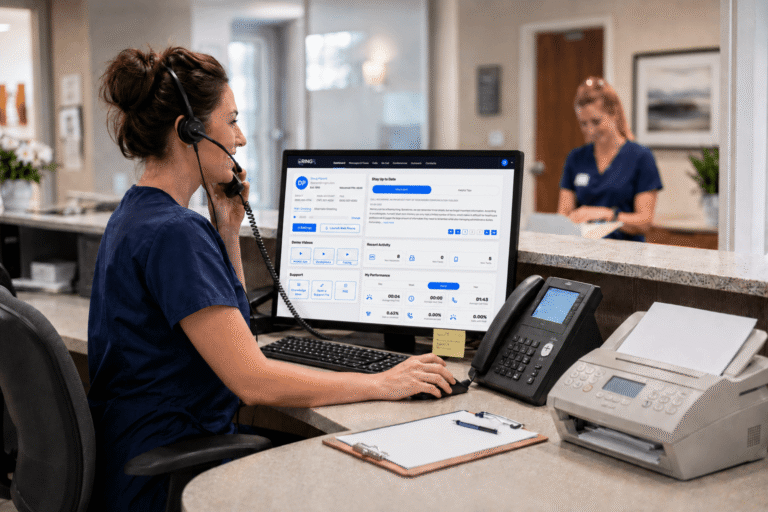
Missed calls, scattered text messages, voicemails buried in separate apps disrupt patient care and expose practices to compliance risks. Erodes patient trust, longer waits and wasted staff time. RingRx changes that by combining voice, secure texting, fax, video visits, and on-call scheduling into one intuitive, fully HIPAA-compliant platform designed specifically for medical workflows. See how your practice can grow, run more smoothly, and deliver a better experience for every patient. Sign Up for RingRx Free Trial today!
The Rise of Patient Engagement Solutions
Healthcare organizations are investing significantly in technologies that place patients at the center of their care journey. The global patient engagement solutions market was valued at USD 27.63 billion in 2024, fueled by technological advancements, wider adoption of electronic health records and mHealth applications, the increasing prevalence of chronic diseases, and a growing emphasis on consumer-driven healthcare. North America maintains a leading position with a substantial revenue share.
These platforms extend well beyond basic reminders. They facilitate two-way messaging, deliver targeted educational content, and create real-time feedback loops that empower patients to actively manage their health. Providers consistently observe better adherence to treatment plans and improved satisfaction ratings when patients feel informed and supported through intuitive, user-friendly interfaces.
AI-Powered Engagement Takes Center Stage
Artificial intelligence has become a practical force in healthcare communication, reshaping everyday interactions between providers and patients. AI-driven tools, which represent a significant portion of the patient engagement solutions market, analyze available data to deliver timely and relevant messages. From personalized medication reminders to predictive alerts for potential health risks, these systems help lower no-show rates and enhance management of chronic conditions while easing the workload on clinical staff.
The true strength of AI lies in its ability to adapt based on past interactions. A patient who frequently overlooks appointment reminders might instead receive a voice message or short educational video tailored to their preferences. This customization builds trust and promotes proactive health behaviors, making care feel more personal and responsive.
Web and Cloud-Based Delivery for Greater Accessibility
The method of delivery is as important as the features offered. Web and cloud-based solutions continue to lead due to their scalability and seamless integration with existing healthcare systems. Providers value the flexibility of these platforms, which eliminate the need for extensive on-premise hardware, while patients gain the freedom to access portals, chat functions, and updates from any connected device.
Cloud infrastructure also strengthens security through ongoing updates and adherence to critical standards such as HIPAA. In an age of remote and hybrid care models, this broad accessibility ensures that patients in rural areas or those who travel frequently can remain fully connected to their care team without unnecessary obstacles.
Healthcare A2P SMS: A Reliable Foundation
While advanced apps often capture attention, straightforward text messaging continues to deliver exceptional results. The healthcare application-to-person (A2P) SMS market, valued at USD 6.31 billion in 2025 and projected to grow modestly to USD 6.69 billion in 2026, underscores the lasting importance of this channel. Its effectiveness comes from remarkably high open rates and universal accessibility even for patients without smartphones or consistent internet access.
SMS proves especially valuable for practical tasks such as confirming appointments, notifying patients of test results, and supporting medication adherence. Healthcare providers leverage it to reduce missed visits and strengthen follow-up care, particularly in managing long-term chronic conditions. When combined with comprehensive engagement platforms, SMS serves as a dependable backbone that enhances other digital channels.
Secure Messaging for Internal Team Collaboration
Communication excellence extends beyond patients to the internal coordination of care teams. Secure messaging platforms built specifically for healthcare enable providers to share updates, discuss cases, and manage shifts efficiently while maintaining strict compliance and avoiding the risks associated with everyday consumer messaging apps.
These specialized tools typically include read receipts, priority notifications, and direct integration with electronic health records, which streamline workflows in fast-paced hospital and clinic environments. As healthcare delivery grows more collaborative involving specialists, nurses, administrators, and support staff reliable internal channels help minimize errors and accelerate informed decision-making.
Telehealth and Omnichannel Communication Strategies
Video consultations have become a standard part of modern care, yet the most effective systems in 2026 embed them within broader omnichannel frameworks. A patient experience might begin with a text reminder, continue through a secure portal for completing pre-visit forms, and culminate in a smooth video consultation all connected within one protected ecosystem.
This integrated approach eliminates unnecessary friction. Patients facing mobility limitations can manage much of their care remotely, while those preferring in-person visits still benefit from efficient digital preparation. Omnichannel platforms accommodate varied preferences, whether through detailed email summaries or voice calls for individuals who require additional personal guidance.
Key Benefits of Integrated Communication Ecosystems
- Enhanced patient adherence achieved through timely and personalized reminders
- Decreased administrative workload for staff by leveraging intelligent automation
- Elevated satisfaction levels as patients experience stronger connections with their care teams
- Improved health outcomes for individuals managing chronic conditions via sustained engagement
- Strengthened data protection and full regulatory compliance across every communication channel
Selecting the Optimal Tools for Your Healthcare Practice
With numerous solutions available, choosing the right platform requires careful attention to integration capabilities, ease of use, and long-term scalability. Prioritize tools that integrate smoothly with your current electronic health record system to avoid creating isolated data pockets. Intuitive interfaces are equally critical designed for both patients who may have limited technical experience and clinicians who need solutions that save time rather than add complexity.
Tailor your selection to the unique characteristics of your patient population. Practices serving many older adults may emphasize voice calls and SMS options, whereas those with younger demographics might focus on app-based features and video capabilities. Security credentials and a demonstrated history of success in healthcare environments should remain primary evaluation criteria.
Addressing Implementation Challenges Effectively
Introducing new communication technologies inevitably presents obstacles, with data privacy concerns often ranking highest. Contemporary platforms mitigate these risks through robust end-to-end encryption and tightly controlled access protocols. While initial staff training and patient education require dedicated effort, the resulting improvements in operational efficiency and user satisfaction deliver substantial returns.
Alert fatigue represents another common hurdle, where excessive notifications cause patients to disengage. Sophisticated systems address this challenge by incorporating intelligent scheduling algorithms and customizable preference settings, ensuring that every message arrives with genuine value and relevance rather than becoming background noise.
Looking Forward to Truly Connected Healthcare
As healthcare communication tools continue to mature in 2026, the emphasis is moving away from standalone features toward comprehensive ecosystems that genuinely advance patient-centered care. From intelligent AI engagement and dependable SMS reminders to protected team messaging, these technologies are expanding access to quality healthcare while making it more responsive to individual needs.
Organizations that achieve the greatest success will treat communication as a foundational element of care delivery rather than a supplementary feature. When patients feel genuinely informed and supported, they participate more actively in their health journeys, which ultimately leads to superior clinical outcomes for all involved. The future of healthcare communication extends beyond speed it centers on creating deeper, more meaningful connections that reinforce the essential human element of medicine.
In summary, the most effective tools do not replace personal interaction; they enhance it. By amplifying provider’s ability to build trusting, lasting relationships in a digital environment, these platforms help deliver care that is both technologically advanced and deeply compassionate.
Frequently Asked Questions
What are the best healthcare communication tools for 2026?
The top healthcare communication tools for 2026 include AI-powered patient engagement platforms, secure internal messaging systems, cloud-based patient portals, and healthcare A2P SMS solutions. The most effective approaches combine these into an omnichannel ecosystem connecting text reminders, secure portals, and video consultations within one unified platform. When selecting tools, prioritize EHR integration, ease of use, HIPAA compliance, and scalability to match your patient population’s needs.
How is AI improving patient engagement in healthcare communication?
AI enhances healthcare communication by analyzing patient behavior patterns to deliver personalized, timely messages such as tailored medication reminders, predictive health alerts, and customized outreach formats (voice messages or educational videos) based on individual preferences. These intelligent systems help reduce no-show rates, support chronic disease management, and lighten the administrative burden on clinical staff. The key advantage is adaptability: AI tools continuously refine their outreach based on past interactions to build patient trust and encourage proactive health behaviors.
Why is SMS still important in healthcare communication despite newer technologies?
Healthcare A2P SMS remains a cornerstone of patient communication because of its exceptionally high open rates and universal accessibility even for patients without smartphones or reliable internet access. Valued at USD 6.31 billion in 2025, the healthcare SMS market continues to grow, driven by its proven effectiveness for appointment confirmations, test result notifications, and medication adherence support. When integrated alongside digital engagement platforms, SMS acts as a reliable backbone that ensures no patient is left out due to technological barriers.
Disclaimer: The above helpful resources content contains personal opinions and experiences. The information provided is for general knowledge and does not constitute professional advice.
You may also be interested in: Failed a HIPAA Audit? 7 Steps for Practices – RingRx
Missed calls, scattered text messages, voicemails buried in separate apps disrupt patient care and expose practices to compliance risks. Erodes patient trust, longer waits and wasted staff time. RingRx changes that by combining voice, secure texting, fax, video visits, and on-call scheduling into one intuitive, fully HIPAA-compliant platform designed specifically for medical workflows. See how your practice can grow, run more smoothly, and deliver a better experience for every patient. Sign Up for RingRx Free Trial today!
Powered by flareAI.co