
Quick Listen:
Picture a bustling medical practice where a nurse spots a subtle shift in a patient’s condition and must reach the physician immediately. A quick, ordinary text or voicemail might seem harmless until it isn’t. In healthcare, where lives hinge on precise and timely information, insecure communication carries real risks to patient safety, data privacy, and professional trust.
Secure messaging has become an essential safeguard, allowing rapid, protected exchanges among care teams, staff, and patients while satisfying rigorous regulatory demands. Far from diminishing personal interaction, it strengthens it by layering technology that protects what matters most: accurate, confidential information flowing exactly where and when it is needed.
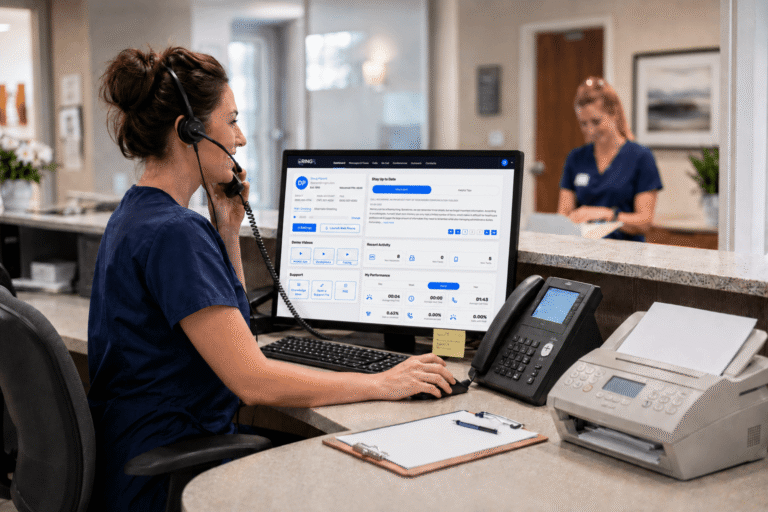
Missed calls, scattered text messages, voicemails buried in separate apps disrupt patient care and expose practices to compliance risks. Erodes patient trust, longer waits and wasted staff time. RingRx changes that by combining voice, secure texting, fax, video visits, and on-call scheduling into one intuitive, fully HIPAA-compliant platform designed specifically for medical workflows. See how your practice can grow, run more smoothly, and deliver a better experience for every patient. Sign Up for RingRx Free Trial today!
The Hidden Dangers of Traditional Healthcare Communication
For decades, healthcare teams have depended on pagers, landline calls, standard emails, and everyday messaging apps. These familiar tools often fail when protected health information enters the conversation. Unencrypted texts and emails leave sensitive details vulnerable to interception, accidental sharing, or outright breaches.
One misplaced message or unsecured recording can spark compliance issues, undermine patient confidence, and slow urgent responses. Clinicians managing overlapping conversations face heightened chances of misunderstanding, while patients left waiting for clarity on test results or next steps experience unnecessary anxiety and frustration.
How Secure Messaging Transforms Daily Clinical Work
Modern secure messaging platforms are engineered specifically for healthcare environments. They deliver end-to-end encryption, strict access controls, detailed audit logs, and seamless integration with electronic health records. Authorized users can exchange messages instantly via mobile or desktop, complete with read receipts, secure group discussions, and the ability to attach images or documents safely.
This shift dramatically cuts down on phone tag and disruptive interruptions. A clinician can consult a colleague about a complex case without stepping away from the bedside. Administrative teams manage refills, prior authorizations, or scheduling updates with speed and confidence. The overall effect is smoother operations and noticeably lower stress levels for teams already stretched thin.
Safeguarding Privacy While Meeting Strict Compliance Requirements
In the United States, adherence to the Health Insurance Portability and Accountability Act remains fundamental. Leading secure messaging solutions address this by encrypting data both during transmission and while stored, maintaining comprehensive activity logs, and giving administrators precise control over user permissions.
When a platform fully satisfies HIPAA standards, providers operate with greater assurance that conversations covering diagnoses, treatment adjustments, or laboratory findings remain shielded. This protection helps organizations avoid significant penalties and fosters stronger patient relationships people share more freely when they feel their private information is genuinely secure.
Enhancing Care Coordination and Driving Better Patient Results
Security is only the beginning. Secure messaging also speeds collaboration across the care continuum. In primary care and specialty settings alike, it improves information flow and helps organize daily responsibilities more effectively. Teams can prioritize urgent matters, share visual documentation safely, and maintain alignment even when multiple specialists are involved.
Patients gain direct, convenient access through secure portals or messaging. They can pose questions, request medication renewals, or review educational resources on their own schedule. This continuous, two-way dialogue encourages greater adherence to care plans and helps individuals play a more informed, active part in managing their health.
Secure Messaging as a Foundation for Patient Engagement
Effective, protected communication lies at the heart of contemporary patient engagement initiatives. Healthcare organizations are turning to solutions that support ongoing interaction appointment reminders, tailored health information, and responsive follow-up. The global patient engagement solutions market reflects this momentum, valued at USD 33.95 billion in 2025 and projected to expand significantly in the years ahead as providers emphasize patient-centered approaches that deliver better clinical outcomes and greater operational efficiency.
In the U.S., demand continues to rise, fueled by the challenges of chronic conditions and the desire for more personalized care experiences. Secure messaging integrates naturally here, powering timely reminders, clear educational content, and reliable feedback channels that deepen the connection between providers and the people they serve.
Real-World Advantages for Medical Practices of Every Size
Practices adopting secure messaging frequently note a lighter administrative load. Staff reclaim hours once spent chasing voicemails or coordinating through fragmented channels, redirecting that time toward direct patient care. When paired with scheduling systems and broader communication tools, the impact multiplies.
Secure messaging complements patient scheduling workflows by enabling fast, private confirmation or adjustment of appointments. It also supports more personalized outreach that improves satisfaction and loyalty. The result is a more efficient practice environment where technology handles routine coordination so human attention can focus on healing and support.
Addressing Common Concerns and Clearing Up Misconceptions
Some clinicians hesitate, fearing that another digital platform will add complexity or burden already busy teams. Experience shows the opposite: thoughtfully designed secure messaging often simplifies communication by consolidating scattered methods into one dependable, intuitive channel.
Patient adoption can also raise questions. Yet when practices clearly communicate the security advantages and offer straightforward mobile or portal access, most patients welcome the convenience. Success hinges on selecting a solution that pairs strong protection with genuine ease of use.
- Improved workflow efficiency without constant interruptions
- Stronger documentation through auditable message threads
- Reduced risk of privacy incidents and compliance violations
- Better patient satisfaction from responsive, accessible communication
The Future of Healthcare Communication
As digital transformation accelerates across the industry, secure messaging is transitioning from optional feature to expected standard. It aligns naturally with value-based care priorities that reward improved outcomes and operational excellence while helping organizations confront evolving cybersecurity threats aimed at sensitive health data.
Solutions such as RingRx demonstrate the next step by uniting secure texting with voice, fax, and video capabilities inside a single HIPAA-compliant platform built for real medical workflows. These integrated systems serve practices of every scale from independent providers to multi-site clinics delivering consistent, high-quality communication that never compromises safety.
In the end, secure messaging matters because healthcare fundamentally depends on trust and the reliable exchange of information. When providers and patients can connect with confidence and clarity, the benefits extend far beyond risk reduction. Fewer errors occur, relationships grow stronger, and care feels more attentive and human even amid powerful technological change.
The quiet reliability of secure messaging is helping reshape an industry where every interaction counts. By embracing it thoughtfully, healthcare organizations unlock more effective ways to coordinate, educate, and support the people at the center of every decision: the patients themselves.
Frequently Asked Questions
What is secure messaging in healthcare and why is it important?
Secure messaging in healthcare refers to encrypted, HIPAA-compliant communication platforms that allow care teams, staff, and patients to exchange sensitive information safely. Unlike standard texts or emails, these platforms use end-to-end encryption, strict access controls, and detailed audit logs to protect protected health information (PHI). They are essential because unsecured communication can lead to data breaches, compliance violations, and delayed care all of which directly impact patient safety and trust.
How does secure messaging help healthcare practices comply with HIPAA?
HIPAA-compliant secure messaging platforms protect data both in transit and at rest, maintain comprehensive activity logs, and give administrators precise control over user permissions. This ensures that sensitive conversations covering diagnoses, lab results, or treatment adjustments remain confidential and fully auditable. By meeting these standards, healthcare organizations reduce the risk of costly penalties and build stronger patient relationships through demonstrated commitment to privacy.
Can secure messaging improve patient engagement and care outcomes?
Yes secure messaging enhances patient engagement by giving individuals direct, convenient access to their care team through secure portals or messaging apps. Patients can ask questions, request prescription renewals, and receive personalized reminders or educational content on their own schedule. This two-way, ongoing dialogue encourages better adherence to care plans and empowers patients to take a more active, informed role in managing their health.
Disclaimer: The above helpful resources content contains personal opinions and experiences. The information provided is for general knowledge and does not constitute professional advice.
You may also be interested in: RingRx: HIPAA Compliant Phone System Designed for Modern
Missed calls, scattered text messages, voicemails buried in separate apps disrupt patient care and expose practices to compliance risks. Erodes patient trust, longer waits and wasted staff time. RingRx changes that by combining voice, secure texting, fax, video visits, and on-call scheduling into one intuitive, fully HIPAA-compliant platform designed specifically for medical workflows. See how your practice can grow, run more smoothly, and deliver a better experience for every patient. Sign Up for RingRx Free Trial today!
Powered by flareAI.co