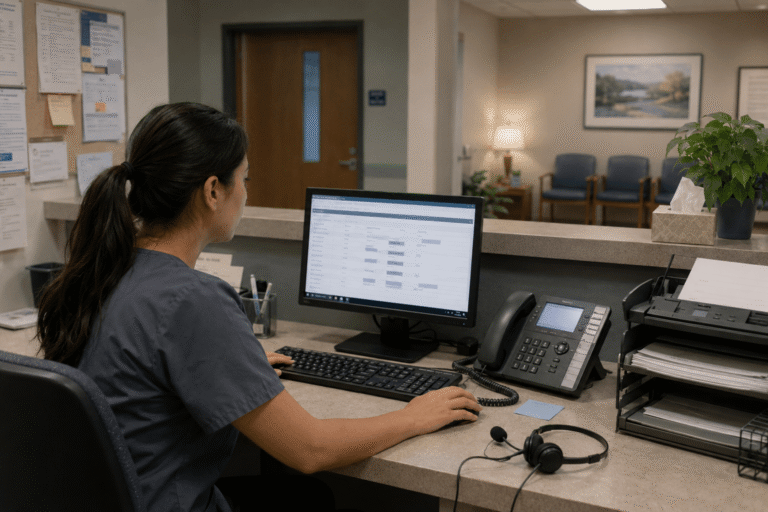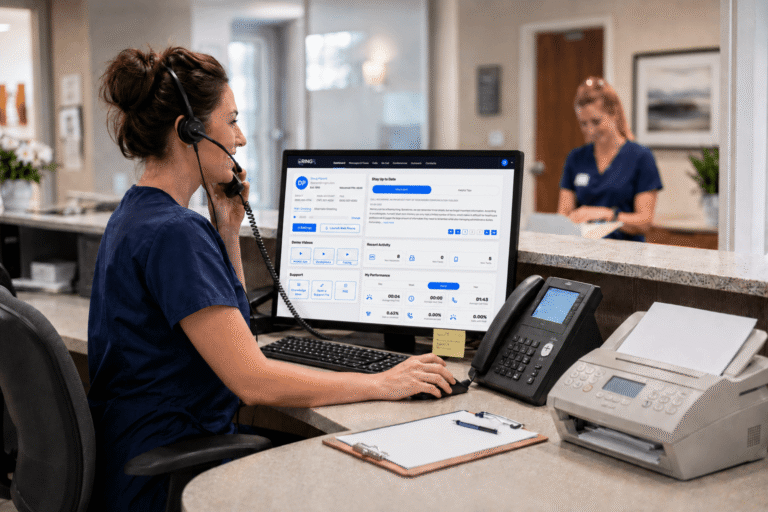

Medical practices depend on phone communication for patient access, care coordination, scheduling, and daily operations. When communication tools are outdated, disconnected, or not designed for healthcare workflows, teams may spend more time managing calls, messages, and handoffs instead of supporting patients. A HIPAA-compliant phone system designed for medical practices helps organizations manage voice communication with healthcare-specific workflows, secure communication practices, and tools that support modern patient interactions.
What Should Medical Practices Evaluate Before Switching Phone Systems?
Medical practices should evaluate whether their current phone system supports secure communication, reliable routing, and the workflows required by staff and patients. The right decision depends on how well the system handles everyday operational needs such as incoming calls, after-hours coverage, voicemail, texting, faxing, and team coordination.
- How patient calls are routed during business hours and after hours.
- Whether staff can manage communication across phone, text, fax, and other channels without unnecessary complexity.
- Whether access controls and communication processes support HIPAA-aligned workflows.
- Whether pricing and system management are clear enough for operational planning.
Why Are Traditional Phone Systems Often Difficult for Healthcare Workflows?
Many medical offices still rely on phone systems that were built primarily for voice calls rather than healthcare communication requirements. Separate tools for calling, messaging, faxing, and voicemail can create fragmented workflows that make it harder for teams to keep communication organized. Operational challenges often appear through missed handoffs, delayed voicemail review, manual routing, and staff time spent switching between disconnected tools. A healthcare-focused communication platform should address these workflow realities instead of adding another general-purpose technology layer.
How Does a HIPAA-compliant Phone System Support Modern Medical Practices?
A HIPAA-compliant phone system supports medical practices by providing communication capabilities designed around healthcare operations. These systems can help practices manage patient conversations through tools such as VoIP calling, secure texting, fax, video communication, call routing, voicemail management, and on-call workflows. Technology alone does not make a practice compliant. Practices must also maintain appropriate policies, procedures, and staff behaviors. A communication platform can support HIPAA-compliant workflows by providing tools that help teams manage information more consistently.
What Features Matter Most in a Healthcare VoIP Phone System?
The most valuable features are those that address real operational needs inside medical offices. Practice leaders should evaluate capabilities based on workflow impact rather than feature volume.
- Healthcare-focused communication: A platform designed for medical workflows can bring voice, texting, fax, and video communication together in one environment.
- Call routing and escalation: Routing rules can help direct calls to the appropriate person or team based on practice needs.
- After-hours support: On-call management and escalation paths help practices define how communication is handled outside normal office hours.
- Communication organization: Consolidating communication channels can help reduce administrative friction caused by scattered tools.
- Transparent pricing: Clear pricing structures can make budgeting and system evaluation easier.
How Can Practices Prepare for a Phone System Transition?
Switching communication systems requires planning because phone infrastructure affects staff workflows and patient access. A successful transition begins with understanding current communication patterns and identifying areas where the existing system creates unnecessary work.
- Documenting current call flows, escalation rules, and after-hours processes.
- Identifying where staff spend time managing voicemail, routing, or separate communication applications.
- Reviewing security requirements and communication policies before migration.
- Choosing a system that fits the practice’s operational model rather than forcing workflows around generic technology.
What Security and Compliance Requirements Should Practices Verify Before Switching?
Before switching, practices should verify that the prospective system supports HIPAA-compliant communication workflows, appropriate access controls, secure data handling, and a Business Associate Agreement where applicable. They should also review encryption, auditability, data retention, voicemail, texting, fax, integrations, continuity planning, incident response, and administrative controls. Technology can support compliance, but policies, procedures, and staff practices remain essential.
How Should Practices Plan Number Porting and Staff Transition?
Practices should build a migration plan that keeps patient access and internal workflows stable during the switch.
- Existing-number transfer: Confirm which phone and fax numbers will be ported, required authorization details, expected timelines, and temporary routing needs.
- Call-flow setup: Recreate and improve menus, extensions, routing rules, voicemail, after-hours coverage, and escalation paths before cutover.
- Testing: Test inbound and outbound calls, texting, fax, voicemail, emergency routing, integrations, and failover before moving live traffic.
- Staff training: Train front-desk, clinical, administrative, and on-call teams on the new tools and their responsibilities.
- Cutover planning: Schedule the transition, assign owners, communicate timing, monitor the launch, and maintain a rollback or contingency plan.
How RingRx Helps Medical Practices Manage Communication Workflows
- RingRx provides a healthcare-focused communication platform designed for medical practices and healthcare organizations.
- The platform supports voice, secure texting, fax, video, and communication workflows built around healthcare needs.
- Call routing, on-call management, voicemail transcription, and mobile or desk phone integration support daily practice operations.
- Transparent pricing helps practices evaluate communication costs with fewer surprises.
Frequently Asked Questions
What Is a HIPAA-compliant Phone System?
A HIPAA-compliant phone system is a communication platform designed to support healthcare privacy requirements and operational workflows. Practices must still maintain appropriate policies and procedures because technology alone does not create compliance.
Why Should Medical Practices Use a Healthcare-specific Phone System?
Healthcare-specific phone systems are designed around workflows such as patient calls, routing, after-hours coverage, messaging, and fax communication. These capabilities can help practices manage communication more consistently.
Can a Cloud Phone System Support Medical Practices?
A cloud phone system can support medical practices by providing flexible communication tools such as VoIP calling, messaging, fax, and workflow management capabilities. Practices should evaluate security features and operational fit before switching.
What Should a Practice Consider When Replacing an Old Phone System?
Practices should review communication workflows, security requirements, staff needs, pricing, and transition planning. The best system should support how the practice operates today and how communication needs may change over time. You may also be interested in: Why Secure Patient Communication Matters in Healthcare Practices
Missed calls, scattered text messages, and voicemails buried in separate apps can slow patient communication and add compliance risk. RingRx brings voice, secure texting, fax, video, and on-call communication into one HIPAA-compliant platform built for healthcare workflows. Start your RingRx free trial today.