
Quick Listen:
In today’s healthcare environment, a single missed message or delayed response can disrupt patient care and strain clinical teams. Telehealth has evolved far beyond a temporary solution, becoming an essential channel that connects providers with patients while optimizing entire practice workflows. The most effective platforms do more than enable video visits they reduce administrative burdens, enhance coordination, and allow clinicians to prioritize healing over technology hurdles.
With numerous options available, selecting the right telehealth solution requires careful evaluation. Some platforms excel in seamless video consultations, while others shine through integrated scheduling or secure messaging. This guide examines leading telehealth platforms in 2026 and highlights why robust clinical communication tools serve as the essential foundation for successful virtual care delivery.
Missed calls, scattered text messages, voicemails buried in separate apps disrupt patient care and expose practices to compliance risks. Erodes patient trust, longer waits and wasted staff time. RingRx changes that by combining voice, secure texting, fax, video visits, and on-call scheduling into one intuitive, fully HIPAA-compliant platform designed specifically for medical workflows. See how your practice can grow, run more smoothly, and deliver a better experience for every patient. Sign Up for RingRx Free Trial today!
The Evolution of Telehealth and the Role of Communication
Telehealth has matured significantly since the pandemic, now supporting routine check-ups, chronic disease management, mental health services, and specialty consultations. Patients demand convenient, reliable access, while providers require solutions that safeguard privacy, integrate with existing systems, and maintain team coordination across distributed settings.
Clinical communication and collaboration solutions play a pivotal role in this ecosystem. These tools facilitate secure information sharing among healthcare professionals, ultimately enhancing patient safety, care coordination, and operational efficiency in busy healthcare environments. Modern platforms unify video, secure messaging, voice, and fax capabilities into cohesive workflows, resulting in fewer disruptions and improved clinical outcomes.
Doxy.me: Straightforward Telehealth for Smaller Practices
Solo practitioners and small clinics often seek simple, low-barrier solutions for virtual care. Doxy.me continues to stand out with its fully browser-based interface that requires no software downloads for providers or patients. Key features include customizable waiting rooms, built-in text chat, and session history tracking, all delivered with strong emphasis on ease of use.
Its robust HIPAA compliance and availability of a free tier make it particularly suitable for occasional consultations or practices exploring telehealth options. While it may not offer extensive enterprise-level integrations, Doxy.me earns consistent recognition for reliability and accessibility in 2026 reviews.
Amwell and Teladoc Health: Scalable Solutions for Larger Organizations
Health systems and larger provider groups frequently choose Amwell or Teladoc Health when integration, volume, and reliability take priority. Amwell delivers strong electronic health record connectivity, support for urgent care, behavioral health, and various specialties, along with widespread insurance acceptance. Its infrastructure helps maintain consistent service quality across multiple locations.
Teladoc Health provides round-the-clock access to a broad spectrum of specialties, making it valuable for comprehensive virtual care programs. Both platforms perform exceptionally well in high-volume environments where complex workflows and backend stability are critical.
Mend, Updox, and VSee: Enhancing Daily Workflow Efficiency
Mend differentiates itself through native electronic health record integrations, patient self-scheduling capabilities, and automated payment processing. These elements help practices minimize front-office workload while maintaining smooth operations.
Updox offers an integrated approach that merges telehealth with broader practice management functions, supported by an extensive patient network. It appeals to offices aiming to consolidate communication channels and reduce dependency on multiple separate systems.
VSee provides secure video and collaboration tools with an emphasis on simplicity and regulatory compliance. Together, these platforms demonstrate that successful telehealth implementation increasingly hinges on seamless alignment with existing clinical routines rather than introducing additional complexity.
RingRx: The Communication Foundation That Strengthens Telehealth
While video visits form a visible component of telehealth, many practices face challenges with the supporting infrastructure managing incoming patient calls, coordinating internal teams, and ensuring secure flow of information across various channels.
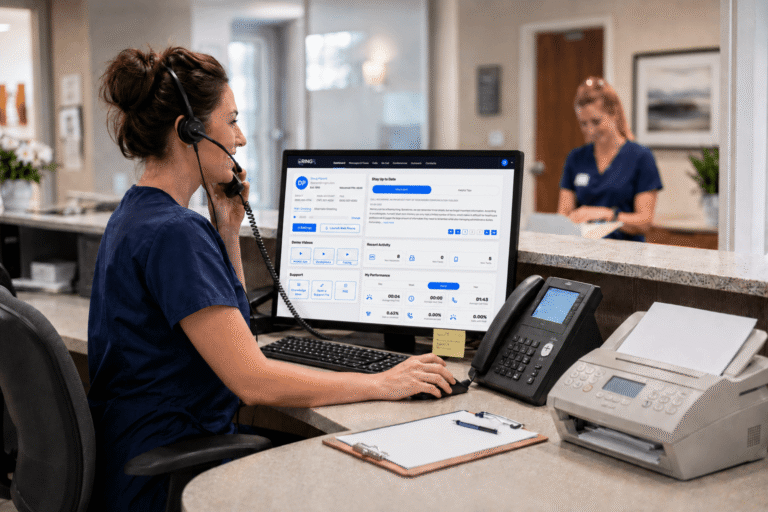
RingRx fills this critical need as a cloud-based communications platform built exclusively for healthcare. It unifies HIPAA-compliant voice calling, secure texting, web-based fax, video visits, and intelligent on-call scheduling within a single, intuitive interface. Advanced call routing, voicemail transcription, and virtual receptionist capabilities enable practices to manage high call volumes effectively while preserving privacy and enhancing patient experience.
Developed specifically for medical workflows, RingRx integrates smoothly with leading electronic health record and scheduling systems, thereby decreasing administrative tasks. Whether supporting single-location clinics or multi-site operations with 24/7 coverage requirements, it transforms communication from a potential vulnerability into a strategic advantage. In a competitive telehealth market, solutions like RingRx underscore that dependable behind-the-scenes coordination frequently determines which virtual care experiences feel truly seamless.
Essential Considerations When Selecting a Telehealth Platform
No single platform suits every practice size or specialty. Providers should evaluate these core factors to ensure an optimal fit:
- HIPAA compliance and data security: Essential for safeguarding protected health information.
- Electronic health record and workflow integration: Minimizes redundant data entry and reduces staff frustration.
- Patient usability: Straightforward joining processes, high-quality audio and video, and flexible scheduling options.
- Scalability for your practice size: Flexible options ranging from free tiers for smaller offices to comprehensive enterprise features.
- Supplementary communication capabilities: Secure messaging, fax services, and call management that extend value beyond video alone.
Many successful practices adopt a hybrid model, pairing a dedicated video platform with specialized clinical communication tools. This combination delivers superior consultation quality alongside the operational support necessary for long-term growth and efficiency.
Addressing Common Operational Challenges
Practices frequently encounter extended hold times, internal miscommunications, or difficulties directing patients to the appropriate resource. Contemporary platforms mitigate these issues through intelligent routing, team-based messaging, and automated processes. The objective extends beyond basic connectivity to eliminating friction points so that care delivery becomes faster and more dependable.
Delivering Measurable Impact on Patient Care
Telehealth has broadened access for individuals in rural communities, those with mobility limitations, and patients juggling work and health responsibilities. Its greatest value appears when technology operates invisibly in the background. Patients experience attentive, unhurried interactions rather than navigating cumbersome interfaces. Clinicians dedicate more time to meaningful dialogue and less to technical troubleshooting.
As healthcare teams manage increasing demands, integrated communication and collaboration tools have become vital infrastructure. These solutions do not replace human connection they enable it to occur effectively at greater scale.
Future Directions in Telehealth and Communication
Platforms poised for success in the coming years will emphasize intuitive design, strong interoperability, and genuine support for clinical workflows. Whether you operate as an individual therapist incorporating occasional virtual sessions or manage a multi-site organization updating its systems, the appropriate mix of video and communication capabilities can fundamentally improve care delivery.
Begin by identifying your most pressing challenges such as scheduling inefficiencies, team coordination gaps, or patient access barriers and select solutions that resolve them without introducing new complications. In telehealth, as in all areas of medicine, optimal results arise from thoughtfully designed, well-supported systems that work in harmony.
The future of healthcare extends beyond virtual visits. It centers on connected, coordinated experiences that keep both patients and providers at the heart of every interaction.
Frequently Asked Questions
What are the best telehealth platforms for small practices in 2026?
For solo practitioners and small clinics, Doxy.me is a top choice due to its browser-based interface that requires no software downloads, customizable waiting rooms, and a free tier option. Platforms like Mend and VSee also cater to smaller practices by offering native EHR integrations and simplified workflows that reduce front-office workload without adding technical complexity.
What features should I look for when choosing a telehealth platform?
When evaluating telehealth platforms, prioritize HIPAA compliance and data security, seamless EHR integration, and patient usability including easy joining processes and flexible scheduling. Scalability and supplementary communication tools such as secure messaging, fax services, and call management are equally important, as many successful practices pair a dedicated video platform with a specialized clinical communication solution for optimal results.
How do clinical communication tools improve telehealth delivery?
Clinical communication platforms like RingRx go beyond video visits by unifying HIPAA-compliant voice calling, secure texting, web-based fax, and intelligent on-call scheduling into a single interface. These tools reduce administrative burdens through advanced call routing, voicemail transcription, and EHR integrations, turning behind-the-scenes coordination into a strategic advantage that makes virtual care feel truly seamless for both patients and providers.
Disclaimer: The above helpful resources content contains personal opinions and experiences. The information provided is for general knowledge and does not constitute professional advice.
You may also be interested in: RingRx vs. Spruce Health: Compare VoIP for Healthcare Practices
Missed calls, scattered text messages, voicemails buried in separate apps disrupt patient care and expose practices to compliance risks. Erodes patient trust, longer waits and wasted staff time. RingRx changes that by combining voice, secure texting, fax, video visits, and on-call scheduling into one intuitive, fully HIPAA-compliant platform designed specifically for medical workflows. See how your practice can grow, run more smoothly, and deliver a better experience for every patient. Sign Up for RingRx Free Trial today!
Powered by flareAI.co