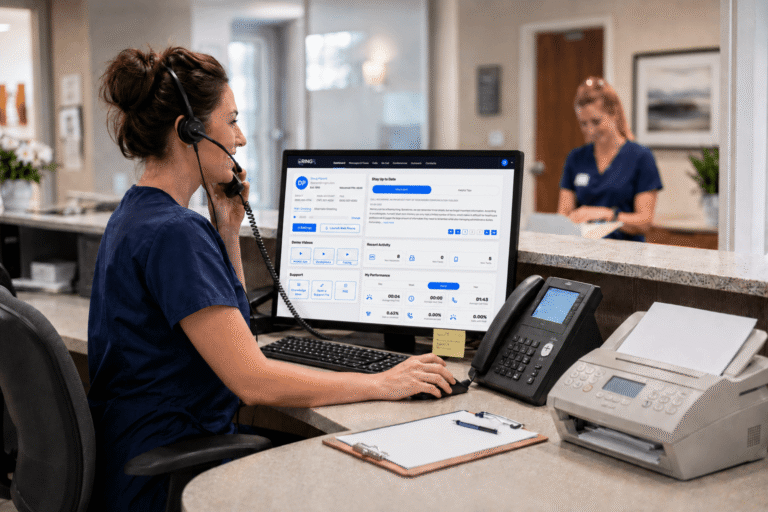

https://www.ringrx.com/hipaa-compliant-text-messages/A HIPAA-compliant VoIP provider can help healthcare practices manage calls, secure texting, fax, voicemail, video, routing, reminders, and follow-up while supporting patient privacy.
Healthcare communication often includes protected health information. A patient may call with a question, leave a voicemail, send a message, need a faxed document, or receive follow-up after a visit.
However, not every VoIP provider is built for healthcare. Practices still need HIPAA safeguards, BAA coverage, access controls, clear routing, staff training, and workflows that fit daily patient communication.
Missed calls, scattered text messages, and voicemails buried in separate apps can slow patient communication and add compliance risk. RingRx brings voice, secure texting, fax, video, and on-call communication into one HIPAA-compliant platform built for healthcare workflows. Start your RingRx free trial today.
Why a HIPAA-Compliant VoIP Provider Matters
A HIPAA-compliant VoIP provider matters because phone calls, voicemail, texts, faxes, and video visits can all involve protected health information.
Practices need more than basic calling. They need communication tools that support privacy, access control, routing, message review, and staff accountability.
When a provider does not understand healthcare workflows, the practice may end up managing compliance and communication gaps manually.
Why HIPAA Compliance Is Essential for Healthcare Communication
HIPAA compliance should align with how the practice communicates every day.
That means the vendor should support appropriate safeguards, BAA coverage, access controls, secure handling, and clear policies for calls, texts, voicemail, fax, video, and follow-up.
In practice, the safest setup makes the approved workflow easier than the workaround.
Where Generic VoIP Providers Fall Short
Generic VoIP tools may work for basic business calling, but healthcare practices often need more.
Staff may need secure texting, fax support, after-hours routing, voicemail review, video workflows, mobile access, and clear controls for who can access patient communication.
Without those pieces, teams may still rely on personal phones, separate fax tools, disconnected voicemail, or informal workarounds.
What a HIPAA-Compliant VoIP Provider Should Include
A useful healthcare VoIP platform should support the communication channels that patients and staff already use.
- Phone and call routing: Calls should be routed to the appropriate person, team, department, or coverage path.
- Secure texting: Staff should have an approved method for sending routine messages when texting is appropriate.
- Voicemail tools: Messages should be easier to review, route, and prioritize.
- Fax support: Referrals, records, and external documents should integrate with the broader workflow.
- Video support: Virtual visits should be scheduled, include reminders, and include follow-up.
- BAA coverage: The vendor should support appropriate business associate agreement requirements.
- Access controls: Practices should be able to manage who can send, receive, route, and review communication.
How to Evaluate Reliability and Support
Reliability matters because missed calls and delayed messages can disrupt patient communication.
Before switching, practices should review uptime expectations, backup options, number porting support, implementation help, staff training, and support availability.
In addition, the vendor should understand healthcare workflows, not only general business phone service.
How RingRx Supports a HIPAA-Compliant VoIP Provider Decision
RingRx gives healthcare practices a HIPAA-compliant communication platform for phone, secure texting, fax, video, voicemail, call routing, and on-call workflows.
For practices comparing HIPAA-compliant VoIP providers, RingRx helps teams manage patient communication from a single healthcare-focused platform.
Staff can route calls, send approved texts, review voicemail, manage fax workflows, support video communication, and coordinate after-hours coverage without relying on disconnected tools.
RingRx also supports HIPAA-compliant phone service workflows, helping practices reduce reliance on generic communication tools.
Common Healthcare VoIP Use Cases
A healthcare-focused VoIP platform can support several daily workflows.
- Routing calls to the right provider, team, or location
- Managing voicemail review and follow-up
- Sending approved routine text messages
- Supporting faxed referrals, records, and documents
- Coordinating after-hours coverage
- Supporting video and phone follow-up workflows
- Managing communication from approved mobile devices
These workflows still need clear staff ownership. Urgent, unclear, or clinical concerns should be routed to the right person or care pathway.
Common Concerns About Switching Providers
Practice leaders may worry about disruption, number porting, reliability, staff training, support, pricing, and whether the new provider will fit existing workflows.
Those concerns are reasonable. Before switching, practices should review implementation support, current number support, routing setup, fax needs, BAA coverage, and user permissions.
They should also avoid comparing providers only by the monthly phone price. The better question is whether the platform reduces tool-switching and helps staff manage patient communication more clearly.
What Practices Should Ask Before Choosing a Provider
Before choosing a HIPAA-compliant VoIP provider, practices should test the platform against real patient and staff needs.
- Does the vendor support HIPAA-related safeguards and BAA coverage?
- Can staff manage phone, secure texting, fax, video, voicemail, and routing in one platform?
- Can calls be routed by provider, team, location, schedule, or coverage path?
- Can current phone and fax numbers be supported?
- Can staff clearly manage user access and permissions?
- Can urgent or unclear messages escalate to a person?
- Can authorized users access communication from approved devices?
- Is pricing clear before the practice commits?
What to Avoid With Healthcare VoIP
Practices should avoid choosing a VoIP provider only because it appears inexpensive or familiar.
A generic system can still leave teams managing calls, texts, faxes, voicemail, video, and after-hours workflows in separate places.
Ultimately, the best provider should reduce tool-switching and make approved communication easier to manage.
Final Thoughts
A HIPAA-compliant VoIP provider should help practices securely and clearly manage patient communication across the channels they already use.
The practical value comes from connecting phone, secure texting, fax, video, voicemail, routing, reminders, and after-hours coverage inside one healthcare-focused workflow.
RingRx helps healthcare practices manage those channels through one HIPAA-compliant platform built for medical workflows.
Frequently Asked Questions
What should I look for in a HIPAA-compliant VoIP provider?
Look for BAA coverage, access controls, secure handling, call routing, voicemail tools, secure texting, fax, video, support, mobile access, and clear pricing.
Is a general VoIP service enough for medical practices?
Usually not. General VoIP services may lack healthcare-specific workflows, BAA coverage, secure texting, fax support, after-hours routing, and clear access controls.
How can a HIPAA-compliant VoIP provider help a practice?
A healthcare-focused VoIP provider can help practices route calls, manage voicemail, support secure texting, handle fax workflows, and coordinate after-hours coverage.
Do HIPAA-compliant VoIP providers need a BAA?
Yes. If a vendor may handle protected health information on behalf of a covered entity, practices should confirm that appropriate BAA coverage is in place.
This article is for general informational purposes and is not legal advice. Practices should review VoIP, patient communication, and privacy policies with their compliance, legal, or administrative teams.
You may also be interested in: RingRx: HIPAA Compliant Phone System Designed for Modern
Missed calls, scattered text messages, and voicemails buried in separate apps can slow patient communication and add compliance risk. RingRx brings voice, secure texting, fax, video, and on-call communication into one HIPAA-compliant platform built for healthcare workflows. Start your RingRx free trial today.