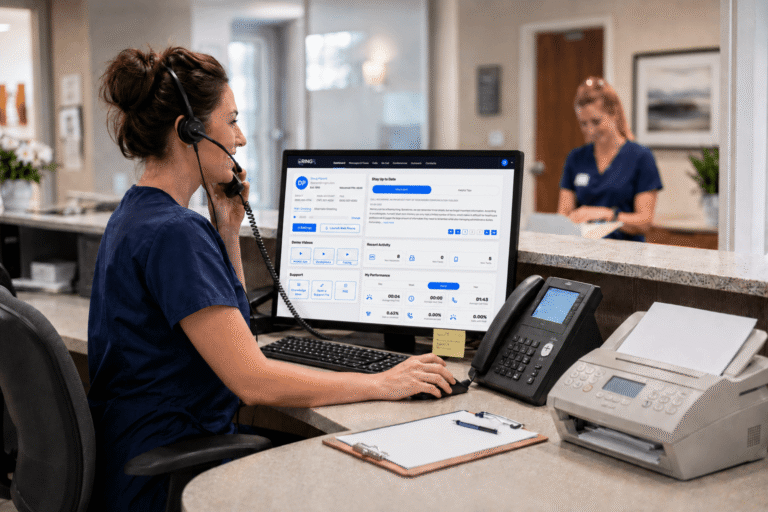

Healthcare teams handling high call volume still need a clear way to manage calls, messages, faxing, and follow-up without relying on disconnected tools. When those workflows are handled in one place, staff can respond faster and support patient communication more consistently.
Missed calls, scattered text messages, and voicemails buried in separate apps disrupt patient care and expose practices to compliance risks. They also erode patient trust, create longer waits, and waste staff time. RingRx supports HIPAA-compliant phone, text, fax, video, and on-call workflows in one platform for healthcare teams. See how RingRx can support healthcare communication in one place. Sign up for a free RingRx trial today!
The Daily Realities Teams Face Today
Many teams still have to jump between separate phone systems, faxing tools, and messaging apps to handle basic communication. That creates missed messages, duplicated work, and more room for delay. When volume is high, those gaps get harder to manage. Staff waste time switching tools, and patients feel the delay when follow-up is slow or poorly routed.
What HIPAA-Compliant Communication Should Cover
HIPAA-compliant communication still comes down to basics: secure handling, access controls, audit visibility, and systems designed to reduce risky workarounds. That matters most when teams are managing calls, messages, and follow-ups across multiple channels. Practices should look for communication tools that clearly and consistently support those workflows, without relying on consumer tools that create additional risk.
Unified Communication Workflows Built for Healthcare
The strongest platforms combine phone, text, fax, and routing into a single workflow. That makes it easier for staff to manage communication without switching between separate systems for each step. When call volume spikes, that kind of setup can reduce handoff gaps and make day-to-day communication easier to manage.
Transparent Pricing That Eliminates Surprises
Pricing clarity matters because healthcare teams need to know what they are paying for and what they are actually getting. Predictable pricing can make budgeting easier, especially when organizations are trying to avoid surprise costs from layered tools or usage-based charges.
Overcoming the Common Hesitations
Many leaders worry that changing systems will disrupt daily operations. The better question is whether the setup, training, and rollout are clear enough to keep disruption manageable. Reliability and compliance matter too, especially when teams are comparing healthcare-specific tools against cheaper alternatives.
- A phased rollout can make the transition easier to manage.
- Reliability across phone, text, fax, and routing should be tested before full rollout.
- Practices should look for clear documentation that supports HIPAA-compliant communication workflows.
Clear rollout planning matters because the system should make communication easier to manage, not add another layer of work.
Real-World Results Across Diverse Care Settings
Organizations handling high communication volume often run into the same problems: missed reminders, delayed follow-up, and too many handoffs between tools. A more unified setup can make those workflows easier to manage and reduce friction for staff. The main benefit is simpler day-to-day communication. When teams are not chasing messages across disconnected tools, follow-up is easier to manage, and staff spend less time on workarounds.
Market Momentum Behind Secure Messaging Adoption
The practical issue is simpler than the market data. Teams need communication tools that are easier to manage, support compliant workflows, and add less friction when volume is high.
Selecting the Right Platform for Long-Term Success
Choosing a solution starts with matching features to actual workflows. Look for native support for medical terminology, easy integration with existing electronic health records, and responsive customer support based in the United States. The best platforms also offer trial periods so teams can test real scenarios before committing. Focus on those that emphasize healthcare-first design, unified channels, and straightforward pricing. These qualities turn a simple technology upgrade into a strategic advantage that grows with the organization.
Evaluating options through the lens of real medical needs ensures the chosen system delivers lasting value. Platforms that combine all three core strengths, purpose-built design, unbreakable compliance, and predictable costs, consistently outperform generic alternatives in both daily use and overall return on investment.
What This Means in Practice
For healthcare teams handling high communication volume, the main goal is simpler day-to-day management. Fewer disconnected tools, clearer routing, and more consistent follow-up can help reduce friction for staff and make patient communication easier to manage.
Frequently Asked Questions
What features should a HIPAA-compliant messaging tool have for healthcare call centers?
A truly HIPAA-compliant messaging tool should include end-to-end encryption, role-based access controls, audit logs, automatic session timeouts, and built-in consent tracking. It should also provide secure routing to ensure that every patient interaction is fully traceable. The best platforms go beyond basic compliance by unifying phone, text, and fax into one healthcare-specific dashboard, eliminating the need for unsecured consumer apps that put protected health information at risk.
How do unified communication platforms improve efficiency in healthcare call centers?
Unified platforms eliminate the need for staff to switch between separate phone systems, fax machines, and messaging apps, reducing missed messages and duplicated efforts. Features like templated responses, automated appointment reminders, and priority routing for urgent cases significantly reduce manual work. Organizations that have adopted these tools report faster response times, lower appointment no-show rates, and improved patient satisfaction, all without expanding their workforce.
Are HIPAA-compliant messaging solutions cost-effective for small or mid-sized healthcare practices?
Yes, modern HIPAA-compliant platforms are designed with transparent, predictable pricing that eliminates the hidden fees and per-message charges common with legacy systems. This makes them accessible for practices of all sizes, from family therapy centers to home health agencies. By consolidating multiple communication tools into one solution, organizations typically see lower overall costs while freeing up budget for staffing, training, and improved patient care.
Disclaimer: The above helpful resources content contains personal opinions and experiences. The information provided is for general knowledge and does not constitute professional advice.
You may also be interested in: Hospitals and Enterprise – RingRx
Missed calls, scattered text messages and voicemails buried in separate apps disrupt patient care and expose practices to compliance risks. Erodes patient trust, longer waits and wasted staff time. RingRx changes that by combining voice, secure texting, fax, video visits, and on-call scheduling into one intuitive, fully HIPAA-compliant platform designed specifically for medical workflows. See how your practice can grow, run more smoothly, and deliver a better experience for every patient. Sign up for a free RingRx Free trial today!
Powered by flareAI.co