Quick Listen:
The healthcare world has undergone a subtle yet profound transformation in recent years. Across clinics large and small, patients have quietly stopped staring at their phones waiting for a call-back or sifting through voicemail. Instead, a growing number now send a quick, protected text to their doctor, nurse, or care team and frequently receive a considered reply in a matter of minutes. This straightforward evolution, powered by secure messaging platforms, is fundamentally changing how medical practices build relationships with the people they serve and how those individuals take an active role in managing their own health.
Modern secure messaging tools go well beyond the old model of sending automated appointment reminders. Today’s HIPAA-compliant platforms support genuine, two-way conversations covering new symptoms, lab result interpretations, questions about prescriptions, post-visit instructions, and more all without the familiar frustrations of endless phone tag or overflowing waiting rooms. What emerges is something distinctly more personal: a reliable, direct channel that fosters trust and keeps patients meaningfully involved in decisions about their care.
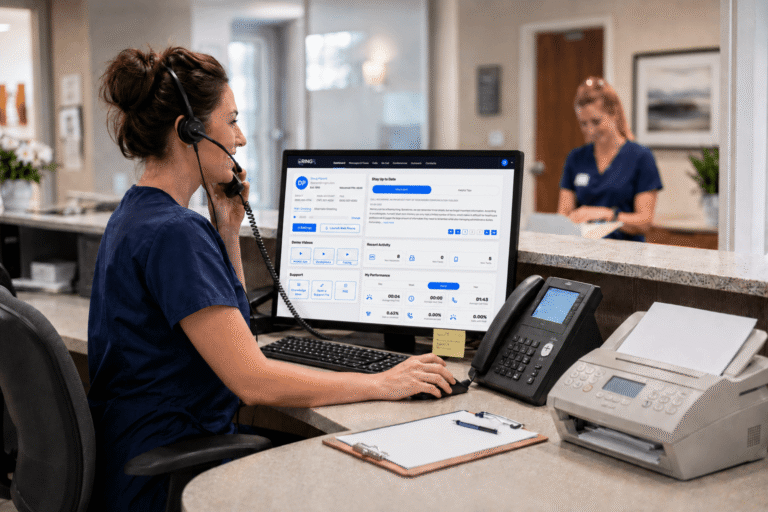
Missed calls, scattered text messages, voicemails buried in separate apps disrupt patient care and expose practices to compliance risks. Erodes patient trust, longer waits and wasted staff time. RingRx changes that by combining voice, secure texting, fax, video visits, and on-call scheduling into one intuitive, fully HIPAA-compliant platform designed specifically for medical workflows. See how your practice can grow, run more smoothly, and deliver a better experience for every patient. Sign Up for RingRx Free Trial today!
Why Secure Messaging Has Gained Traction So Quickly
Outpatient practices operate under constant pressure to become more efficient while simultaneously offering more individualized attention. Legacy phone systems frequently become choke points receptionists and nurses spend large portions of the day managing incoming calls, relaying messages, clarifying instructions, or tracking down the right clinician. Secure messaging slices through much of that inefficiency. Patients can raise non-urgent concerns on their own schedule, while staff reply when it best fits their workflow, dramatically reducing disruptions to face-to-face patient care.
The COVID-19 pandemic dramatically accelerated adoption; contactless communication suddenly felt essential rather than optional. When normal routines eventually returned, the convenience proved sticky. Patients grew accustomed to the speed and accessibility, while clinics discovered measurable advantages: reduced no-show rates, faster closure of routine clinical questions, and deeper patient relationships that translate into improved treatment-plan follow-through.
How Secure Messaging Strengthens Everyday Patient Engagement
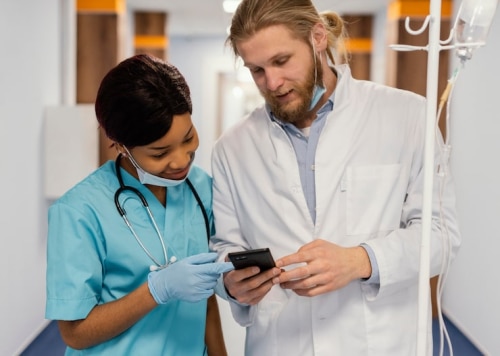
True engagement means patients feel listened to, respected, and capable of influencing their own care journey. Secure texting creates space for continuous, low-friction dialogue that brief office visits rarely allow. A person recuperating after a procedure can report changing pain levels or unexpected side effects the same day without booking another appointment. An individual living with diabetes can upload recent glucose patterns or ask practical questions about carbohydrate counting between scheduled check-ins.
Real-world experience consistently shows higher patient satisfaction when this channel exists. Text-based outreach typically sees quicker response rates than email or voicemail, and that responsiveness is closely linked to better clinical results higher rates of medication adherence, lower hospital readmission numbers, and a stronger perception that the care team genuinely values the patient’s daily experience. Practices that encourage regular messaging often describe a noticeable shift: patients move from passive recipients to engaged collaborators who feel genuinely partnered in their health management.
Making Life Easier for Clinicians and Support Staff
The advantages flow inward as well. Leading secure messaging solutions integrate natively with electronic health record systems, ensuring every exchange remains permanently attached to the correct patient record no more hunting for handwritten notes or disconnected message threads. Internal team communication also improves; physicians and nurses can quickly confer on ambiguous cases or coordinate care plans without stepping outside the secure environment.
For front-line personnel the difference is immediate and practical. Reception areas field far fewer incoming calls, allowing more focused attention on in-person arrivals. Nursing staff can prioritize and triage incoming messages more effectively, escalating only those questions that truly require physician-level input. Because the system is asynchronous by design, no one feels compelled to drop everything and respond during the busiest parts of the day yet replies still arrive fast enough to maintain momentum in patient care.
Navigating the Most Frequent Hesitations
Adoption is rarely instantaneous. Some practices initially worry that message volume will swamp already busy teams or that patients will begin expecting instant replies around the clock. Others express concern about losing nuance when tone of voice and facial expression are absent. Thoughtful implementations address these realities head-on by establishing transparent expectations: secure messaging is reserved for non-emergent matters, typical response times fall within one business day, and clear pathways exist to escalate urgent issues to telephone or in-person evaluation.
Privacy and security remain non-negotiable cornerstones. Industry-leading platforms employ end-to-end encryption and satisfy rigorous regulatory requirements, providing reassurance to both patients and providers that protected health information stays genuinely protected.
Market Signals Pointing to Continued Expansion
Demand for secure clinical communication tools continues to climb as practices place greater emphasis on protected, streamlined interaction. The clinical communication and collaboration sector is experiencing strong momentum, with platforms steadily evolving from standalone secure texting into comprehensive ecosystems that connect messaging with scheduling, nurse-call systems, on-call directories, and real-time clinician availability. Secure messaging in healthcare specifically reflects robust, sustained interest, fueled by tightening compliance obligations, growing telehealth adoption, and an unmistakable shift toward genuinely patient-centered models of care.
North America currently leads global adoption, bolstered by stringent regulatory frameworks and widespread priority on data protection, while other regions particularly Asia-Pacific are advancing rapidly as digital infrastructure and healthcare investment expand.
Observed Outcomes and the Road Ahead
Clinics that fully integrate secure messaging frequently describe a reinforcing cycle: satisfied patients remain loyal, clinician and staff burnout decreases, and key performance indicators move in the right direction. One multi-site practice discovered that activating bidirectional texting transformed their main telephone line into a genuine communication nerve center patients reported feeling far more heard, while staff spent noticeably less time trapped in hold queues or message-relay loops.
As these technologies continue to mature, expect to see additional capabilities layered on smarter automated reminders, context-aware response suggestions, and perhaps AI-supported preliminary sorting of incoming messages. Yet the fundamental appeal remains elegantly simple: protected, direct conversation that aligns with the rhythm of contemporary life. For any practice still anchored to legacy telephony, the takeaway grows increasingly difficult to ignore today’s patients expect convenient, modern ways to reach their care team, and meeting that expectation can meaningfully elevate engagement for years to come.
At its heart, medicine has always revolved around human connection. Secure messaging does not replace that truth; it simply delivers the connection more swiftly, more safely, and perhaps most importantly more humanely.
Frequently Asked Questions
How does secure messaging improve patient engagement in healthcare clinics?
Secure messaging enables continuous, two-way communication between patients and their care teams outside of scheduled appointments, allowing patients to report symptoms, ask questions about prescriptions, and share health data like glucose readings in real time. This low-friction channel makes patients feel heard and respected, shifting them from passive recipients to active collaborators in their own care. Research and real-world outcomes consistently link this kind of responsive communication to higher medication adherence, lower hospital readmission rates, and stronger overall patient satisfaction.
Is secure messaging in healthcare HIPAA-compliant and safe to use for sharing medical information?
Yes purpose-built clinical messaging platforms are designed to meet HIPAA requirements, using end-to-end encryption to ensure that protected health information remains secure throughout every exchange. Unlike standard SMS or consumer apps, these tools are built specifically around healthcare’s strict regulatory standards, giving both patients and providers confidence that sensitive data stays protected. Leading platforms also integrate directly with electronic health record (EHR) systems, so every message is automatically tied to the correct patient record for a complete, auditable communication history.
What are the operational benefits of secure messaging for clinic staff and physicians?
Secure messaging significantly reduces the volume of incoming phone calls, freeing front-desk and nursing staff to focus on in-person patient care rather than managing hold queues and voicemail relay loops. Because the system is asynchronous, staff can triage and respond to messages at natural breaks in their workflow rather than being interrupted during critical moments. Physicians and nurses can also use the platform for internal care coordination, quickly consulting on complex cases without leaving the secure environment ultimately reducing administrative burden and contributing to lower rates of clinician burnout.
Disclaimer: The above helpful resources content contains personal opinions and experiences. The information provided is for general knowledge and does not constitute professional advice.
You may also be interested in: Modern Faxing in Healthcare: Go Cloud-Based Without Ditching
Missed calls, scattered text messages, voicemails buried in separate apps disrupt patient care and expose practices to compliance risks. Erodes patient trust, longer waits and wasted staff time. RingRx changes that by combining voice, secure texting, fax, video visits, and on-call scheduling into one intuitive, fully HIPAA-compliant platform designed specifically for medical workflows. See how your practice can grow, run more smoothly, and deliver a better experience for every patient. Sign Up for RingRx Free Trial today!
Powered by flareAI.co