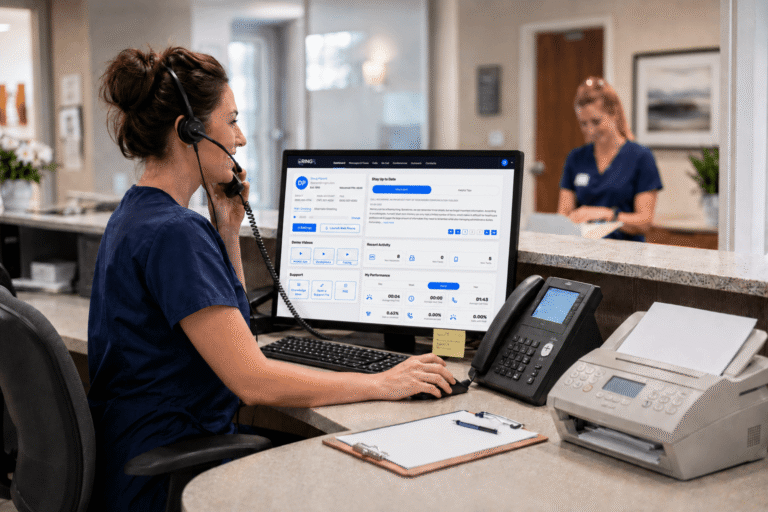

Secure fax systems for medical practices can help teams send, receive, review, and track lab results, insurance documents, referrals, and other patient paperwork without relying only on paper machines. For many practices, fax is still part of daily healthcare communication.
Medical practices often need to exchange documents with labs, payers, specialists, hospitals, and outside providers. When fax workflows depend on shared machines or paper trays, staff can lose time confirming receipt, routing documents, and tracking what still needs follow-up.
RingRx supports HIPAA-compliant phone, text, fax, video, voicemail, call routing, and on-call workflows in one platform for healthcare teams. That gives practices a clearer way to manage fax alongside other patient communication channels.
Missed calls, scattered text messages, and voicemails buried in separate apps can disrupt patient care and create compliance concerns. They can also erode trust, lengthen response times, and waste staff time. RingRx supports HIPAA-compliant phone, text, fax, video, and on-call workflows in one platform for healthcare teams. See how RingRx can help your practice manage communication in one place. Sign up for a free RingRx trial today.
Why Fax Still Matters in Medical Practices
Fax remains common because many healthcare partners still use it. Labs, payers, referral partners, and smaller practices may send or request documents by fax even when other systems are available.
The issue is not that fax exists. Instead, the problem is that traditional fax workflows often rely on paper, shared devices, manual confirmation, and staff memory.
Secure fax systems for medical practices can help keep fax available while making the workflow easier to track and manage.
Where Traditional Fax Workflows Create Risk and Friction
Paper fax workflows can create small but important problems. For example, a document may sit on a shared tray, be routed to the wrong person, or require manual confirmation before the staff know it arrived.
Those steps add work for the front desk, billing, records, and clinical support teams. Over time, staff may spend more time checking fax status than acting on the information.
A cloud-based fax workflow can reduce that friction by making sent and received documents easier to find, review, and route.
What Secure Fax Systems Should Support
A secure fax system should support the document workflow practices already used. It should also help staff manage fax activity without creating another disconnected inbox.
Useful capabilities may include:
- Web-based sending and receiving for approved users
- Support for existing fax workflows where needed
- Delivery records and searchable fax history
- Secure access controls for staff
- Cloud-based review of sent and received documents
- Phone, text, voicemail, and routing tools in the same platform
When those capabilities are available, staff have fewer paper-based steps to manage and a clearer view of fax activity.
Supporting HIPAA-Conscious Fax Communication
Faxed documents may include protected health information. Therefore, practices need fax workflows that support HIPAA-compliant communication and practical privacy controls.
Technology alone does not make a practice compliant. Teams still need policies, staff training, appropriate vendor agreements, and clear rules for handling patient documents.
Before choosing a secure fax system, practices should confirm whether the vendor offers a business associate agreement. They should also review how fax data is transmitted, stored, accessed, and logged.
How Secure Fax Helps Lab and Insurance Workflows
Lab and insurance communication often depends on timely document exchange. Practices may need to send referral information, receive lab results, submit prior authorization paperwork, or share supporting records.
If those steps rely on paper trays and manual follow-up, staff can lose time confirming whether a document was sent or received. In addition, it can be harder to see who reviewed a fax and what still needs action.
A secure fax workflow provides teams with a clearer way to send, receive, and track documents related to lab and insurance communication.
Addressing Common Concerns Before Switching
Changing fax workflows can raise practical questions. Can the practice keep its fax numbers? Will staff need training? Can existing machine fax workflows still be supported?
A smoother rollout starts with a review of current fax numbers, document types, staff responsibilities, and routing needs. From there, the team can decide which workflows should move first.
Common setup questions include:
- Can current fax numbers be kept or ported?
- Who sends, receives, and reviews faxes?
- How are delivery records stored?
- Which staff members need access?
- What setup and training support is included?
The goal is not to change every fax workflow at once. Instead, it is to make fax easier to manage while preserving continuity with outside partners.
Choosing Secure Fax Systems for Medical Practices
Secure fax systems for medical practices are most useful when they fit existing healthcare workflows. The right platform should help staff manage faxed documents without adding unnecessary complexity.
As they compare options, practices should look for secure access, delivery records, practical setup support, predictable pricing, and workflows that fit current lab, insurance, referral, and records needs.
For a broader context on healthcare communication workflows, this review of secure healthcare communication provides a general background.
Better fax tools do not remove the need for staff review. However, they give teams a clearer structure for sending, receiving, routing, and tracking documents.
Frequently Asked Questions
Why do medical practices still use fax for lab and insurance communication?
Many labs, payers, specialists, hospitals, and outside providers still use fax for referrals, authorizations, records requests, and supporting documents. Secure fax systems can make those workflows easier to track and manage.
Are secure fax systems for medical practices HIPAA-compliant?
Secure fax systems can support HIPAA-compliant workflows when they include appropriate safeguards, access controls, and vendor agreements. Practices still need policies, staff training, and clear rules for handling patient documents.
What should practices look for in a secure fax system?
Practices should look for web-based faxing, delivery records, staff access controls, searchable fax history, number porting support, setup help, and related communication workflows, such as phone, text, voicemail, and routing.
Disclaimer: This content is for general informational purposes and does not constitute legal or compliance advice.
You may also be interested in: RingRx vs. Nextiva: Compare VoIP for Healthcare Practices
Missed calls, scattered text messages, and voicemails buried in separate apps can disrupt patient care and create compliance concerns. They can also erode trust, lengthen response times, and waste staff time. RingRx supports HIPAA-compliant phone, text, fax, video, and on-call workflows in one platform for healthcare teams. See how RingRx can help your practice manage communication in one place.