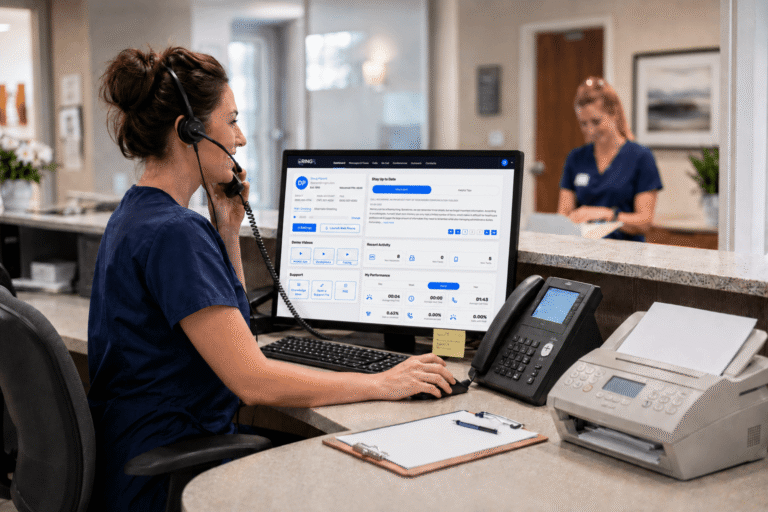

Remote telemedicine practices depend on clear, reliable communication. When teams are working across locations, calls, messages, and follow-ups need to stay organized, responsive, and secure.
Missed calls, scattered text messages and voicemails buried in separate apps disrupt patient care and expose practices to compliance risks. Erodes patient trust, longer waits and wasted staff time. RingRx changes that by combining voice, secure texting, fax, video visits, and on-call scheduling into one intuitive, fully HIPAA-compliant platform designed specifically for medical workflows. See how RingRx can support secure communication for remote and multi-location care teams. Start your free RingRx trial today!
The Growth of Telemedicine in Remote Settings
Telemedicine has made it easier for practices to stay in touch with patients regardless of distance. That is especially important for smaller clinics, behavioral health providers, and multi-location teams that need to coordinate care without relying on one physical office. That flexibility also raises the bar for communication. Patients still expect prompt replies, clear handoffs, and secure follow-up. If phone, messaging, fax, and video are split across separate tools, remote care gets harder to manage.
Where Traditional Tools Fall Short
Many practices started remote care with whatever tools were available, such as consumer video apps, standard landlines, or disconnected messaging tools. That may work for basic use at first, but the gaps quickly become apparent in a healthcare setting. Calls drop. Messages get missed. Faxing stays manual. Staff spend time troubleshooting instead of following up with patients. For smaller practices, those handoff problems create delays, confusion, and more admin work.
HIPAA Compliance as the Cornerstone of Secure Communication
Remote care still has to meet the same privacy standards as in-office communication. Calls, texts, voicemails, and faxed documents need to be handled through secure, access-controlled workflows that support HIPAA-compliant communication. Features like secure texting, voicemail controls, and audit visibility matter because they help practices manage communication more safely across distributed teams. Without that structure, remote workflows can create compliance and trust problems for a practice.
The Power of Secure VoIP in Daily Operations
Secure VoIP helps bring phone, text, fax, and video into one communication workflow. That makes it easier for staff to manage calls, send secure messages, handle faxing, and support remote follow-up without bouncing between separate tools. Call routing and after-hours call handling are especially important for remote teams. They help practices direct callers to the right person, reduce missed calls, and avoid gaps when staff are working across locations.
Essential Features Designed for Medical Practices
Effective systems should cover the basics well. Spam call blocking helps cut distractions. Number porting helps practices keep existing contact details during a transition so patients and referral sources are not left guessing.
Beyond basics, the platform supports:
- Patient reminder texting system options that boost appointment attendance through timely, secure notifications
- Secure messaging for healthcare providers for fast internal coordination without risking compliance violations
- Healthcare fax solution integration for quick, protected document exchange that replaces outdated paper processes
- HIPAA-compliant SMS for healthcare that meets regulatory standards while remaining convenient for both parties
- Secure video capabilities that support remote care workflows without forcing staff to switch between separate tools
Taken together, these tools help practices manage day-to-day communication in one place instead of patching it together across separate systems.
Tackling the Hesitations Head-On
Switching communication systems can seem disruptive at first. Practices often worry about downtime, compatibility issues, or reliability across phone, text, fax, and routing functions. Staff wonder whether the change will complicate daily workflows or create new headaches during busy periods.
Practices usually worry about downtime, setup complexity, and whether staff will have to relearn too much at once. Those concerns are real. The transition only works if number porting, routing setup, and staff onboarding are handled clearly. Practices should look for a straightforward setup, clear documentation, and pricing they can understand before committing.
What Changes Day to Day
With better routing, after-hours handling, and fewer handoff gaps, practices can reduce missed calls and better organize follow-ups. Secure texting and reminders can also make it easier to stay in touch with patients without adding another tool for staff to manage. For remote and multi-location teams, that matters most in daily operations. Staff spend less time chasing messages across systems and more time handling the work in front of them.
Selecting a Platform Built for Healthcare
Frequently Asked Questions
Why do remote telemedicine practices need secure VoIP instead of regular phone or video apps?
Consumer video apps and standard phone lines lack the encryption and reliability required in clinical settings, calls drop at critical moments, and messages go unprotected. Secure VoIP provides a HIPAA-compliant communication platform that combines phone, text, fax, and video into a single unified system. This ensures patient health information remains private at every step while providing providers with the consistent, professional-grade performance that remote care demands.
How does HIPAA-compliant VoIP protect patient privacy in telemedicine?
HIPAA-compliant VoIP encrypts all communication channels, including calls, texts, voicemail, and fax, to prevent unauthorized access during transmission and storage. Features such as secure messaging for healthcare providers and HIPAA-compliant call recording enable practices to share sensitive patient information and conduct training without risking compliance violations. This built-in protection makes virtual visits feel as safe and trustworthy as in-person appointments.
What key features should a telemedicine practice look for in a secure VoIP system?
A healthcare-focused VoIP system should include call routing, after-hours call handling, patient texting, spam call blocking, and secure faxing. Practices should also look for tools that help staff manage communication in a single place, rather than switching between separate systems.
Disclaimer: The above helpful resources content contains personal opinions and experiences. The information provided is for general knowledge and does not constitute professional advice.
You may also be interested in: RingRx: HIPAA Compliant Phone System Designed for Modern
Missed calls, scattered text messages, and voicemails buried in separate apps disrupt patient care and expose practices to compliance risks. They also erode patient trust, create longer waits, and waste staff time. RingRx changes that by combining voice, secure texting, fax, video visits, and on-call scheduling into one intuitive, fully HIPAA-compliant platform designed specifically for medical workflows. See how your practice can grow, run more smoothly, and deliver a better experience for every patient. Sign up for a free RingRx trial today!
Powered by flareAI.co