
The rapid rise of telemedicine has fundamentally changed how healthcare is delivered, moving countless consultations from exam rooms to screens and phones. What began as a convenient alternative has become essential for follow-ups, mental health support, chronic condition monitoring, and routine care. Amid this shift, one understated capability stands out as increasingly valuable for providers who want to protect both patients and themselves: secure, compliant recording of telemedicine audio encounters. When implemented thoughtfully, these recordings serve as far more than simple backups they become reliable evidence that conversations happened as intended, instructions were clear, and care adhered to legal and regulatory standards.
In today’s environment of audits, malpractice inquiries, and payer reviews, the ability to point to an objective, timestamped record often proves decisive. Practices that record appropriately can demonstrate without ambiguity that informed consent was secured, risks and benefits were explained, and follow-up plans were understood.
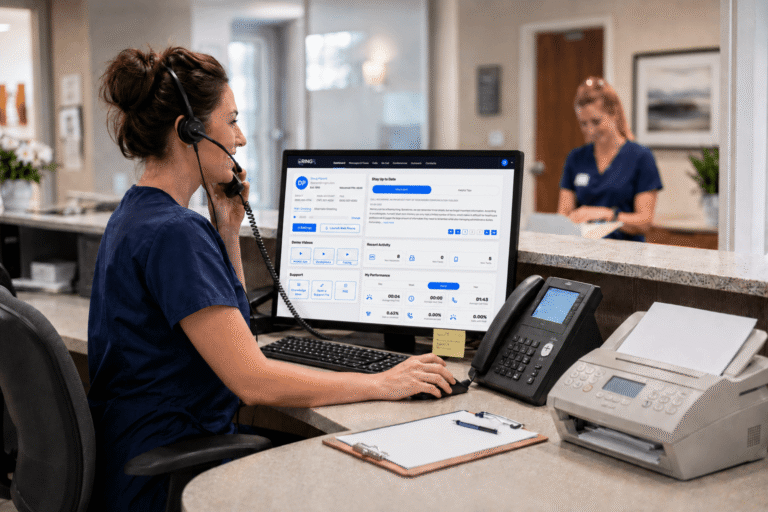
Missed calls, scattered text messages, voicemails buried in separate apps disrupt patient care and expose practices to compliance risks. Erodes patient trust, longer waits and wasted staff time. RingRx changes that by combining voice, secure texting, fax, video visits, and on-call scheduling into one intuitive, fully HIPAA-compliant platform designed specifically for medical workflows. See how your practice can grow, run more smoothly, and deliver a better experience for every patient. Sign Up for RingRx Free Trial today!
The Evolving Role of Documentation in Virtual Care
Telemedicine removes geographic and logistical barriers, allowing patients in rural areas or with mobility challenges to receive timely care without leaving home. Yet expanded access brings expanded accountability. Regulators, licensing boards, and liability insurers expect providers to maintain clear proof of critical communications, especially when prescribing medications, discussing sensitive diagnoses, or managing behavioral health conditions.
Handwritten or typed notes, no matter how detailed, remain subjective interpretations filtered through memory and time pressure. A recording captures exact language, tone of voice, pauses, and patient affirmations in ways no summary can replicate. When a patient later claims “I was never told about that side effect” or “You didn’t explain the follow-up steps,” the audio can resolve the dispute quickly and fairly.
Platforms engineered specifically for healthcare make this capability routine rather than cumbersome, embedding recording within secure, encrypted workflows that respect patient privacy from start to finish.
Navigating HIPAA Compliance in Audio Recording
HIPAA continues to set the non-negotiable floor for protecting protected health information (PHI) in telehealth. The Privacy Rule requires reasonable safeguards against unauthorized use or disclosure, while the Security Rule governs electronic PHI transmitted or stored digitally.
Recording telemedicine calls is fully permissible under HIPAA provided certain conditions are met:
- Patients give explicit consent typically verbal, captured at the beginning of the session and documented.
- Recordings are stored using strong encryption with strict access controls.
- The technology vendor maintains a signed Business Associate Agreement that outlines shared compliance responsibilities.
- Audit logs track who accessed recordings and when.
Department of Health and Human Services guidance confirms that audio-only telehealth can satisfy HIPAA when appropriate safeguards are in place. Purpose-built healthcare communication platforms avoid the vulnerabilities that plague general-purpose tools, giving providers confidence that their recording practices will withstand scrutiny.
Strengthening Legal and Regulatory Protection
Beyond basic compliance, recordings frequently become the most persuasive evidence in liability matters. Malpractice allegations often center on alleged miscommunication: Was the standard of care explained adequately? Were warning signs described clearly? Did the patient acknowledge understanding discharge instructions?
An unaltered audio file can settle these questions decisively. In behavioral health, where therapeutic alliance and precise instruction are paramount, recordings help verify that safety plans, medication changes, and crisis protocols were communicated effectively. For practices prescribing controlled substances via telehealth, recordings provide additional assurance that DEA and state requirements for patient education were fulfilled.
Payers and accrediting organizations increasingly look for robust documentation when reviewing telehealth claims or quality metrics. Having verifiable records reduces friction during audits and strengthens a practice’s position when defending billing or clinical decisions.
Turning Recordings into Tools for Continuous Improvement
The benefits extend well beyond defense. Thoughtful review of recorded sessions always with proper consent and de-identification when used for education reveals patterns that notes alone rarely expose. Clinicians may discover they consistently speak too quickly during medication counseling or overlook opportunities to invite questions.
Training becomes more concrete. New providers can listen to exemplary interactions (with permission) to model effective communication. Supervisors can offer targeted coaching based on real examples rather than generalized advice. Over time, this feedback loop sharpens clinical and interpersonal skills across the practice, ultimately raising the standard of care delivered through virtual channels.
Overcoming Hesitation: Addressing Provider Concerns
Many clinicians initially resist recording, fearing it will feel intrusive, add administrative overhead, or alienate patients. In practice, most patients respond positively when the purpose is framed transparently: “We record for accuracy and to protect both of us, just as we document notes.” That brief explanation often builds rather than erodes trust.
State recording-consent laws differ some follow one-party consent, others require all-party but HIPAA’s federal overlay demands PHI protection regardless of state rules. Healthcare-specific platforms handle these variations through configurable settings, simplifying multi-state operations.
Cost objections have largely disappeared. Modern cloud-based systems deliver transparent, predictable pricing without surprise overages, making enterprise-grade recording accessible to independent practices and small clinics alike.
Selecting a Platform That Matches Clinical Reality
Not every communication tool is suitable for medical environments. The strongest options share several hallmarks:
- Native HIPAA compliance featuring end-to-end encryption, granular access controls, and comprehensive audit trails
- Intuitive consent workflows that document patient agreement without disrupting the visit
- Flexible recording controls that allow providers to start, pause, or exclude segments as needed
- Seamless integration with call routing, secure texting, e-fax, and virtual visit features
When these elements are designed around real medical workflows rather than retrofitted from general business tools, compliance stops feeling like a burden and starts functioning as a natural extension of daily practice.
The Path Forward: Accountability as a Competitive Advantage
Telemedicine shows no signs of slowing. As adoption deepens and patients expect virtual options as standard care, the practices that thrive will be those that combine convenience with demonstrable accountability. Secure call recording, when managed responsibly, delivers exactly that balance.
It offers providers peace of mind, patients stronger protection, and the entire care team a clearer picture of what was actually communicated. In a domain where precision and trust are everything, the quiet presence of an accurate record can make a profound difference.
For medical practices seeking a unified, healthcare-first platform that embeds compliant recording within reliable phone, text, fax, and video capabilities, RingRx is built specifically to meet those demands.
Frequently Asked Questions
Is it legal to record telemedicine calls under HIPAA?
Yes, recording telemedicine calls is fully permissible under HIPAA as long as specific conditions are met. Patients must provide explicit consent at the start of the session, recordings must be stored with strong encryption and strict access controls, and the technology vendor must have a signed Business Associate Agreement (BAA) in place. Audit logs tracking who accessed recordings and when are also required to maintain compliance.
How does telemedicine call recording protect healthcare providers from malpractice claims?
Secure audio recordings serve as objective, timestamped evidence that critical communications such as informed consent, medication instructions, and follow-up plans took place as intended. When malpractice allegations arise around miscommunication, an unaltered audio file can decisively resolve disputes without relying solely on handwritten notes or memory. This is especially valuable in behavioral health and controlled substance prescribing, where precise documentation of patient education is required by DEA and state regulations.
What features should a HIPAA-compliant telemedicine call recording platform include?
A healthcare-grade recording platform should offer end-to-end encryption, granular access controls, and comprehensive audit trails as baseline requirements. It should also include intuitive consent workflows that document patient agreement without disrupting the visit, flexible recording controls, and seamless integration with other clinical communication tools like secure texting, e-fax, and virtual visits. Platforms built natively for medical workflows rather than adapted from general business tools make compliance a natural part of daily practice rather than an added burden.
Disclaimer: The above helpful resources content contains personal opinions and experiences. The information provided is for general knowledge and does not constitute professional advice.
You may also be interested in: RingRx: HIPAA Compliant Phone System Designed for Modern
Missed calls, scattered text messages, voicemails buried in separate apps disrupt patient care and expose practices to compliance risks. Erodes patient trust, longer waits and wasted staff time. RingRx changes that by combining voice, secure texting, fax, video visits, and on-call scheduling into one intuitive, fully HIPAA-compliant platform designed specifically for medical workflows. See how your practice can grow, run more smoothly, and deliver a better experience for every patient. Sign Up for RingRx Free Trial today!
Powered by flareAI.co