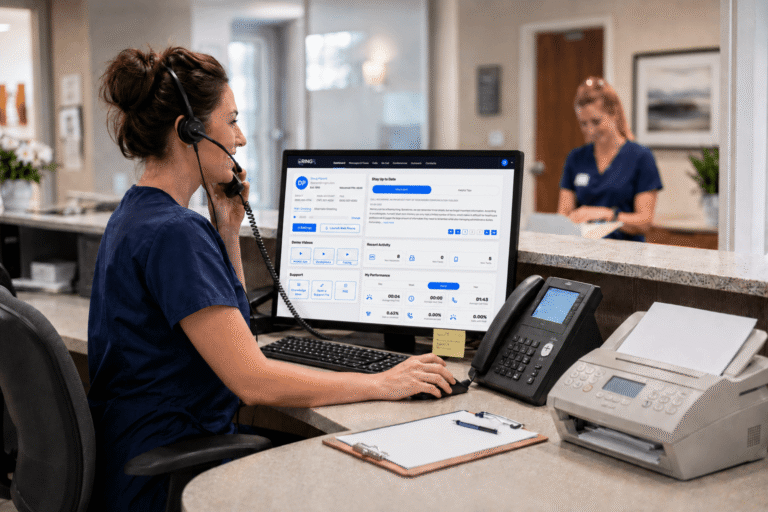

Cloud-based healthcare communication platforms can help medical organizations manage phone, text, fax, video, voicemail, and routing without maintaining separate on-premise tools for every workflow. For clinics and healthcare organizations, the practical value is simpler communication management and less reliance on aging office hardware.
Many healthcare teams still rely on a mix of desk phones, fax machines, voicemail, and separate messaging tools. When those systems are disconnected, staff and IT teams may spend extra time managing setup, access, troubleshooting, and routine changes.
RingRx supports HIPAA-compliant phone, text, fax, video, voicemail, call routing, and on-call workflows in one platform for healthcare teams. That gives practices a more organized way to manage patient communication from one place.
Missed calls, scattered text messages, and voicemails buried in separate apps can disrupt patient care and create compliance concerns. They can also erode trust, lengthen response times, and waste staff time. RingRx supports HIPAA-compliant phone, text, fax, video, and on-call workflows in one platform for healthcare teams. See how RingRx can help your practice manage communication in one place. Sign up for a free RingRx trial today.
Why Legacy Communication Systems Add IT Work
Legacy phone and fax systems often require local hardware, vendor coordination, manual setup, and ongoing troubleshooting. Even small changes can create work when teams need to update users, call routing, voicemail boxes, or fax access.
Those tasks may not look large one at a time. However, they add up when the organization is managing multiple locations, changing staff roles, or supporting hybrid work.
Cloud-based healthcare communication platforms can reduce some of that operational friction by consolidating more communication management into a single hosted system.
How Cloud-Based Platforms Shift Daily Management
A cloud-based communication platform does not eliminate all IT responsibilities. It can, however, reduce the need to manage separate physical systems for phone, fax, voicemail, and routing.
For example, approved administrators may be able to manage users, call flows, voicemail access, and routing changes through a portal, rather than coordinating every update with hardware or separate vendors.
As a result, healthcare teams can make routine communication changes with a clearer process and fewer disconnected systems.
What Cloud-Based Healthcare Communication Platforms Should Support
A healthcare communication platform should support the channels staff already use. It should also make daily administration easier without creating privacy or access-control gaps.
Useful capabilities may include:
- Phone and call routing by role, provider, department, or schedule
- Secure texting for appropriate patient communication
- Cloud-based faxing that staff can review and track
- Voicemail access and transcription where available
- Video communication for practices that offer virtual visits
- After-hours and on-call routing controls
- Mobile and desk phone access for approved users
When these tools work together, staff and administrators have fewer separate systems to manage.
Supporting HIPAA-Conscious Cloud Workflows
Healthcare communication may include protected health information. Therefore, cloud-based systems need to support HIPAA-compliant workflows across phone, text, fax, video, voicemail, and routing.
Technology alone does not make an organization compliant. Teams still need staff training, privacy policies, appropriate vendor agreements, and clear rules for access, retention, and handling patient information.
Before choosing a platform, leaders should confirm whether the vendor offers a business associate agreement. They should also review how communication data is protected, who can access each channel, and how records are maintained.
How Cloud Communication Supports Distributed Teams
Healthcare teams are not always working from one location. Providers may move between offices, staff may support multiple sites, and after-hours coverage may depend on mobile access.
A cloud communication platform can help approved users access practice communication tools from supported devices. In addition, it can make routing and coverage easier to manage when staff roles or locations change.
This does not mean every workflow should move to mobile or remote access. Instead, it gives the organization more flexibility when the workflow requires it.
Common Concerns Before Moving Communication to the Cloud
Moving communication tools to the cloud can raise practical questions. Will current numbers transfer? Can staff keep familiar call flows? Does the system support phone, text, fax, video, voicemail, and routing?
A smoother rollout starts with clear planning. Organizations should map current communication workflows, review number-porting needs, confirm user permissions, and decide which departments should move first.
Common setup questions include:
- Can the organization keep its existing phone and fax numbers?
- Which staff members need access to each communication channel?
- How are call routing and after-hours rules managed?
- What setup and training support is included?
- How does pricing change as users or locations grow?
The goal is not to replace every workflow at once. Instead, it is to move communication into a system that staff and administrators can manage more clearly.
Choosing Cloud-Based Healthcare Communication Platforms
Cloud-based healthcare communication platforms are most useful when they fit real medical workflows. The right platform should help teams manage calls, texts, faxes, voicemail, video, and routing without adding unnecessary complexity.
As they compare options, healthcare leaders should look for privacy safeguards, staff access controls, practical setup support, transparent pricing, and workflows that can scale as the organization grows.
For a broader context on cloud computing in healthcare, this cloud computing in healthcare overview provides a general background.
Better cloud tools do not eliminate IT work entirely. However, they can give teams a clearer structure for managing communication and reducing avoidable hardware and workflow friction.
Frequently Asked Questions
How do cloud-based healthcare communication platforms reduce IT overhead?
They can reduce IT overhead by consolidating phone, text, fax, voicemail, and video workflows into fewer systems. This may reduce hardware management, separate vendor coordination, and manual communication setup tasks.
Are cloud-based healthcare communication platforms HIPAA-compliant?
Cloud platforms can support HIPAA-compliant workflows when they include appropriate safeguards, access controls, vendor agreements, and, where available, activity records. Organizations still need policies, staff training, and careful handling of protected health information.
What should healthcare teams look for in a cloud communication platform?
Healthcare teams should look for phone, text, fax, voicemail, video, routing, after-hours controls, staff permissions, practical setup support, transparent pricing, and a business associate agreement where needed.
Disclaimer: This content is for general informational purposes and does not constitute legal or compliance advice.
You may also be interested in: Texting vs. Calling: What Patients Really Want in 2025
Missed calls, scattered text messages, and voicemails buried in separate apps can disrupt patient care and create compliance concerns. They can also erode trust, lengthen response times, and waste staff time. RingRx supports HIPAA-compliant phone, text, fax, video, and on-call workflows in one platform for healthcare teams. See how RingRx can help your practice manage communication in one place. Sign up for a free RingRx trial today.