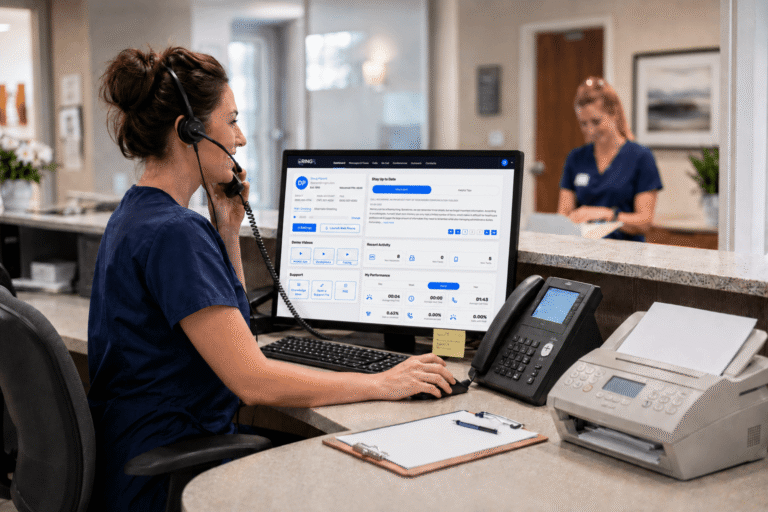

The adoption of secure, HIPAA-compliant VoIP solutions continues to accelerate across private medical practices in the United States. Independent providers from solo behavioral health therapists to multi-physician specialty clinics are replacing aging landlines and fragmented communication tools with unified, healthcare-focused platforms that protect patient privacy while streamlining daily workflows.
In cities large and small, from Maryland trauma centers to Pacific Northwest metabolic health groups, clinicians increasingly recognize that modern communication is no longer optional. It has become a competitive necessity and a practical requirement for delivering responsive, compliant care.
Missed calls, scattered text messages, voicemails buried in separate apps disrupt patient care and expose practices to compliance risks. Erodes patient trust, longer waits and wasted staff time. RingRx changes that by combining voice, secure texting, fax, video visits, and on-call scheduling into one intuitive, fully HIPAA-compliant platform designed specifically for medical workflows. See how your practice can grow, run more smoothly, and deliver a better experience for every patient. Sign Up for RingRx Free Trial today!
The Growing Appeal of Purpose-Built Healthcare Communication
Private practices operate under intense constraints: limited staff, unpredictable call volumes, strict privacy regulations, and constant pressure to improve patient experience. Traditional phone systems whether analog lines or generic cloud services rarely address these realities well. They lack built-in safeguards for protected health information, offer limited integration between voice, text, and fax, and frequently generate unexpected costs.
Today many independent providers are choosing HIPAA compliant VoIP platforms designed specifically for medical environments. These systems combine crystal-clear calling, secure patient texting, web-based faxing, and video visits into one cloud-based solution. The result is a single dashboard that supports intelligent call routing, after-hours answering, automated appointment reminders, and mobile access for on-call physicians without forcing the practice to cobble together multiple vendors.
Practical Advantages Driving Adoption
Smaller practices see especially clear benefits. Behavioral health clinics, direct primary care groups, and solo therapists need discreet, reliable channels for sensitive conversations. A virtual receptionist can answer calls professionally during peak hours, while on-call routing ensures urgent matters reach the right provider after hours. Voicemail transcription turns lengthy messages into readable text, and secure SMS enables quick follow-up on lab results or medication questions.
Spam call blocking and robocall protection have also become essential. Medical front desks lose valuable time fielding unwanted sales pitches and automated robocalls; modern platforms dramatically reduce that noise. When combined with features such as call queuing and overflow routing, practices report noticeably fewer abandoned calls and higher patient satisfaction scores.
Cost control remains another powerful motivator. Many practices discover that moving to VoIP allows them to eliminate expensive on-premises hardware and reduce monthly telecommunications spending significantly compared with legacy providers.
Overcoming Common Hesitations
Despite the advantages, some practice owners still hesitate. The most frequent concerns revolve around three issues: potential disruption during the switch, questions about long-term reliability across multiple channels, and uncertainty whether a specialized platform truly justifies its price compared with cheaper general-purpose alternatives.
Number porting has become remarkably smooth in recent years. Most providers keep existing phone numbers active throughout the transition, with downtime measured in minutes rather than days. Once live, unified platforms prove reliable because they are engineered from the ground up for healthcare workflows rather than retrofitted for compliance. Regular security audits, end-to-end encryption for text and fax, and detailed HIPAA documentation help alleviate anxiety about regulatory risk.
On value, the comparison often favors healthcare-first vendors. Generic VoIP services may advertise low rates, but they frequently require third-party add-ons, custom scripting, or manual workarounds to meet medical privacy standards hidden expenses that quickly erase apparent savings.
Real-World Examples Across Specialties
The shift is visible in diverse settings. Pediatric groups offer parents direct text and phone access as part of membership models. Anxiety and trauma specialists maintain secure, confidential lines for patients who value discretion. Home health agencies coordinate care across wide geographic areas using mobile-friendly tools. Even holistic and integrative practices rely on telehealth-ready video and messaging to support mind-body treatment plans.
In each case, the common thread is improved accessibility. Patients reach their providers more easily, miss fewer appointments thanks to automated reminders, and feel greater confidence when sharing personal health details through encrypted channels.
Market Momentum and Broader Context
The broader VoIP market reflects this healthcare-specific trend. North America continues to lead adoption, with businesses of all sizes moving toward internet-based telephony for its flexibility and lower operating costs. Many organizations report meaningful telecommunications savings after switching sometimes up to 50% compared with traditional circuit-switched services while gaining capabilities that older systems simply cannot match.
Within medicine, the migration is accelerated by the ongoing push toward value-based care models that reward responsiveness and patient engagement. Practices that communicate efficiently tend to retain patients longer and achieve better clinical outcomes through timely follow-up and coordination.
What the Future Holds for Independent Practices
As patient expectations rise and reimbursement pressures persist, secure communication platforms will likely become standard infrastructure rather than a nice-to-have upgrade. The most forward-thinking independent providers already treat them as mission-critical tools much like electronic health records or practice management software.
For practices still using outdated systems, the decision point is approaching. Modern VoIP solutions deliver efficiency, robust security, transparent pricing, and genuine workflow alignment. They allow clinicians and staff to spend less time wrestling with technology and more time focused on patient care.
The direction is clear. Across the United States, private medical practices are quietly but steadily modernizing the way they connect. Those that embrace purpose-built, healthcare-first platforms position themselves to thrive in an environment where connection, compliance, and convenience increasingly define quality care.
Frequently Asked Questions
What is a HIPAA-compliant VoIP solution and why do medical practices need one?
A HIPAA-compliant VoIP solution is a cloud-based phone and communication platform built specifically to protect patient health information (PHI) under federal privacy regulations. Unlike generic phone services, these systems include end-to-end encryption for calls, texts, and faxes, along with detailed security documentation required for regulatory compliance. Medical practices need them because standard telecom tools lack built-in safeguards, leaving practices exposed to compliance risks and potential breaches of patient trust.
Will switching to a new VoIP system disrupt my medical practice’s phone service?
Modern number porting has become remarkably smooth, with most practices keeping their existing phone numbers active throughout the transition and experiencing only minutes of downtime. Healthcare-focused VoIP platforms are engineered from the ground up for medical workflows, making them more reliable than generic services retrofitted for compliance after the fact. Most providers also offer guided onboarding to ensure staff can confidently use features like call routing, voicemail transcription, and secure SMS from day one.
How much can a private medical practice save by switching to a VoIP phone system?
Many private practices report significant cost reductions after switching to VoIP sometimes up to 50% compared with traditional landline or circuit-switched services. Savings come from eliminating expensive on-premises hardware, reducing monthly telecom bills, and avoiding the hidden costs of stitching together multiple third-party tools to meet compliance requirements. Healthcare-first VoIP platforms bundle voice, secure texting, fax, and video into one transparent pricing plan.
Disclaimer: The above helpful resources content contains personal opinions and experiences. The information provided is for general knowledge and does not constitute professional advice.
You may also be interested in: Telehealth in Rural America: How the Right Communication System
Missed calls, scattered text messages, voicemails buried in separate apps disrupt patient care and expose practices to compliance risks. Erodes patient trust, longer waits and wasted staff time. RingRx changes that by combining voice, secure texting, fax, video visits, and on-call scheduling into one intuitive, fully HIPAA-compliant platform designed specifically for medical workflows. See how your practice can grow, run more smoothly, and deliver a better experience for every patient. Sign Up for RingRx Free Trial today!
Powered by flareAI.co