

Choosing a Healthcare Phone System

Choose a healthcare phone system by defining your workflows first. Compare providers on BAA scope, security, fax, texting, routing, support, and total cost.

This guide helps independent healthcare practices apply those criteria consistently and document the evidence behind their decision.

What should a healthcare practice evaluate in a phone system?

Published September 25, 2026 · Last reviewed October 1, 2026

RingRx publishes this guide and is one of the providers discussed. Vendor information is based on public sources reviewed on the date above.

The Buyer’s Guide uses a structured evaluation process. This page gives you the six areas to establish before you start comparing providers.

Workflow fit and integrations

Start with how calls reach the front desk, how they move between staff, how they support remote and multi-location work, and how they connect with the systems and data flows your practice relies on.

HIPAA, BAA, and security

Confirm BAA scope and HIPAA responsibilities, how PHI/ePHI is handled, the safeguards and access controls provided, and what remains your practice’s responsibility.

Fax and texting workflows

Define the fax and texting workflows staff actually need, including number use, routing, ownership, follow-up, and day-to-day handling.

After-hours and routing

Map after-hours and on-call coverage, call routing, transfers, queues, voicemail ownership, escalation, and handoffs to ensure responsibility is clear when the office is open or closed.

Implementation and support

Evaluate number porting, setup, testing, training, cutover, onboarding, and how support and escalation will work after launch.

Total cost

Compare the full configured cost, including plans, add-ons, hardware, usage, support, fees, renewal terms, and cancellation terms.

Compare healthcare phone systems

Use the same criteria to review the providers your practice may be considering. Start with the shortlist below, then open the detailed comparisons for a closer look at fit, workflows, costs, and trade-offs.

Healthcare phone-system provider comparison
VendorPotential fitWhat to investigateDetailed comparison
Google VoiceGeneral business phone serviceBAA scope, fax, routingRingRx vs. Google Voice →
RingCentralBusiness phone and communications platformHealthcare workflow fit, packaging, total costRingRx vs. RingCentral →
WeaveHealthcare communications platformCommunication scope, workflow fit, pricingRingRx vs. Weave →
DialpadBusiness communications platformBAA scope, fax/text workflows, pricingRingRx vs. Dialpad →
OpenPhone / QuoSmall-business cloud phone serviceBAA scope, fax, after-hoursRingRx vs. OpenPhone / Quo →
NextivaBusiness communications platformHealthcare fit, implementation, supportRingRx vs. Nextiva →
iPlumMobile-first business phone serviceWorkflow depth, routing, scalabilityRingRx vs. iPlum →
VonageBusiness cloud communications platformHealthcare fit, compliance, implementationRingRx vs. Vonage →
Spruce HealthHealthcare communications platformHealthcare workflow fit, integrations, pricingRingRx vs. Spruce Health →

Ready to run your own evaluation?

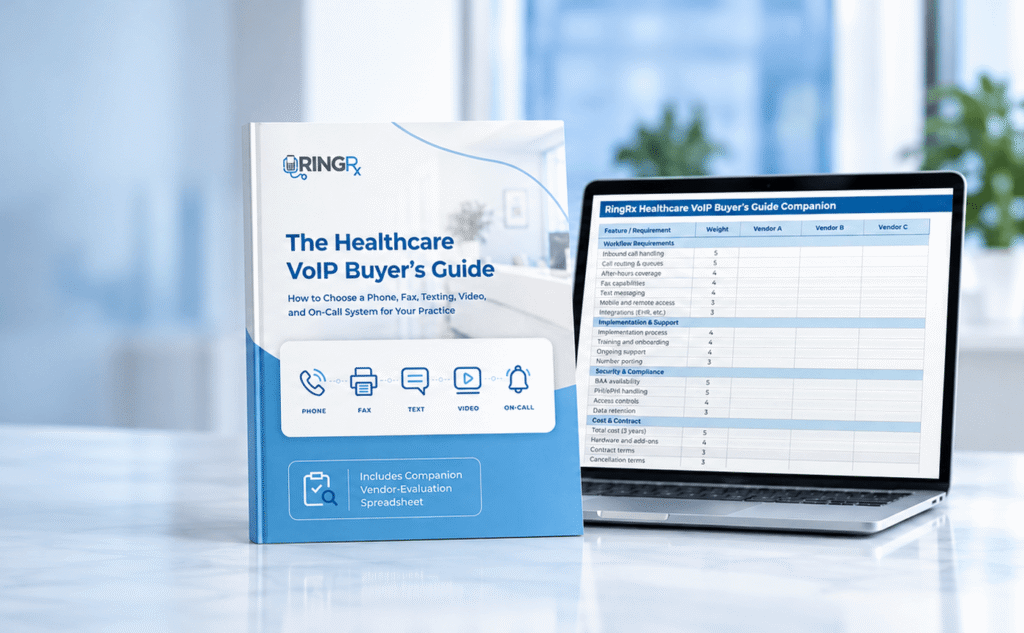
The Healthcare VoIP Buyer’s Guide walks your team through the evaluation process. Its companion spreadsheet helps you document requirements, weight priorities, record vendor evidence, and compare your shortlist using the same framework.

Proof from practices like yours

epa

Eugene Psychological Assessments

“I need to be able to transfer calls and access faxes immediately, and I also need to be able to send texts from those same phone lines.” Eugene Psychological Assessments used RingRx desktop and mobile access to manage calls, fax, and text on the same business lines while its practice manager worked remotely.
carmendi_health

Cormendi Health

“RingRx not only gave us a better process for routing calls, but we were also able to differentiate the new incoming patient calls from established patients.” Cormendi Health used RingRx to organize call handling across a growing, largely remote team. Staff gained clearer visibility into incoming calls and could route new-patient and established-patient calls differently, making ownership easier to manage across locations.

Frequently asked questions

What should a healthcare practice look for in a phone system?

Start with workflow fit and integrations; fax and texting workflows; after-hours and routing; HIPAA/BAA considerations; implementation and support; and total cost. Then compare every shortlisted vendor using the same criteria.

What does a BAA tell you about a phone-system provider?

A BAA addresses the vendor relationship and handling of PHI within its scope. Practices still need to evaluate safeguards, configuration, access, policies, training, and their own responsibilities.

How should a practice compare healthcare phone-system pricing?

Compare the cost of the configured workflow you actually need, including subscriptions, fax, texting, devices, support, implementation, porting, usage, fees, and contract terms.

Can a medical practice keep its existing phone and fax numbers?

Number portability depends on the numbers, the current carrier, the account information, and the new provider. Confirm portability and the migration process before committing to a switch.

How should you compare two healthcare phone systems?

Define requirements first, use the same evaluation criteria for both providers, verify changes to claims against current sources, and document evidence and trade-offs before making a choice.

How does RingRx build these comparisons?

RingRx publishes these comparisons and is one of the providers included. We use current public vendor information for factual comparisons, distinguish RingRx assessments from verified facts, flag information that cannot be publicly verified, and review priority comparisons when material vendor information changes.

See how RingRx supports these healthcare communication workflows.

Resources to support your success

Key Takeaways Patients judge your phone system by whether they can get help quickly, not by whether a call is technically answered. …

Key Takeaways Both RingRx and iPlum support HIPAA-oriented healthcare communication workflows, but they are built for different operating models. iPlum is a …

Key Takeaways Healthcare practice operating costs are rising, making every dollar count. Choosing a communications platform without transparent pricing can leave practices …