
Quick Listen:
In the wide-open stretches of rural America, where the nearest hospital might lie beyond rolling hills and long dirt roads, timely medical help has often felt out of reach. Yet today a powerful shift is underway. Telemedicine is no longer a futuristic promise but a practical lifeline that lets a farmer in Nebraska consult a cardiologist in minutes rather than drive for hours. This transformation hinges on seamless, secure tools that let doctors, nurses, and specialists talk to one another and to patients without missing a beat. By bridging vast distances with reliable technology, rural communities are finally gaining the same level of coordinated care that urban centers have long enjoyed.
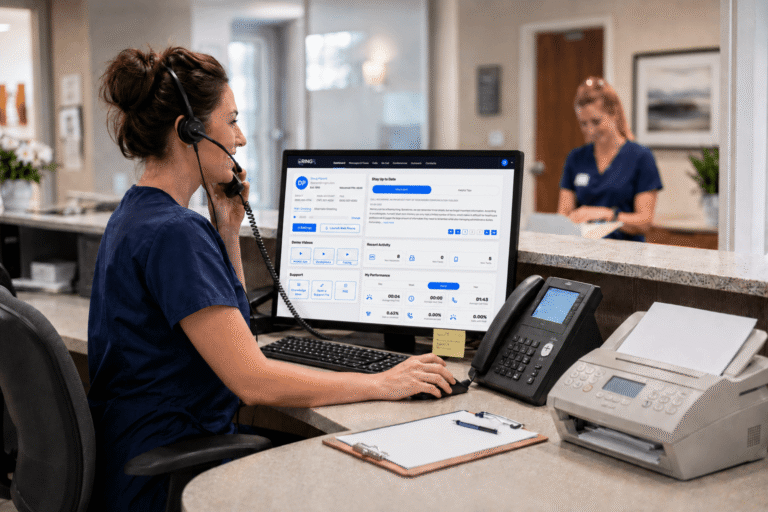
Missed calls, scattered text messages, voicemails buried in separate apps disrupt patient care and expose practices to compliance risks. Erodes patient trust, longer waits and wasted staff time. RingRx changes that by combining voice, secure texting, fax, video visits, and on-call scheduling into one intuitive, fully HIPAA-compliant platform designed specifically for medical workflows. See how your practice can grow, run more smoothly, and deliver a better experience for every patient. Sign Up for RingRx Free Trial today!
The Stark Reality of Rural Healthcare Access
For generations, distance has defined the rural healthcare experience. Patients delay care because travel is costly and time-consuming. Specialists are few and far between. Emergency rooms in small towns close or consolidate, leaving communities vulnerable. When a heart attack or stroke strikes after dark, every minute counts. These barriers are not abstract they translate into higher rates of untreated chronic conditions, delayed diagnoses, and preventable complications. Families in isolated areas often face impossible choices between seeking help and managing daily responsibilities on the farm or in the home. Telemedicine changes the equation by bringing expert eyes and ears directly into living rooms, barns, or even pickup trucks parked on the side of a two-lane highway. The technology does not replace the human touch; it simply removes the miles that once stood in the way, creating pathways to care that were previously unimaginable.
How Telemedicine Speeds Up Connections
Picture this: a pregnant woman in a remote Appalachian town feels sudden complications. Instead of an ambulance ride that could take ninety minutes, she activates a secure video link. Her local clinic nurse joins the call, and within moments a high-risk obstetrician in a distant city reviews her vitals in real time. The consultation happens instantly because the communication platform is built for exactly this scenario fast, clear, and protected. Rural patients gain access to the same caliber of care city dwellers take for granted, often on the same day rather than weeks later. Another example unfolds in the Midwest, where a rancher experiencing chest pain connects immediately with a cardiologist who can interpret an on-site ECG and guide life-saving decisions before transport even begins. These real-time interactions not only save precious time but also build confidence among patients who once felt cut off from advanced medical expertise.
The Critical Need for Secure Clinical Communication
Speed alone is not enough; the connection must be trustworthy. Healthcare professionals need to share lab results, images, and treatment plans without fear of breaches or dropped calls. That is where modern clinical communication platforms shine. The increasing demand for seamless coordination among healthcare professionals has fueled impressive expansion in this space. Recent industry analysis shows the clinical communication and collaboration market was estimated at USD 2.99 billion in 2024, with North America accounting for the largest share. These tools are no longer optional they are the backbone that lets rural clinics operate as if they were part of a much larger, instantly reachable network. By enabling instant, protected exchanges, they turn isolated facilities into integrated nodes of a national care system.
HIPAA Compliance as the Foundation of Trust
Patient privacy is non-negotiable, especially when sensitive information travels across Wi-Fi signals and state lines. HIPAA-compliant messaging software has become the quiet hero of telemedicine. These platforms allow healthcare professionals to share patient information securely, in full compliance with the Health Insurance Portability and Accountability Act in the United States. While its core function is to protect patient privacy, the technology has evolved into a hub for workflow optimization, real-time care coordination, and integration with broader electronic health record systems. The result is confidence on both sides of the screen: patients know their data stays protected, and providers know they are operating within the law. What once required fax machines and handwritten notes now happens with a few taps on a tablet, all while preserving the highest level of confidentiality.
Real-World Impact on Rural Patients and Providers
The benefits show up in everyday stories. A veteran in rural Texas manages his diabetes through regular virtual check-ins, avoiding costly trips to the VA hospital. An elderly couple in the Midwest receives follow-up care after surgery without leaving their front porch. On the provider side, nurses in understaffed clinics no longer feel isolated; they can loop in specialists instantly and reduce the burnout that comes from shouldering every case alone. Telemedicine does not just move data it moves expertise exactly where it is needed most.
- Rural emergency departments can stabilize patients and consult trauma surgeons before deciding on transfer.
- Primary-care doctors gain backup from mental-health specialists for patients struggling with isolation or depression.
- Chronic-disease management improves because follow-up appointments become simple video calls instead of all-day ordeals.
- Surgical teams coordinate pre- and post-operative plans with distant specialists, ensuring smoother recoveries even in resource-limited settings.
These examples illustrate how secure platforms transform daily operations, turning potential delays into immediate action and fostering stronger provider-patient relationships across vast geographies.
Overcoming the Remaining Hurdles
Of course, challenges remain. Broadband access is still patchy in some of the most remote corners of the country. Older patients sometimes need help navigating the technology. Reimbursement rules continue to evolve, and not every insurance plan covers virtual visits equally. Yet progress is steady. Federal programs have poured resources into expanding rural broadband, while intuitive apps designed for seniors are lowering the learning curve. Healthcare systems that once viewed telemedicine as a temporary fix during the pandemic now see it as a permanent strategy for equity. Training programs for clinic staff and community outreach initiatives are further smoothing the transition, ensuring that no one is left behind as technology advances.
The Broader Market Momentum Behind the Change
The numbers tell a clear story of demand. Secure messaging solutions tailored for healthcare are gaining traction because they solve the exact problems rural providers face every day: how to share information quickly without compromising safety. secure messaging in healthcare is primarily driven by the increasing need to protect and safeguard patient data. Instead of drowning in statistics, consider the practical insight: when communication tools work reliably, patient outcomes improve, hospital readmissions drop, and scarce medical resources stretch farther. That is the quiet power behind the market growth real people getting better care because the right information reaches the right hands at the right moment. Platforms that integrate seamlessly with existing systems further amplify this momentum, creating efficiencies that benefit everyone in the care chain.
Looking Ahead: A More Connected Rural Future
The next chapter will blend telemedicine with wearable sensors, artificial intelligence that flags early warning signs, and even drone delivery of medications to the most isolated homes. Rural patients will not merely survive; they will thrive because distance no longer dictates destiny. The same secure platforms that power today’s video visits will evolve to support continuous monitoring and proactive care. What feels innovative now will soon feel routine, and communities that once felt forgotten will stand at the forefront of a more inclusive healthcare system. As these technologies mature, rural America stands poised to lead in demonstrating how connected care can close longstanding gaps in access and quality.
Why This Matters for All of Us
Telemedicine’s success in rural America is not a niche story. It is a blueprint for how technology can restore balance to a system long tilted toward urban centers. When a single mother in a small farming town can get specialist advice without missing work, the ripple effects touch entire families and local economies. When providers spend less time chasing paperwork and more time treating patients, the entire profession regains its sense of purpose. The tools are here. The momentum is real. The only question left is how quickly we embrace the change so that no patient, no matter how far from the city lights, has to wait for care that could arrive in minutes. In the end, telemedicine is about more than faster connections it is about restoring hope, dignity, and possibility to places that have waited long enough. The countryside is no longer cut off. Thanks to secure, intelligent communication platforms, rural patients are now linked to the best medicine America has to offer. And that link is only getting stronger.
Frequently Asked Questions
How does telemedicine improve healthcare access for rural patients?
Telemedicine eliminates the barrier of distance by connecting rural patients with specialists through secure video platforms often on the same day, rather than weeks later. A farmer experiencing chest pain, for example, can consult a cardiologist in real time before an ambulance even arrives. This technology doesn’t replace hands-on care; it removes the miles that once stood in the way of receiving it.
Is telemedicine secure enough to protect patient health information?
Yes HIPAA-compliant messaging platforms are designed specifically to protect patient data while enabling fast, seamless communication between providers. These tools encrypt health information shared across video calls, messaging, and electronic health records, ensuring full compliance with U.S. privacy law. The clinical communication and collaboration market was valued at $2.99 billion in 2024, reflecting just how essential secure platforms have become in modern healthcare.
What are the biggest challenges still facing rural telemedicine adoption?
The main hurdles include inconsistent broadband access in remote areas, a learning curve for older patients unfamiliar with digital tools, and uneven insurance reimbursement for virtual visits. However, federal broadband expansion programs and more intuitive, senior-friendly apps are steadily closing these gaps. Many healthcare systems that initially used telemedicine as a pandemic stopgap now treat it as a long-term strategy for expanding care equity.
Disclaimer: The above helpful resources content contains personal opinions and experiences. The information provided is for general knowledge and does not constitute professional advice.
You may also be interested in: RingRx: HIPAA Compliant Phone System Designed for Modern
Missed calls, scattered text messages, voicemails buried in separate apps disrupt patient care and expose practices to compliance risks. Erodes patient trust, longer waits and wasted staff time. RingRx changes that by combining voice, secure texting, fax, video visits, and on-call scheduling into one intuitive, fully HIPAA-compliant platform designed specifically for medical workflows. See how your practice can grow, run more smoothly, and deliver a better experience for every patient. Sign Up for RingRx Free Trial today!
Powered by flareAI.co