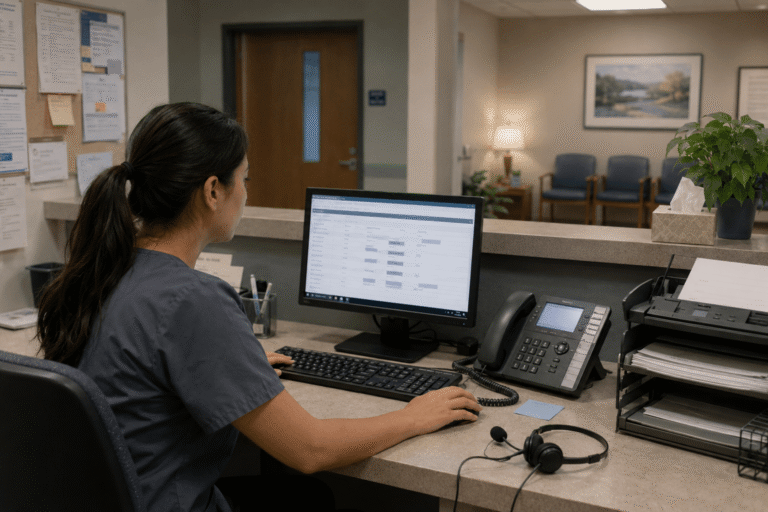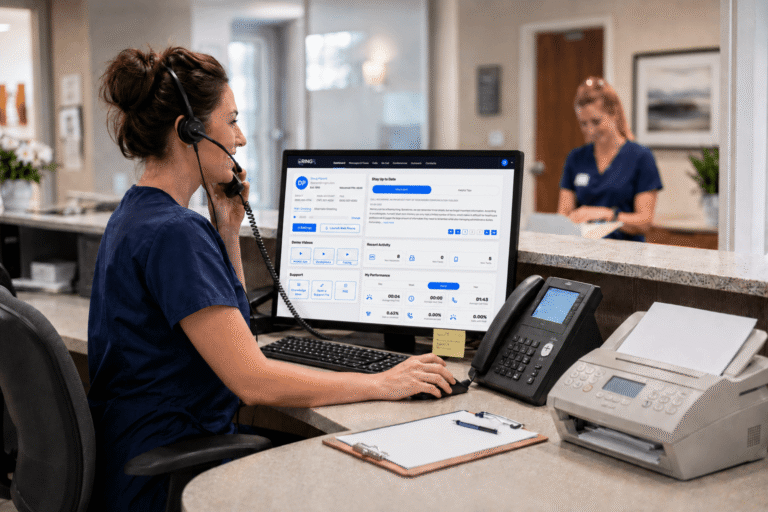

In medical practices throughout the United States, front-desk teams have long shouldered an unrelenting wave of administrative demands. Phones ring without pause, patients request appointments, refills, test results, and billing clarifications all while staff simultaneously manage check-ins, verify insurance, and maintain a welcoming environment. The pressure is constant, and the consequences are familiar: hurried interactions, mounting frustration, and the creeping risk of burnout among the very people who serve as the practice’s first and most consistent point of contact.
Today, a growing number of practices are finding meaningful relief through virtual receptionists specialized, healthcare-focused answering services that function as seamless extensions of the in-house team. Far from replacing staff, these services strategically absorb routine and overflow call volume, freeing receptionists to concentrate on higher-value, in-person responsibilities. The result is a calmer workflow, improved patient experience, and perhaps most importantly a more sustainable workday for the people who keep the practice running.
Missed calls, scattered text messages, voicemails buried in separate apps disrupt patient care and expose practices to compliance risks. Erodes patient trust, longer waits and wasted staff time. RingRx changes that by combining voice, secure texting, fax, video visits, and on-call scheduling into one intuitive, fully HIPAA-compliant platform designed specifically for medical workflows. See how your practice can grow, run more smoothly, and deliver a better experience for every patient. Sign Up for RingRx Free Trial today!
The Relentless Pace of Front-Desk Responsibilities
Step inside a busy primary care office, an urgent care center, or a small specialty clinic on any weekday morning and the pattern is strikingly consistent. Receptionists field dozens of calls per hour while simultaneously greeting walk-ins, collecting copays, scanning insurance cards, and answering questions from patients already in the waiting area. Multitasking becomes second nature, yet no one can answer every line promptly or give every caller their full attention.
When call volume spikes as it inevitably does during flu season, after holiday breaks, or following local health alerts the front desk becomes a bottleneck. Hold times lengthen, messages stack up, and staff members begin to feel perpetually behind. Over time, that chronic overload contributes to stress, reduced morale, and higher turnover, all of which carry hidden costs for the practice.
What Modern Virtual Receptionists Bring to Healthcare
Contemporary virtual receptionist services built for medical practices have evolved well beyond simple message-taking. Professional agents or in some cases, hybrid systems combining intelligent automation with live supervision answer every call using the practice’s preferred greeting, terminology, and protocols. They operate as though seated at the front desk, even though they may be hundreds of miles away.
Among their core capabilities:
- Real-time appointment scheduling and modification integrated directly with the practice’s electronic health record or practice management platform
- Secure collection of new-patient demographic and insurance details
- Intelligent triage that immediately escalates true clinical urgencies to the on-call provider
- Provision of standard practice information hours, locations, accepted insurances, and directions
- Accurate capture of non-urgent messages with complete details for efficient callback
- Round-the-clock coverage that eliminates gaps during evenings, weekends, and holidays
Integration lies at the heart of effectiveness. A booked appointment appears instantly in the provider’s schedule; no manual entry is required, and the risk of double-booking or missed slots virtually disappears. From the patient’s perspective, the interaction feels local, consistent, and professional.
Tangible Reductions in Daily Workload Pressure
Practices that implement virtual support typically observe an immediate and measurable decrease in the number of calls reaching the in-house team. Receptionists who previously spent large portions of their day managing inbound lines suddenly gain uninterrupted time for face-to-face conversations, chart preparation, referral coordination, and other tasks that directly support clinical flow.
Practice leaders frequently describe the change in human terms. One manager reported that staff could finally “complete a full sentence with the person standing in front of them.” Another observed a noticeable decline in weekend and evening resentment after those shifts were reassigned to the virtual team. In several documented cases, reduced call-related stress has correlated with lower staff turnover a critical advantage in an industry where replacing a trained receptionist can take months and cost thousands of dollars.
Scalability becomes another powerful advantage. When patient demand surges, whether from seasonal illness, new physician recruitment, or practice expansion, the virtual service absorbs the additional volume without forcing overtime or rushed hiring.
Maintaining Warmth, Professionalism, and Trust
Skeptics often worry that routing calls to an external service will erode the personal connection patients value. In well-executed programs, however, the opposite occurs. Agents undergo rigorous training in medical vocabulary, empathetic communication, HIPAA-compliant handling of protected health information, and the unique preferences of each partnered practice.
Callers hear friendly, regionally appropriate voices that mirror the tone of the local office. Many patients never realize the person scheduling their next visit is not physically present in the building. In fact, some practices report that average phone wait times have shortened considerably, prompting positive comments from patients who appreciate the quicker response.
Overcoming Legitimate Concerns Around Privacy and Consistency
Privacy protections remain ironclad. Leading healthcare-oriented virtual services maintain strict HIPAA compliance through encrypted telephony platforms, role-based access controls, regular security audits, and business associate agreements with every client practice. Providers retain complete authority over what data agents may request or disclose.
Consistency is enforced through multiple layers: detailed call scripts, ongoing training, recorded interactions (with appropriate disclosures), side-by-side quality monitoring, and transparent performance reporting. When a deviation occurs, corrective action follows swiftly often within hours rather than days.
Which Practices See the Greatest Advantage?
Solo physicians and small group practices tend to experience the most dramatic transformation. With lean teams, even modest call volume can derail the day’s rhythm. Virtual receptionists enable these offices to deliver the accessibility and responsiveness typically associated with much larger organizations without the corresponding payroll burden.
Mid-sized and larger practices often adopt a more targeted approach, deploying virtual support for after-hours answering, lunchtime overflow, new-patient intake lines, or high-volume specialty scheduling. Multi-site organizations particularly value the uniformity: every location projects the same polished, cohesive patient experience regardless of staffing fluctuations at any single office.
A Practical Step Toward Long-Term Sustainability
Healthcare delivery faces persistent headwinds chronic staffing shortages, escalating administrative complexity, and growing patient expectations for instant access. Solutions that meaningfully extend human capacity without displacing people deserve serious consideration.
Virtual receptionists do not solve every challenge, but they address one of the most persistent pain points in ambulatory care: the unrelenting telephone burden that pulls attention away from direct patient support. For practices prepared to invest modest time in initial customization and onboarding, the returns frequently arrive quickly less stressed teams, more satisfied patients, and additional bandwidth for the clinical and relational work that defines quality medicine.
In an era when burnout threatens to undermine the entire workforce, even incremental improvements in daily workflow can produce outsized benefits. The front desk may never be completely quiet, but it no longer has to feel like a battleground.
Frequently Asked Questions
How do virtual receptionists help reduce workload for medical front-desk staff?
Virtual receptionists absorb routine and overflow call volume including appointment scheduling, insurance verification, and general inquiries so in-house staff can focus on higher-value, face-to-face responsibilities. Practices that implement virtual support typically see an immediate decrease in inbound calls reaching the in-house team, giving receptionists uninterrupted time for chart preparation, referral coordination, and patient check-ins. This reduction in call-related stress has also been linked to lower staff turnover in several documented cases.
Are virtual receptionist services for medical practices HIPAA-compliant?
Yes reputable healthcare-focused virtual receptionist services maintain strict HIPAA compliance through encrypted telephony platforms, role-based access controls, regular security audits, and signed business associate agreements with every client practice. Providers retain full authority over what patient data agents may request or disclose. Consistency and accuracy are further enforced through detailed call scripts, recorded interactions with appropriate disclosures, and ongoing quality monitoring.
What types of medical practices benefit most from using a virtual receptionist service?
Solo physicians and small group practices tend to see the most dramatic transformation, as even modest call volume can disrupt daily workflow with lean teams. Mid-sized and larger practices often deploy virtual receptionists for specific needs like after-hours answering, lunchtime overflow, or new-patient intake lines. Multi-site organizations particularly benefit from the consistency virtual services provide, ensuring every location delivers the same professional patient experience regardless of individual office staffing levels.
Disclaimer: The above helpful resources content contains personal opinions and experiences. The information provided is for general knowledge and does not constitute professional advice.
You may also be interested in: Seamless Operations & Integration for Healthcare Practices – RingRx
Missed calls, scattered text messages, voicemails buried in separate apps disrupt patient care and expose practices to compliance risks. Erodes patient trust, longer waits and wasted staff time. RingRx changes that by combining voice, secure texting, fax, video visits, and on-call scheduling into one intuitive, fully HIPAA-compliant platform designed specifically for medical workflows. See how your practice can grow, run more smoothly, and deliver a better experience for every patient. Sign Up for RingRx Free Trial today!
Powered by flareAI.co